
Valve’s latest Steam client update eliminates official support for 32-bit Windows, signaling the platform’s complete migration to a 64-bit architecture. The move aligns Steam with modern operating system standards and hardware requirements.
According to Valve’s official changelog, the Steam client now runs exclusively in 64-bit mode on both Windows 10 and Windows 11. As a result, support for the 32-bit edition of Windows 10, the final 32-bit operating system compatible with Steam, will end on January 1, 2026.
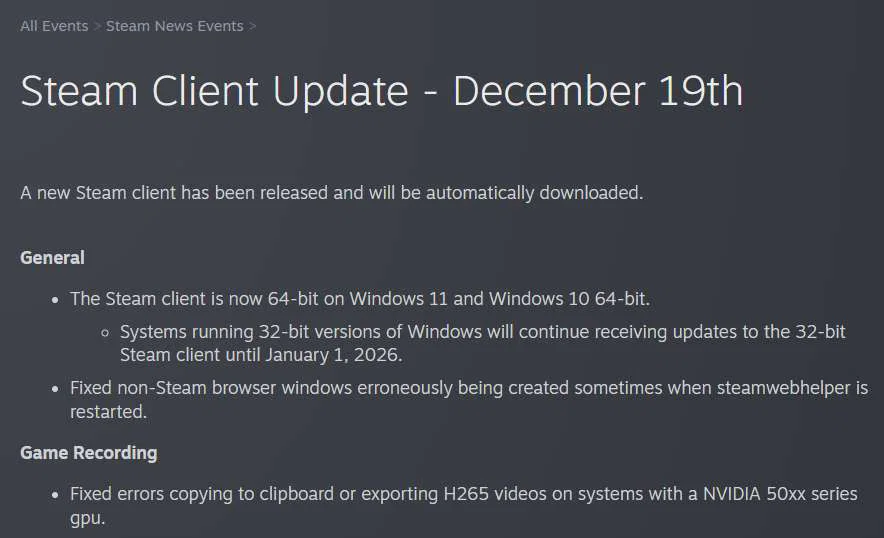
Valve says the change affects just 0.01% of Steam users who still run the client on 32-bit Windows 10. The move aligns with Microsoft’s decision five years ago to stop producing 32-bit Windows for OEMs, reinforcing the broader shift toward 64-bit architecture.
The benefits of 64-bit Windows are widely understood. Unlike 32-bit systems, modern versions can access well beyond 4GB of RAM and tend to deliver greater stability and performance. For those worried about older software, Windows’ WoW64 compatibility layer allows most 32-bit applications and games to run smoothly on 64-bit systems, with modern processors handling that code natively.
Valve has confirmed that the existing 32-bit Steam client will remain operational on older systems but will no longer be updated. Users are being encouraged to upgrade to a 64-bit operating system to continue receiving new features, security patches, and future support.
Although the end of 32-bit support is the headline change, the latest Steam client update also includes several additional fixes and enhancements:
- A fix for an H.265 game recording bug affecting systems with NVIDIA’s latest 50-series GPUs.
- Enhanced reporting tools for suspicious or harassing messages in group chats.
- New support for Nintendo Switch 2 USB controllers and GameCube adapters running in Wii U mode.
Most players won’t even notice the change, but it officially closes the book on a shift that’s been happening for years. If you’re still on 32-bit hardware, the takeaway is simple: PC gaming has moved on to 64-bit.
Maybe you would like other interesting articles?