

For years, memory has been cheap and easy to source. That period may be ending. IDC says a worsening shortage of critical components could drive PC, smartphone, and tablet prices up by as much as 8% in the months ahead.
PC makers are likely to take the hit before anyone else. IDC says the market could slide by nearly 9% next year if DRAM shortages get worse, and even under current conditions, the forecast has dimmed, with the expected 2026 decline nearly doubling.
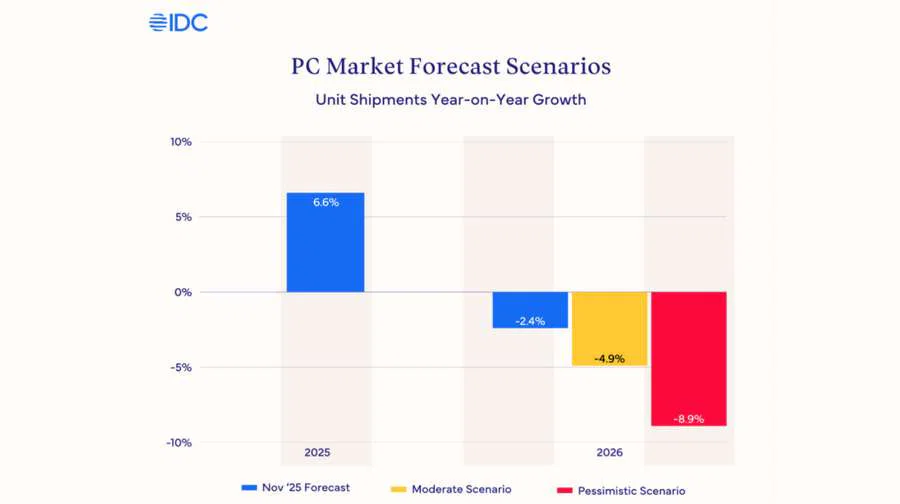
Leading computer manufacturers such as Dell, Lenovo, HP, Asus, and Acer have signaled potential price increases of up to 8%. Analysts believe other vendors will follow as memory and storage component costs increase.
IDC says the price hikes couldn’t be coming at a worse time. They land just as Microsoft is pulling mainstream support for Windows 10 in October, pushing users toward newer, more memory-heavy AI PCs that now come with a higher price tag.
The memory shortage is also likely to affect the mobile market. IDC estimates that smartphone average selling prices could increase by 3% to 5% in a moderate scenario, and by 6% to 8% in a more pessimistic one.
Budget-focused manufacturers are expected to be hit hardest. Brands including TCL, Transsion, Xiaomi, Realme, Oppo, Vivo, Honor, and Huawei operate with thin margins and are likely to pass the higher costs on to consumers, while some may reduce device specifications to offset the increase.
Samsung and Apple are in a better spot for now, having reportedly secured memory supplies for the next year and a half to two years. Still, the tighter market could force some compromises, like putting off planned RAM bumps from 12GB to 16GB in future flagships.
Experts predict that NAND and DRAM shortages will continue well into 2027, prolonging market pressure. For consumers, this is likely to result in higher prices for memory upgrades, new SSDs, and devices overall.
With no immediate relief expected, the imbalance between supply and demand is likely to continue raising costs for PCs, smartphones, and tablets, reshaping affordability across the tech market over the long term.
Maybe you would like other interesting articles?