

A few days after Cupertino introduced its newest notebook, the PC industry is already analyzing what it means. Manufacturers are aware they’ll likely need to respond, but the moment is complicated by ongoing supply pressures affecting memory and other key parts.
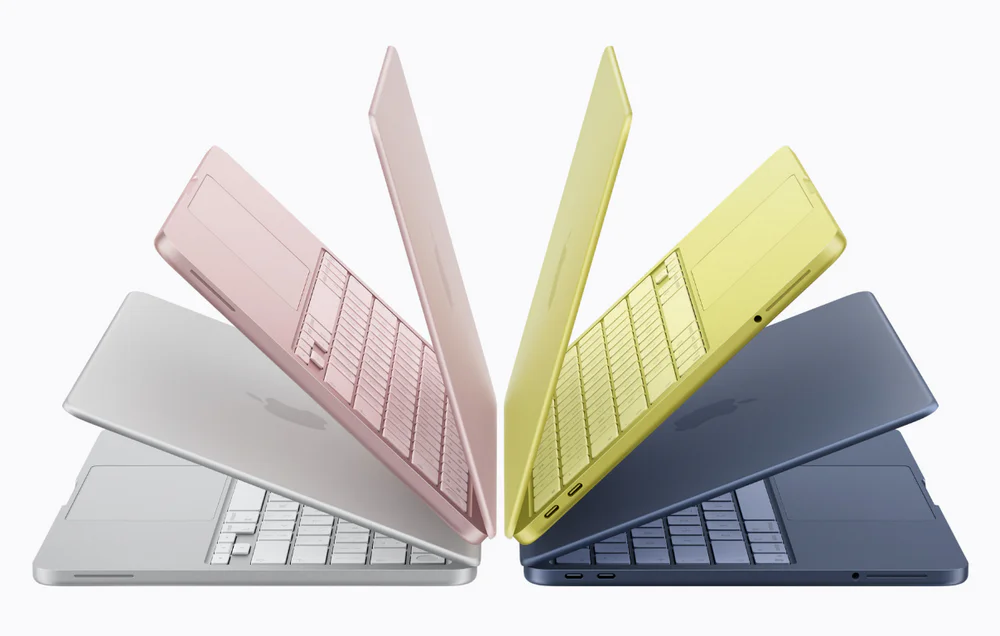
Last week, Apple introduced the MacBook Neo, presenting it as the cheapest laptop the company has ever offered. With a starting price of $600, or $500 for students, the device is aimed at buyers who want a lightweight and responsive machine. That unusually low entry point, by Apple standards, could quickly put pressure on the broader PC market.
According to recent remarks from S.Y. Hsu, companies across the PC industry are already discussing how to react to Apple’s latest move. Speaking during Asus’s latest earnings call, Hsu said the MacBook Neo and its aggressive pricing came as a real “shock” to Windows PC OEMs.
Until now, most PC manufacturers assumed Apple would continue pricing its computers well above competing systems. A lower-cost MacBook changes that dynamic, S.Y. Hsu said. He also indicated that other major players in the PC ecosystem, including chip vendors and Microsoft, are treating the shift as a serious competitive threat.
If Apple manages to convince enough buyers to try one of its lower-priced laptops, students and everyday users could end up staying within the company’s ecosystem and later moving up to more premium devices. S.Y. Hsu said talk about a possible MacBook Neo had already been circulating inside the PC industry for at least a year.
The laptop does come with a few compromises, including 8GB of memory that can’t be upgraded. S.Y. Hsu noted that the MacBook Neo is mainly designed for lighter, everyday tasks, while many mainstream laptop buyers still expect their systems to handle heavier workloads. Even so, early comparisons indicate that several Windows laptops in the same price range perform worse than Apple’s device.
The new MacBook runs on Apple A18 Pro, the same chip used in the iPhone 16 Pro. That makes it a somewhat unusual addition to the laptop market. In practice, though, its performance seems broadly comparable to Apple M1, which still holds up well today.
The PC industry is also running into another problem, memory shortages. Analysts say that could drive laptop prices up by as much as 40 percent. Asus has already said memory prices alone doubled in just one quarter.
“How big of an impact it will have on the PC industry will still require some time for us to observe,” Hsu said, adding that “the entire Windows PC ecosystem will push out products to compete against Apple.”
Maybe you would like other interesting articles?