
According to several sources, Meta will test premium subscriptions for Instagram, Facebook, and WhatsApp later this year, looking to add paid features as a new revenue stream beyond ads.
Meta will experiment with several app-specific subscription models instead of a single bundle, focusing on adding unique features while keeping its free services intact for global users.
Early tests will focus on how paid features related to creation, sharing, and privacy resonate with select audiences before any broader rollout.
The subscription push is closely linked to Manus, an advanced conversational AI agent Meta acquired in late 2025 for a reported $2 billion, which is now being integrated across the company’s apps to handle more complex, context-aware tasks.
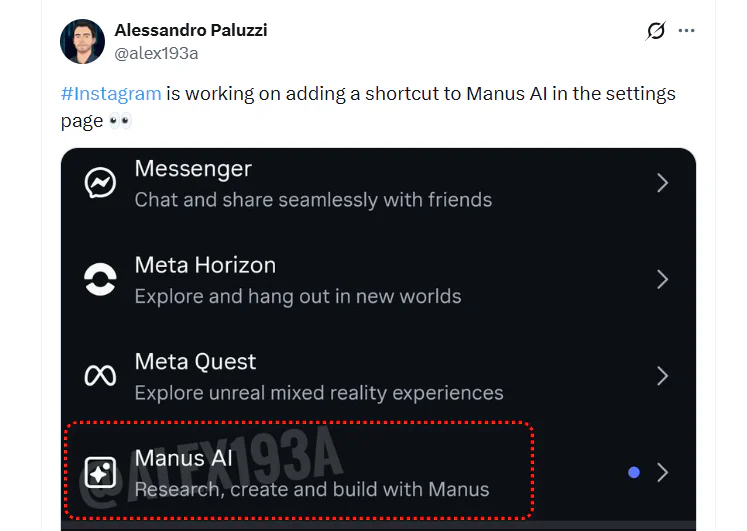
Reverse engineer Alessandro Paluzzi has spotted early Manus shortcuts showing up in Instagram, suggesting the rollout is already underway. Inside Meta, the AI is seen as both a user-facing assistant and a business tool, with plans to sell it separately to developers and companies while building it into consumer apps.
Some of the possible features are already leaking out. Early Instagram versions are said to include tools for seeing who doesn’t follow you back, making unlimited audience lists, and watching Stories anonymously, all aimed at giving users more control and privacy.
Vibes, Meta’s AI-driven short-form video generator, is also set for a change. After launching as a free feature in 2025, the tool will move to a freemium model, keeping its most advanced creation options for paying users.
Meta hasn’t shared what paid features might come to WhatsApp or Facebook yet, but the experiments hint at a bigger idea: selling personalization as a service.
The new subscriptions will be separate from Meta Verified, with Meta using feedback from that program to shape a broader offering for everyday users and small businesses.
make sentences don’t look like AI “The move enters a competitive subscription landscape, but analysts point to successes like Snapchat+, which surpassed 16 million paying users, as proof that optional paid features can generate significant revenue. However, Meta must also contend with widespread consumer subscription fatigue.”
Since Meta still makes most of its money from ads, these tests are a big step toward finding new revenue streams.
Maybe you would like other interesting articles?