
AMD is absolutely dominating Amazon’s CPU sales right now, taking 17 of the top 20 spots and leaving Intel with just two. It’s a clear sign that shoppers are increasingly choosing Team Red.
The Ryzen 7 9800X3D leads the rankings as Amazon’s best-selling processor. At $468, the chip, frequently described by reviewers as the “new gaming king,” continues to hold the top spot. The Ryzen 7 7800X3D remains a strong seller as well, taking third place.
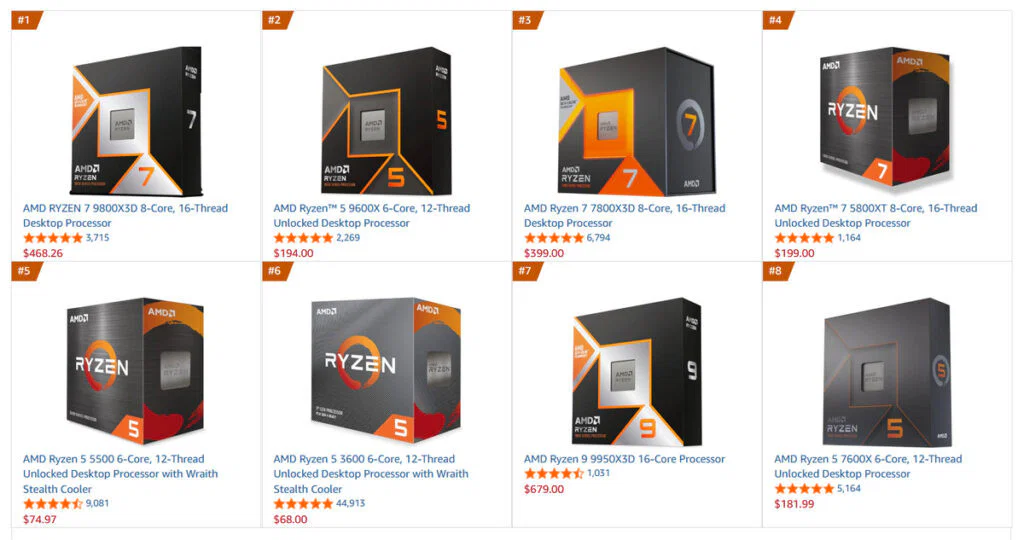
The list really shows how deep AMD’s bench is. You’ll find everything from brand-new Zen 5 CPUs to older Zen 4 and Zen 3 chips in the top 20. Even the Ryzen 5 3600 from 2019 is still hanging on in sixth place, which says a lot about how well the AM4 platform has aged.
Intel’s only entry in the top tier is the Core i9-14900K. Its lone appearance comes amid broader disappointment around Intel’s Arrow Lake lineup, with recent comparisons continuing to favor the 14th-generation chip in gaming workloads. AMD’s dominance also stretches beyond the top 20, where it captures four of the next six spots.
The retail trend is also visible in wider market metrics. The latest Steam Hardware Survey shows AMD reaching a record 42.6% share, compared with 33.8% a year earlier. If the pattern continues, AMD is positioned to surpass Intel in the Steam survey in 2025.

During a single week in November, German retailer Mindfactory sold more than 2,260 AMD CPUs compared to 220 from Intel, giving AMD roughly a 90% share of revenue. The Ryzen 7 9800X3D was again the top seller. Although the retailer frequently promotes AMD products, the difference is still notable.
The strength of AMD’s ecosystem is also driving a surge in second-hand sales. Used Ryzen 7 5800X3D CPUs have reportedly sold for as much as $800 on eBay, exceeding the price of the newer 9800X3D. Much of the demand comes from AM4 users, who want high gaming performance without the added cost of upgrading to DDR5-based systems.
Look at the online sales and the global numbers, and it’s hard to argue otherwise. AMD isn’t merely in the race anymore; it’s out front. It’s winning on new chips while still keeping older platforms relevant.
Maybe you would like other interesting articles?