

OpenAI is planning a large-scale expansion, with thousands of new hires tied to a renewed focus on enterprise customers and closer product integration. The move reflects intensifying competition in the enterprise AI space, as the company works to counter the growing strength of its primary rival.
Privately valued at roughly $730 billion, the company is expected to almost double its workforce to around 8,000 employees by the end of the year, up from about 4,500 today, according to people familiar with the matter who spoke to the Financial Times. Most of the hiring will target engineering, research, sales, and product development. A notable portion will also support what insiders describe as “technical ambassadorship”, specialists embedded within customer organizations to help drive AI adoption and tailor deployments, a model first popularized by Palantir.
OpenAI has secured additional office space in San Francisco to support the growth, expanding its footprint to more than one million square feet. The added capacity aligns with hiring at a pace of roughly a dozen employees per day.
The expansion coincides with growing competition from Anthropic, which has gained big traction with enterprise customers since early 2024. Data covering more than 50,000 users of payments startup Ramp suggests first-time buyers are choosing Anthropic roughly three times as often as OpenAI, reversing the pattern seen a year earlier. An OpenAI spokesperson disputed the conclusion, arguing that large organizations typically finalize multimillion-dollar agreements outside platforms like Ramp. “The notion that enterprise market share can be derived from Ramp credit card data is insane,” the spokesperson said.
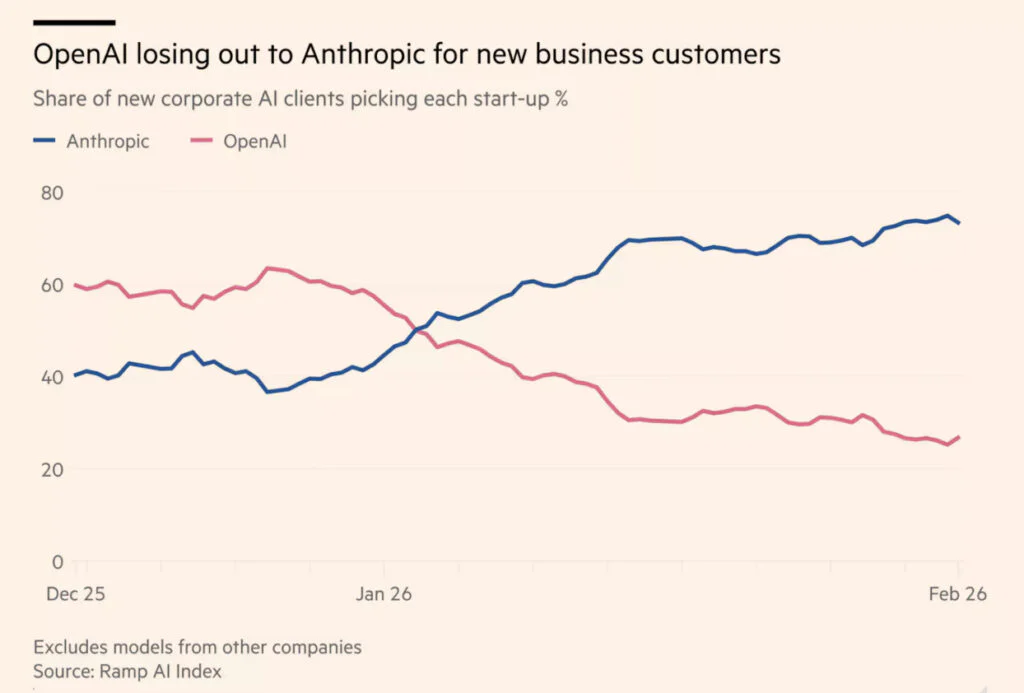
The move toward enterprise customers follows a period of internal realignment at OpenAI. Late last year, CEO Sam Altman issued a “code red,” encouraging employees to concentrate on core offerings. Earlier this month, applications leader Fidji Simo urged teams to set aside “side quests” and focus on developing ChatGPT and Codex into practical tools for productivity and code development.
The expanded enterprise strategy comes as OpenAI explores a joint venture with private equity firms to distribute its tools across their portfolio companies, according to people briefed on the discussions. Corporate customers are projected to generate roughly half of total revenue by year’s end, up from about 40 percent currently.
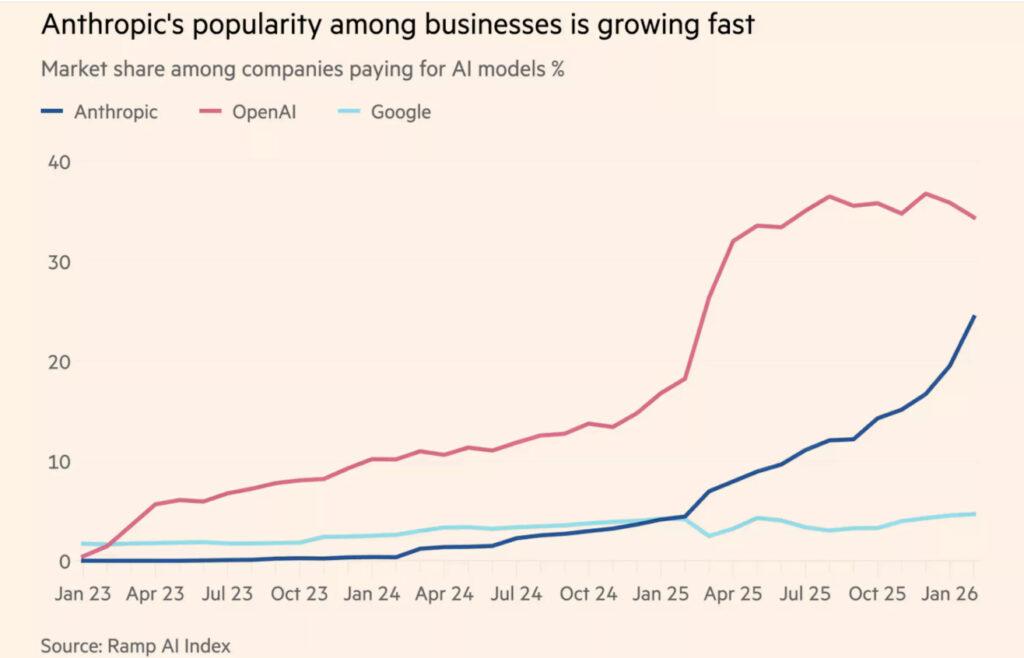
Anthropic, launched in 2021 by former OpenAI researchers, has focused on enterprise customers from the beginning, shaping its strategy around products such as the Claude Code assistant. That emphasis has driven fast growth, with the company reportedly adding around $1 billion to its annualized revenue run rate each week since January.
Neither company has reached profitability, as both continue to outspend revenue on model training and market positioning. Investors anticipate potential public listings as soon as this year. One OpenAI backer characterized the strategic risk as landing in “no man’s land”, wedged between Google’s scale on the consumer side and Anthropic’s tightening grip on enterprise demand. The current hiring blitz represents the company’s most visible countermeasure.
Maybe you would like other interesting articles?