

Google has expanded end-to-end encryption to its mobile apps, although it still faces challenges before it can be widely used. Encryption is a key part of most digital services today. With Gmail, Google is working to improve security on mobile devices.
A few months after introducing end-to-end encryption (E2EE) to Gmail’s web platform, Google is doing the same to mobile apps. The company recently confirmed that Android and iOS users can now safely encrypt their email-based conversations, although they will still need to be part of an organization paying for the Google Workspace service and related E2EE extensions.
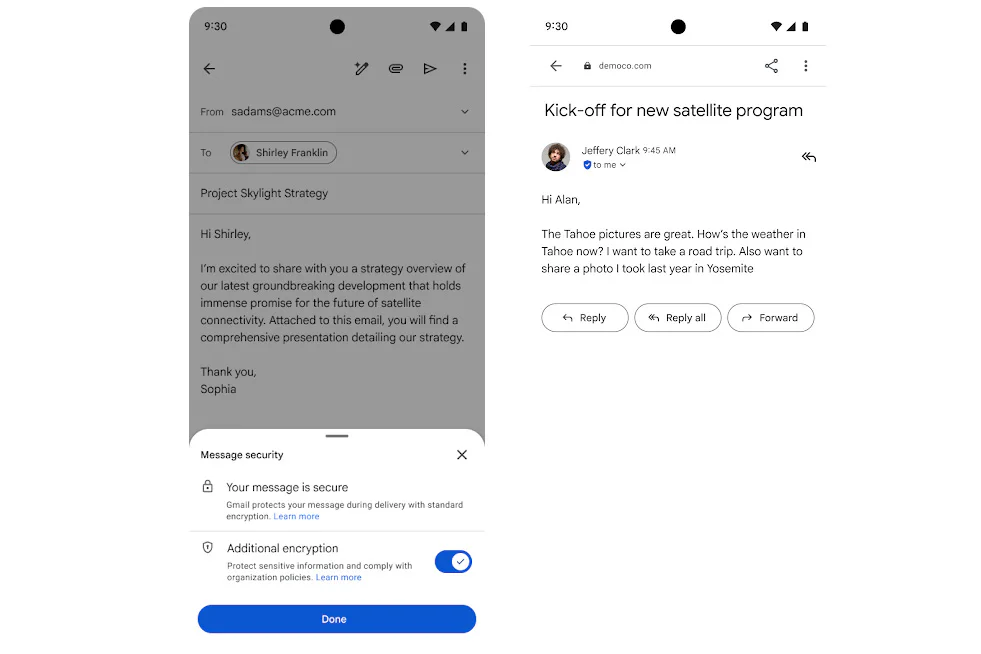
According to Google, Workspace users can now manage encrypted emails directly within Gmail. Messages can be sent to any recipient, regardless of their email provider, although the delivery experience may differ depending on the platform.
Recipients using Gmail can read encrypted messages seamlessly within their inbox, just like any standard email thread. Those on other email services, however, are redirected to a secure web page to access the message. While this approach may not be ideal, Google maintains that it still delivers a secure and user-friendly experience that meets E2EE standards.
End-to-end encryption improves the security and privacy of both personal and professional communications. When properly implemented, it ensures that only the sender and recipient can access the message content. Google describes Gmail’s E2EE as its highest level of data protection, noting its growing importance for businesses, enterprises, and public institutions.
Gmail’s end-to-end encryption for mobile apps is now generally available to Workspace organizations on the Enterprise Plus plan, including those using Assured Controls or Assured Controls Plus add-ons. IT administrators can manage the feature through the CSE admin console on supported clients, while users on certified devices can enable encryption by tapping the lock icon when composing a message.
Google refers to its managed encryption system in Gmail as Client-side Encryption (CSE). The service allows enterprise customers and their administrators to build a secure communication setup tailored to their needs. It also requires organizations to obtain a valid pair of encryption keys from approved third-party providers.
Maybe you would like other interesting articles?