
Microsoft says it plans to move away from web-based app technologies and start building Windows 11 applications that are “100% native.” A new team will oversee the transition. The change signals a break from the recent trend of using web technologies and Progressive Web App (PWA) architectures across many Microsoft and third-party apps.
In a post on X, Microsoft Partner Architect Rudy Huyn, known for his work on the Store and File Explorer, said he’s assembling a team to focus on native Windows experiences. Rather than targeting platform experts, the hiring push will lean toward candidates with strong product instincts.
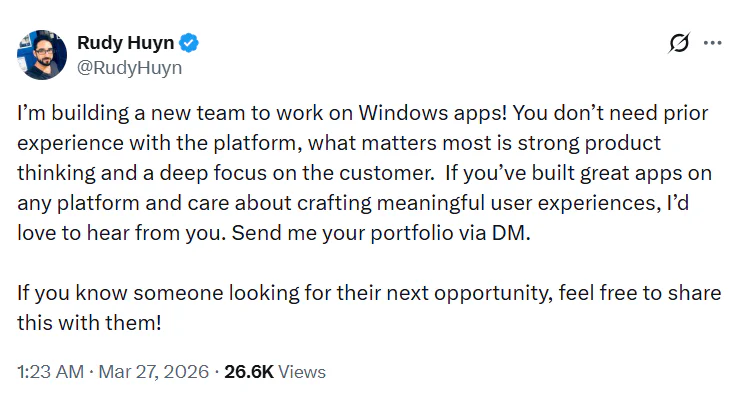
“You don’t need prior experience with the platform.. what matters most is strong product thinking and a deep focus on the customer,” Huyn wrote. “If you’ve built great apps on any platform and care about crafting meaningful user experiences, I’d love to hear from you.”
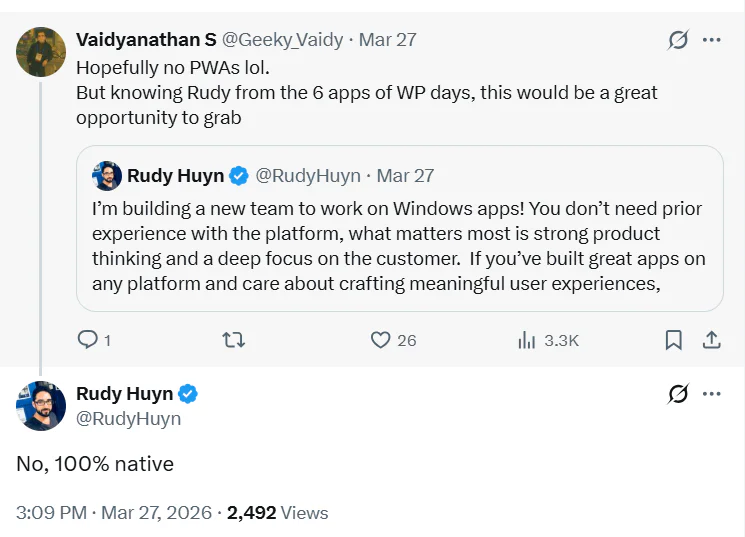
In a subsequent reply on X, Huyn clarified that the resulting applications will be “100% native.”
The shift contrasts sharply with Microsoft’s recent development direction. Built-in apps such as Clipchamp and Copilot depend on web technologies, and users have frequently complained about slow performance, high memory usage, and inconsistent interface behavior.
Some of the strongest criticism has come from high-profile changes. When WhatsApp’s Windows 11 app abandoned its native WinUI build for a Chromium-based wrapper, many users pushed back, saying the new version felt slower than the native one they were used to.
The native app initiative also aligns with a Windows 11 update focused on system performance. Microsoft says the update will improve File Explorer launch times, speed up context menus, and transition the Start menu to a WinUI interface.
Additional planned changes include expanded taskbar customization, with support for resizing and repositioning. Microsoft is also working on a “compact layout” similar to the one found in Windows 10.
Back in 2020, Windows chief Panos Panay said Microsoft wanted users to “love Windows, not just need it.” Not much visibly changed before he left. Now, six years later, the new Windows leadership seems ready to actually follow through on that goal.
Details remain unclear about which applications will be rebuilt and how strictly “100% native” will be applied. Some Microsoft apps considered native still use WebView for certain functionality. Even so, the renewed focus on native performance has drawn interest from developers watching for a broader shift.
Maybe you would like other interesting articles?