

A minor tweak in the Steam beta client may be setting the stage for broader performance tracking. Valve appears to be preparing to collect data from many games running on a wide range of PC hardware. If that’s the case, the information could one day give players an idea of how games might perform on similar systems.
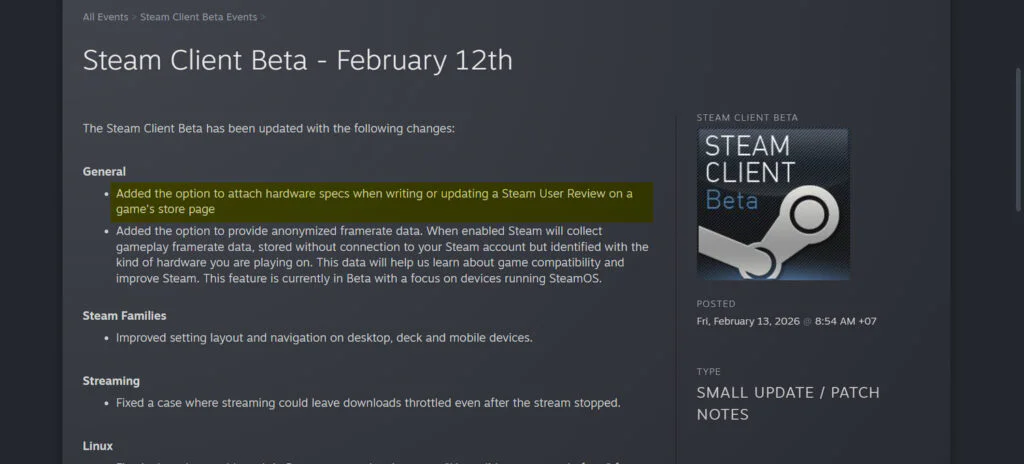
The February 12 Steam beta patch notes indicate that users can now attach their hardware specifications to reviews and optionally share anonymized frame rate data with Valve. While the tools appear to be in an early phase, they could evolve into a useful source of performance insight for prospective buyers.
Users who want to access the new tools must first opt into the Steam beta. Navigate to Settings > Interface > Client Beta Participation, select Steam Beta Update, and restart the client. When posting a review on a game’s store page, enable the “Attach PC specs to this review” option on the right; Steam will then prompt you to add a new PC configuration.
Once the prompt is selected, Steam scans the system the client is running on and generates a hardware profile that can later be attached to reviews from any logged-in session. That said, the feature is still rough around the edges. In some cases, it struggles to distinguish between the Steam client and a web browser, and the hardware scan may list integrated graphics instead of a dedicated GPU.
Once Valve resolves these issues, attaching hardware specs to Steam reviews will make them more informative. For example, when reading reviews that complain about performance, shoppers and developers can now see whether the problems are tied to certain system configurations.
While the method for providing Valve with performance data remains unclear, the company aims to improve Steam by learning more about game compatibility. Frame rate data will not be tied to individual Steam accounts, but will be connected to information about hardware specs. The performance monitor that Valve added to Steam last year likely led to this development.
The company also states that it will first focus on collecting data from SteamOS devices, suggesting that it aims to gauge how various titles run on the Steam Deck and the upcoming Steam Machine. However, the feature might become far more useful on Windows devices.
Steam’s ubiquity in the PC gaming market has made the monthly Steam hardware and software survey one of the most widely cited snapshots of what CPUs, GPUs, and operating systems users have installed. Collecting game performance data on a similar scale could create a useful resource for developers and players.
Maybe you would like other interesting articles?