
A global PC divide is becoming increasingly apparent. Despite Windows 11 being available for more than two and a half years, nearly one billion devices are still running Windows 10. Roughly half of those, around 500 million systems, cannot upgrade due to hardware incompatibility, creating a significant roadblock in Microsoft’s transition strategy.
The numbers surfaced during a recent earnings call from Dell, where COO Jeffrey Clarke outlined the scale of the divide. He explained that roughly 500 million older PCs are effectively stuck on Windows 10 because they don’t meet the requirements for Windows 11, while another 500 million capable systems have yet to make the transition. Clarke described both groups as a major opportunity for the industry to accelerate upgrades to newer hardware and software platforms.
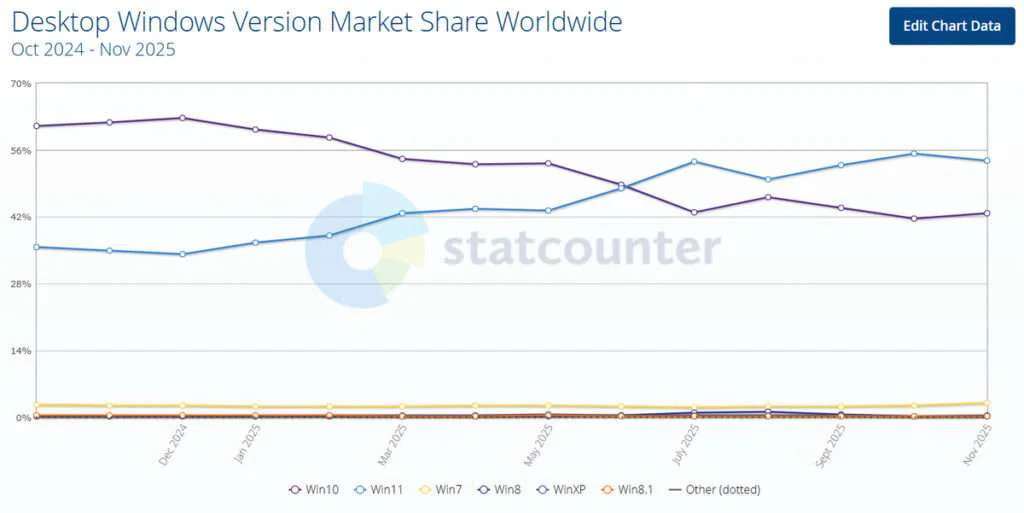
The numbers validate what industry analysts have been saying for years: a fast, universal move away from Windows 10 was unlikely. StatCounter’s latest global desktop data shows Windows 10 still commanding 42.62% of the market, even as Windows 11 edges ahead with 53.79%. Despite losing the lead, the older operating system still has more users than the entire population of Europe.
Recognizing the slower pace of upgrades, Microsoft introduced an Extended Security Update option ahead of Windows 10’s end-of-support in October 2025. The program provides an additional year of essential security patches. Users signed in with a Microsoft account and syncing their files to OneDrive can access it for free, while others can purchase the update for $30 or redeem 1,000 Microsoft Reward points.
Why the Upgrade Stall?
Several key factors are contributing to the upgrade gridlock:
- Stringent Hardware Requirements: Windows 11’s launch in late 2021 introduced strict hardware mandates, including TPM 2.0 security chips and specific CPU generations. These requirements left millions of seemingly capable PCs, often just 4-5 years old at the time, ineligible for the free upgrade, forcing users to consider buying entirely new hardware.
- User Apathy and Ignorance: A significant portion of the PC user base is either resistant to change or unaware of the security risks of running an unsupported operating system. The familiar, stable environment of Windows 10 is a powerful deterrent to upgrading.
- Extended Ecosystem Support: Critical apps and services are expected to continue supporting Windows 10 for the foreseeable future, reducing immediate pressure for businesses and consumers to switch.
At this point, the market’s basically divided into two camps. Half a billion PCs can’t run Windows 11, no matter what, leaving owners with three choices: buy a new computer, pay for extra support, or take the risk and stay exposed. The other half billion could upgrade any time; they just haven’t decided whether it’s worth it yet.
This isn’t the first time an older Windows release has refused to fade away. Even now, more than ten years after mainstream support ended, Windows 7 still accounts for nearly 3% of global desktops. The trend points to a familiar outcome: Windows 10 and the hundreds of millions still relying on it.
Maybe you would like other interesting articles?