
Google CEO Sundar Pichai says the company has a desire to build AI data centers in space and expects the idea to become mainstream within the next ten years. The statement may sound futuristic, but it reflects Google’s long-term plans.
Speaking on Fox News over the weekend, Pichai outlined what may be Google’s most literal “moonshot” to date. The effort is anchored by Project Suncatcher, introduced earlier this month, which explores powering large-scale compute infrastructure with solar energy captured outside Earth’s atmosphere.
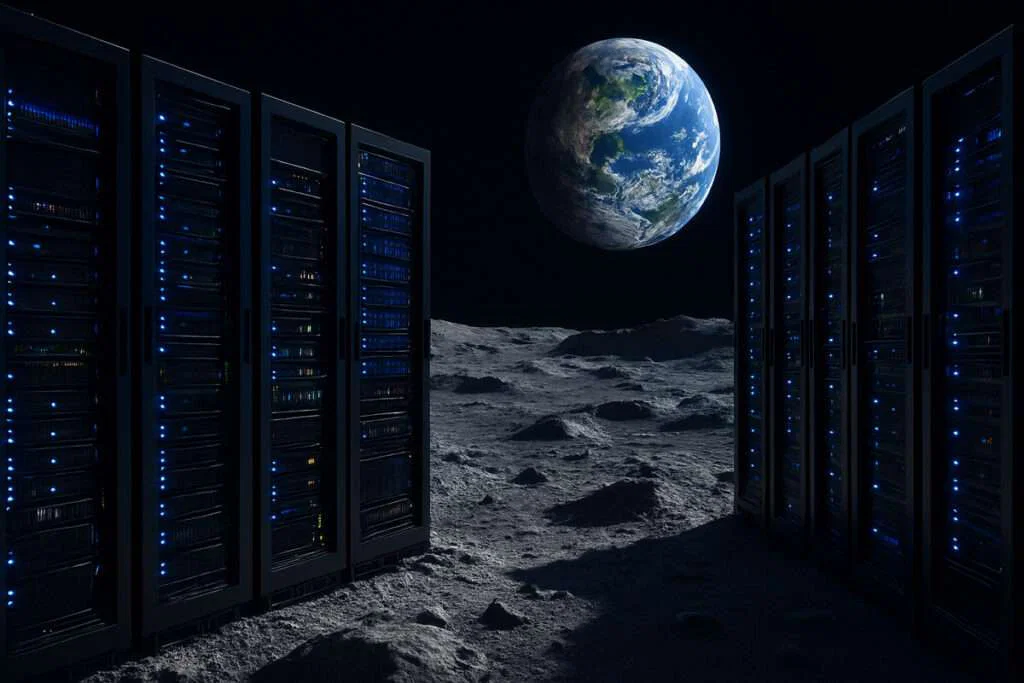
“One of our moonshots is to, how do we one day have data centers in space so that we can better harness the energy from the sun that is 100 trillion times more energy than what we produce on all of Earth today?” Pichai said.
Google expects to begin its first real phase of testing in early 2027 by working with satellite imagery company Planet to launch two pilot satellites and trial critical hardware in orbit. Pichai said he remains confident in the schedule, adding that within roughly a decade, building data centers in space may be viewed as standard practice.
Google isn’t the only company exploring space as the next frontier for computing. Earlier this month, Starcloud, a startup supported by Y Combinator and Nvidia, launched its first AI-enabled satellite. The company’s CEO, Philip Johnston, claims that space-based data centers could cut carbon emissions by a factor of ten compared to land-based facilities, even after factoring in the emissions from rocket launches.
Cheaper test satellites are helping kick off this new space race, making early experimentation a lot more realistic. But no one really knows what it will cost to build full-scale, solar-powered data centers in orbit. And all of this is happening while investment in regular, Earth-based facilities is exploding; McKinsey said in April that the industry could need over $5 trillion by 2030.
Following the launch of Gemini 3, Google has reiterated its commitment to large-scale AI development. It remains among the hyperscalers investing heavily in compute capacity and recently announced a $40 billion plan to build additional data centers in Texas.
The race to expand infrastructure carries real financial risk. Analysts warn that a potential AI bubble could lead to an oversupply of data centers and billions in wasted capital. As McKinsey noted in its recent report, “Overinvesting in data center infrastructure risks stranding assets, while underinvesting means falling behind.”
AI systems are using so much electricity that power grids are starting to feel the pressure, and people are questioning how sustainable this growth really is. A recent U.S. Department of Energy report says data center power use has already tripled in the last ten years and could double or even triple again by 2028. They made up more than 4% of America’s electricity use last year, and that number could hit 12% in just a few years.
Google’s rising power needs reflect the scale of the challenge. The company’s June sustainability report shows its data center electricity use has increased from 14.4 million megawatt-hours in 2020 to 30.8 million in 2024. Although Google reported a 12% decrease in related emissions last year, the long-term upward trend remains a concern for regulators and the broader industry.
“There is still much we don’t know about the environmental impact of AI, but some of the data we do have is concerning,” said Golestan Radwan, United Nations Environment Programme chief digital officer, in a statement last year. “We need to make sure the net effect of AI on the planet is positive before we deploy the technology at scale.”
With Google and other tech giants looking beyond Earth, the big question now is whether space data centers will actually work, and work responsibly. Over the next ten years, we’ll find out if this idea becomes the new normal or just a very costly experiment.
Maybe you would like other interesting articles?