
Oracle has staked its future on the artificial intelligence revolution, committing tens of billions of dollars to build massive data centers. However, recent reports of a key partner scaling back plans, combined with the company’s deteriorating cash position, are raising red flags among analysts who question whether the “AI bubble” might claim its first major corporate casualty.
The Austin-based cloud provider is steadily moving beyond its traditional enterprise software focus as it aims to become a major infrastructure platform for AI workloads. Co-founder Larry Ellison has supported the strategy, saying that AI-powered coding tools, what he refers to as “vibe coding, are improving developer productivity and reinforcing Oracle’s core SaaS operations.
Even with record bookings and plenty of optimism on earnings calls, the real financial situation looks a bit more complicated.
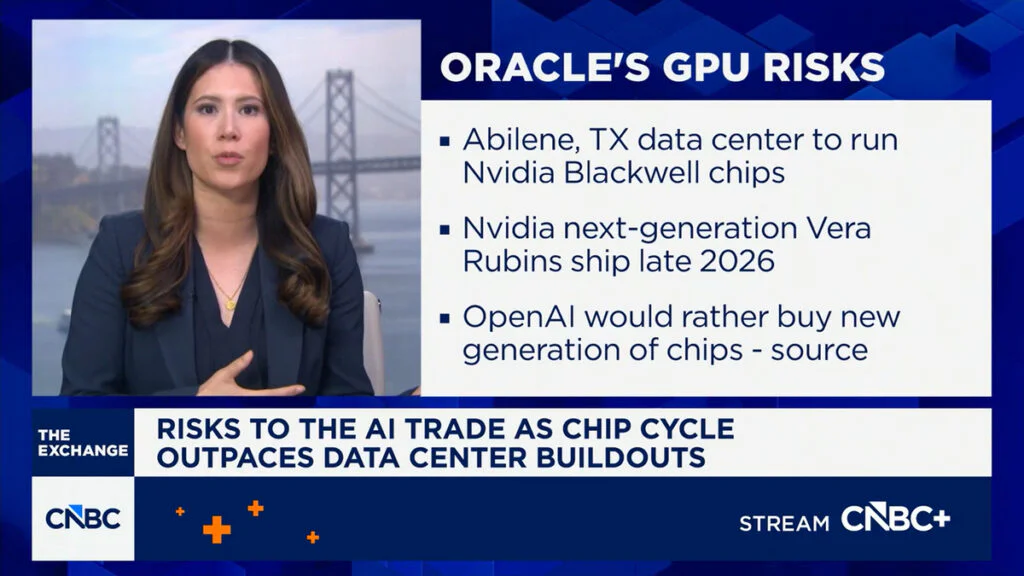
According to sources familiar with the situation, OpenAI has decided to pause its planned expansion of the “Stargate” data center project in Abilene. The AI firm, which partnered with Oracle on the facility, is reportedly shifting away from the site over concerns that some of the hardware could become outdated too quickly.
Early plans for the Abilene facility were built around AI accelerators based on Nvidia’s Blackwell architecture. Since then, the chipmaker has introduced its next-generation Vera Rubin platform, which it says could train AI models up to five times faster while cutting inference costs by as much as tenfold.
It now looks like OpenAI wants to move to Nvidia’s newer Vera Rubin chips, which could leave Oracle stuck with a huge facility running on older, less efficient hardware. It’s a reminder of how tough the AI race has become, if infrastructure doesn’t keep up with the pace of innovation, those massive investments can quickly lose value.
Any retreat by OpenAI would come at a difficult time for Oracle. The market has already raised concerns about whether the company’s capital spending plans are sustainable. Compared with hyperscale competitors such as Google, Amazon, and Microsoft, Oracle lacks large consumer-focused revenue streams that could help absorb the cost of expanding AI infrastructure. The company has reportedly committed about $100 billion to the buildout, much of it financed through debt.
The debt-funded expansion is now showing financial pressure. Oracle reported negative free cash flow of about $13.18 billion over the past 12 months. This suggests that while cloud revenue continues to grow, the company is using significant cash resources to finance its expanding data center infrastructure.
Sources suggest the company is also planning to reduce its workforce by thousands of employees, accelerating its transition from a traditional software licensing firm to a leaner cloud infrastructure operator focused on large-scale AI.
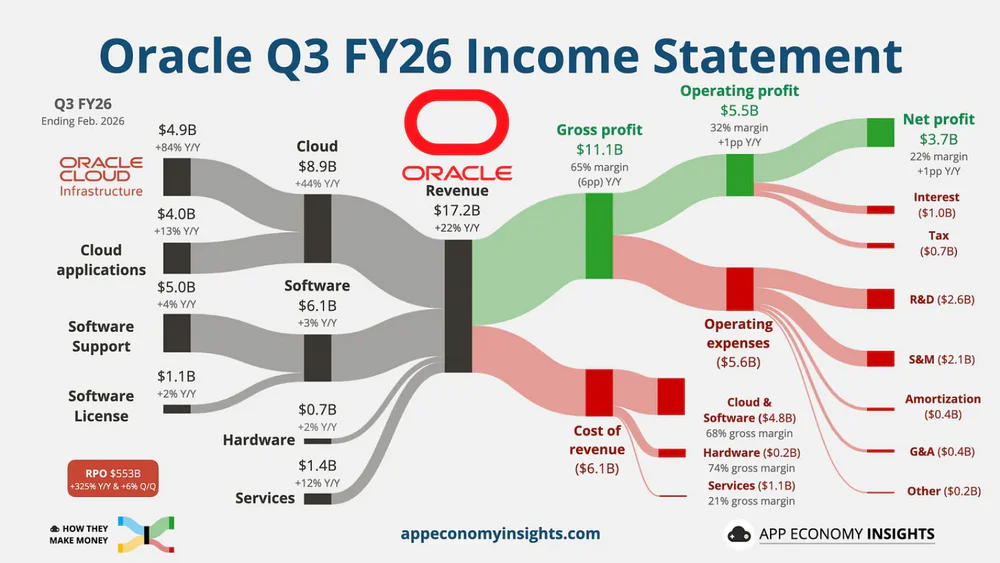
In public statements, Oracle continues to present a strong outlook. The company recently reported quarterly results that surpassed Wall Street expectations, including a 22% increase in total revenue for the third quarter and a 44% year-over-year jump in cloud revenue. Oracle now expects fiscal-year revenue to reach around $90 billion, exceeding analyst estimates of $86.6 billion.
Ellison has dismissed fears of a “SaaS apocalypse,” arguing that AI and vibe coding are actually helping Oracle build a complete ecosystem from scratch, making development teams smaller and more productive.
The difference between the company’s positive earnings narrative and its declining cash flow is becoming increasingly noticeable. While Oracle emphasizes the efficiency gains expected from AI, its financial statements indicate that the infrastructure required to support that future is consuming large amounts of capital.
For a debt-heavy company such as Oracle, the reported shift by OpenAI comes at a difficult moment, particularly as the company deals with negative cash flow. Together, these factors raise the possibility that the widely promoted “new golden era” of AI may prove less financially sustainable than many expect.
Maybe you would like other interesting articles?