
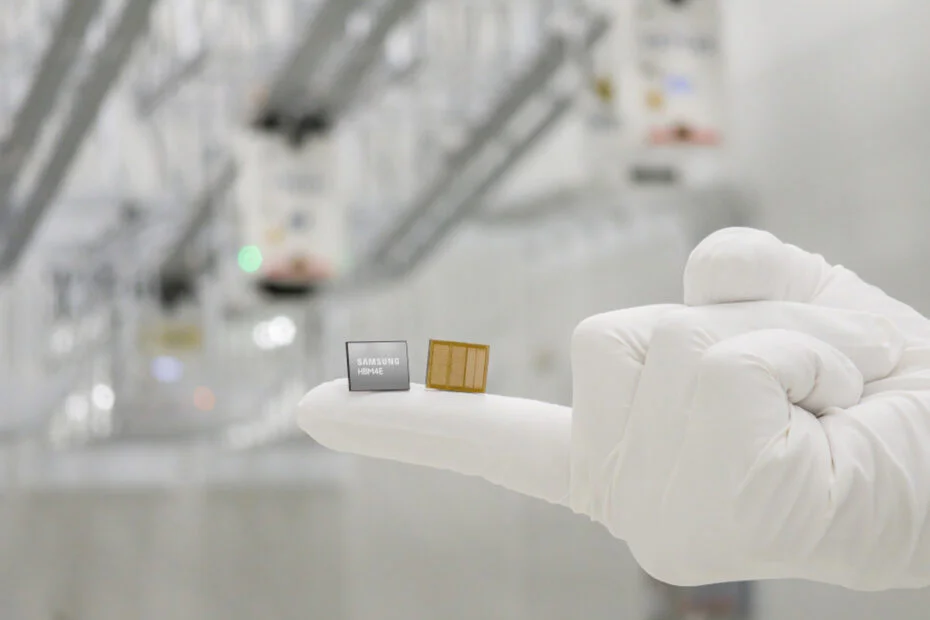
The chipmaker expects $80.2 billion in quarterly operating profit as memory costs ripple through PCs, Kindles, Xbox consoles, and more.
Samsung is expected to post another record quarter as surging demand for AI memory pushes component prices to new highs. Chipmakers are collecting the gains, while consumers are paying more for everyday devices.
Samsung’s preliminary guidance puts operating profit for July to September at 107.4 trillion won, roughly $80.2 billion. In the same period last year it was 12.17 trillion won, or $9.1 billion, an increase of 782.5%. The report says this would be a world first for a technology company. The figure came in below some analysts’ expectations.
Revenue is projected at 195 trillion won ($145.6 billion), an increase of nearly 127% from a year earlier. Quarter over quarter, operating profit rose 20%, and revenue rose 13.7%. The resulting operating margin is about 55%, which means more than half of revenue would become operating profit.
The result was about 1.2% lower than Bloomberg’s analyst consensus of 108.7 trillion won ($81.2 billion). It was higher than the 106.1 trillion won ($79.2 billion) forecast from LSEG. Samsung shares fell 0.7% in morning trading.
By comparison, Nvidia reported $63.7 billion in operating income in its most recent quarter. Samsung’s projected figure is well above that and would be its fourth straight record quarter.
Anyone who has priced out a RAM kit lately has seen the cause firsthand. AI infrastructure buildouts are soaking up memory, and suppliers are passing that through in higher prices. Samsung has previously warned that supply will stay constrained even as it ramps production.
In June, memory industry consultant Ethan Tan forecast price increases of 40% to 50% in the third quarter, followed by another 30% to 40% in the fourth. They were projections, not final figures, but they show how difficult conditions have become for buyers.
The effects are not limited to people building or upgrading PCs. In August, Amazon raised prices on its Kindle, Echo, Fire TV, and eero products, with some increases as high as 60%. The company attributed the changes to higher memory and storage costs.
Apple and Microsoft have also passed higher costs on to buyers. Apple raised prices on MacBooks and iPads, while Microsoft added $100 to the entry-level Xbox Series S and $150 to its 1TB consoles as memory costs rose.
Maybe you would like other interesting articles?