
For almost 20 years, Gmail users have had little choice but to live with email addresses they created long ago, often ones that no longer reflect who they are. Changing them meant jumping through technical hoops or abandoning the account entirely. Now, that long-standing limitation is finally coming to an end.
Google has quietly confirmed that Gmail users can now change their email address without losing their account or data.
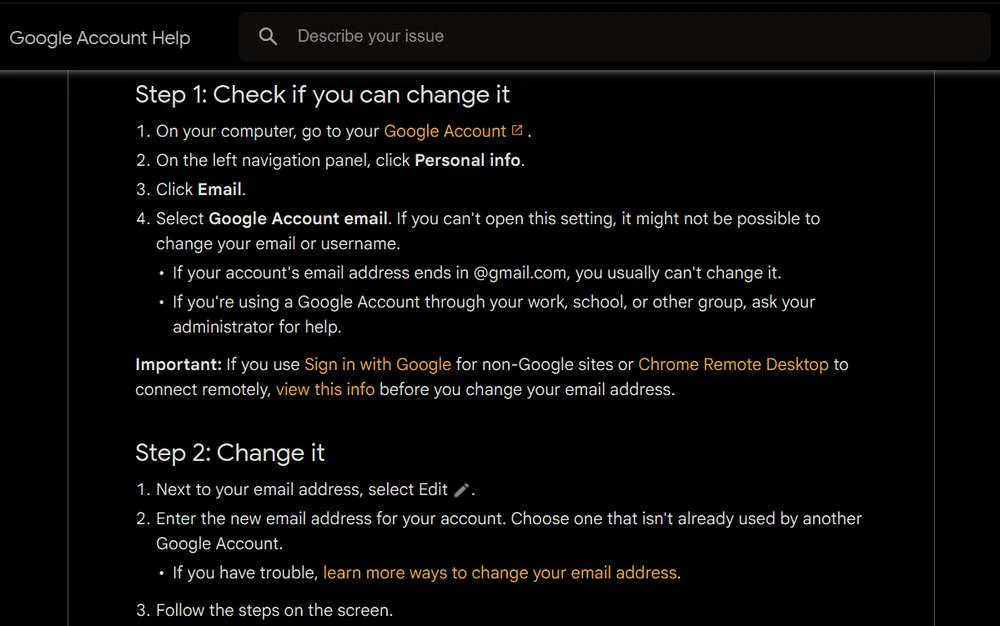
The feature was first noticed in a Google support document published in Hindi, pointing to an initial rollout in India. The page notes that the change is being released “gradually to everyone,” suggesting it could take days or even weeks to reach all Gmail users worldwide.
This is not a workaround like aliases or plus addressing. The new system allows users to choose an entirely new @gmail.com username while keeping their existing Google account intact, including all emails, contacts, files, photos, subscriptions, and app purchases.
To avoid missed messages, the original email address remains active as an alias. Emails sent to the old address will still land in the same inbox, and users can sign in using either the old or new Gmail address.
To prevent misuse, Google has put reasonable limits in place. Users typically face a waiting period before making another change, along with a cap on the total number of address changes. Some older services, including calendar invites and shared documents, may still display the original address temporarily.
Before this change, Gmail offered no direct way to replace an existing username. Users instead leaned on aliases, dot-insensitive addresses, and plus addressing, stopgap measures that managed email delivery but left the core account identity untouched.
Outlook and Yahoo have allowed this for years. For Google, finally catching up is a big deal, and a sensible one. After all, the email you picked as a teenager probably doesn’t match who you are at work today.
Google hasn’t made an official announcement, choosing a subtle rollout instead. For many users who’ve lived with outdated email addresses, the update could prove to be one of Google’s most appreciated features in years. The digital past, it seems, is finally editable.
Maybe you would like other interesting articles?