
Microsoft is trying to make Windows an even better place to play games, and it just rolled out a bunch of upgrades for Windows 11 to do it. In a new blog post, the company says these changes should make the OS feel smoother and more ‘console-like,’ whether you’re gaming on a handheld or a big desktop setup.
Microsoft’s engineers are working on under-the-hood upgrades to Windows, tightening how the system handles background tasks, power use, and CPU/GPU scheduling. They’re also fine-tuning the graphics stack. The idea is to cut down on resource drain from nonessential processes so more horsepower goes straight to games, improving frame rates and overall responsiveness.
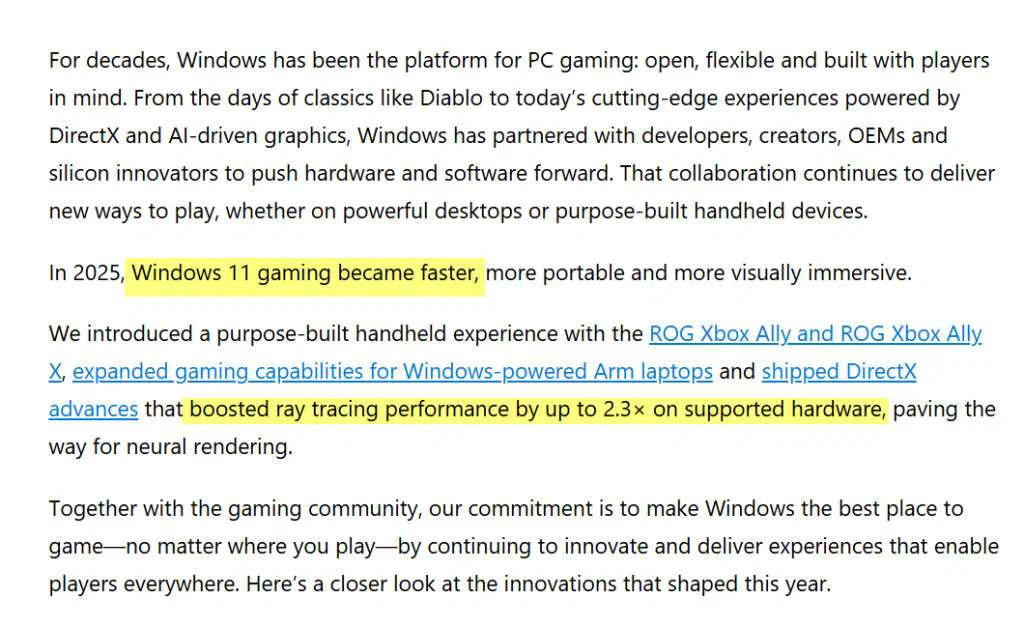
Microsoft says the goal is to make Windows feel more like a console, steady, reliable, and built to perform the same way every time you launch a game.
Several specific technologies are leading the charge here:
Advanced Shader Delivery (ASD) Goes Mainstream: First introduced for Xbox Insiders, ASD solves a common PC gaming headache: stuttering during gameplay as shaders compile. The technology pre-caches and compiles critical shaders during game download, not during play. Microsoft is now expanding ASD support to ASUS ROG Ally devices and reports good results: an 80% reduction in first-run load times for Avowed and a staggering 95% reduction in Call of Duty: Black Ops 7. The company plans to bring ASD to more games, hardware, and storefronts soon.
Xbox Full Screen Experience Expands: Designed to minimize interruptions and maximize performance on handhelds, the “Xbox Full Screen Experience” feature is now rolling out in preview to a wider audience. Available to Windows and Xbox Insiders on qualifying Windows 11 laptops, desktops, and 2-in-1s, it provides a more immersive, game-focused shell. A broader release is scheduled for next year.
Prism Emulator Gets a Power Boost: For the growing segment of Arm-powered Windows PCs (like Copilot+ PCs), game compatibility just took a leap forward. Microsoft’s Prism emulator, which allows x86-64 software to run on Arm, now supports AVX and AVX2 instruction sets. This crucial update increases compatibility and performance for emulated games.
Auto Super Resolution for All: Microsoft’s AI-powered upscaling technology, Auto Super Resolution (Auto SR), is set to break free from its exclusivity. Originally debuted on Snapdragon X Elite Copilot+ PCs, the feature will soon be available on “all devices.” Auto SR uses machine learning to sharpen visuals and boost frame rates in DirectX games running at lower resolutions. Gamers with an ASUS ROG Ally X will be the first to test it widely via a public preview in early 2026.
Microsoft’s trying to fix a lot of the stuff PC gamers have been annoyed about for years: slow start-ups, random stutters, and lousy battery life on handhelds. By tuning the core of Windows 11, rolling out performance upgrades across devices, and adding AI tools to boost graphics, the company wants the OS to feel smoother and more dependable, kind of like a console but without losing what makes a PC a PC.
Maybe you would like other interesting articles?