
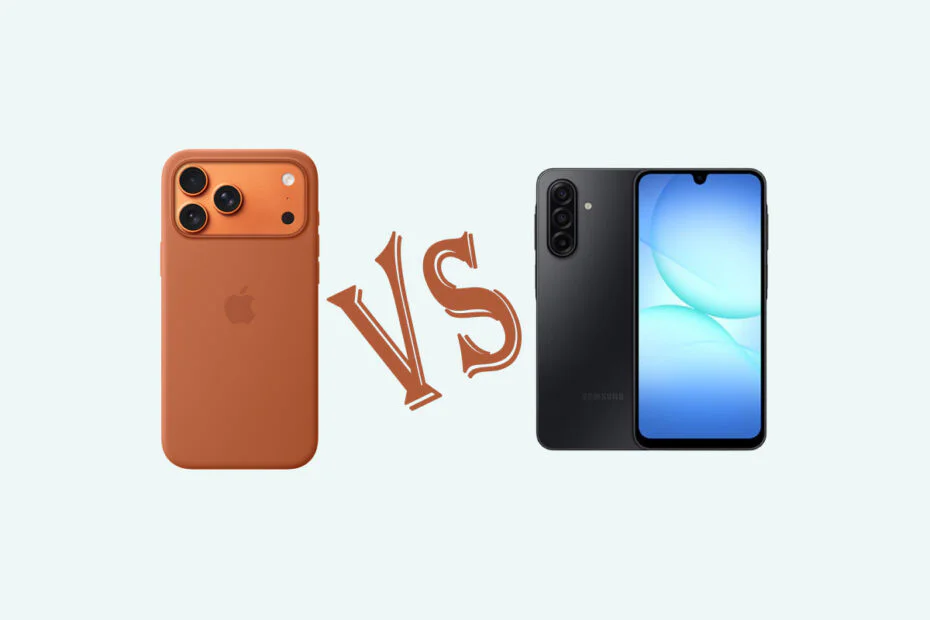
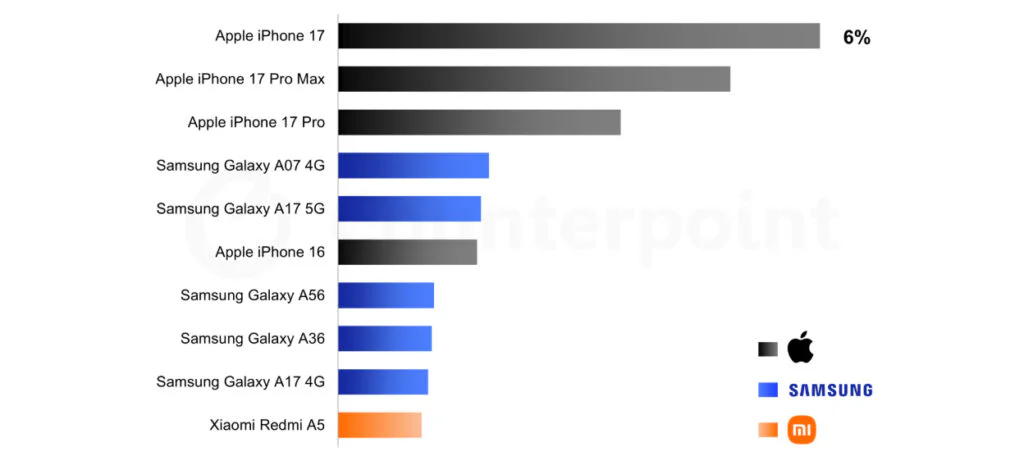
Apple and Samsung dominated the global smartphone market in the first quarter of 2026, occupying nine of the top ten best-selling models. Data from Counterpoint Research shows Xiaomi as the only exception, with its Redmi A5 taking the final spot. All other positions were held by iPhone and Galaxy devices.
During the quarter, the iPhone 17 ranked as the best-selling smartphone, accounting for six percent of worldwide sales. The iPhone 17 Pro Max came in second, followed by the iPhone 17 Pro. Samsung placed fourth and fifth with the Galaxy A07 G4 and Galaxy A17 5G.
The iPhone 17 series was released in September 2025. Despite being more of an incremental update, sales have remained steady. For the fiscal second quarter ending March 28, the iPhone segment generated $56.99 billion, slightly below estimates but still a strong performance.
According to CEO Tim Cook, demand remains very strong, and the main limitation is the supply chain. He explained that demand has been exceptionally high, but sourcing additional parts has become more difficult.
Counterpoint Senior Analyst Harshit Rastogi noted that the iPhone 17 is outpacing the previous generation, supported by upgrades in camera resolution, baseline storage, and display refresh rate. These changes reduce the gap between the base and Pro tiers while strengthening the device’s value proposition.
Xiaomi was the only manufacturer other than Apple and Samsung to appear in the top 10, taking the final position with the Redmi A5. Counterpoint reported that it was the most affordable model among the listed devices.
The Galaxy A series was Samsung’s strongest performer during the quarter. The Galaxy A07 4G ranked as both the company’s best-selling device and the top Android smartphone globally. It includes a 6.7-inch display, a 50-megapixel rear camera, and a 5,000mAh battery, with a price below $100.
Looking ahead, Counterpoint expects premium smartphones to gain a larger share of the market, even as overall sales decline.
Maybe you would like other interesting articles?