

A new Pew Research Center survey shows that, for the first time, a larger share of American adults favor a full-day ban on student cellphone use over classroom-only restrictions.
The latest survey points to changing attitudes toward student cellphone policies. After years of stronger support for classroom-only restrictions, respondents now show greater backing for bell-to-bell bans.
The survey found that 77% of U.S. adults support banning cellphones in middle and high school classrooms, an increase from 68% in 2024. It is the second consecutive year that support has grown. Another 18% oppose the restriction, while 6% have no opinion.
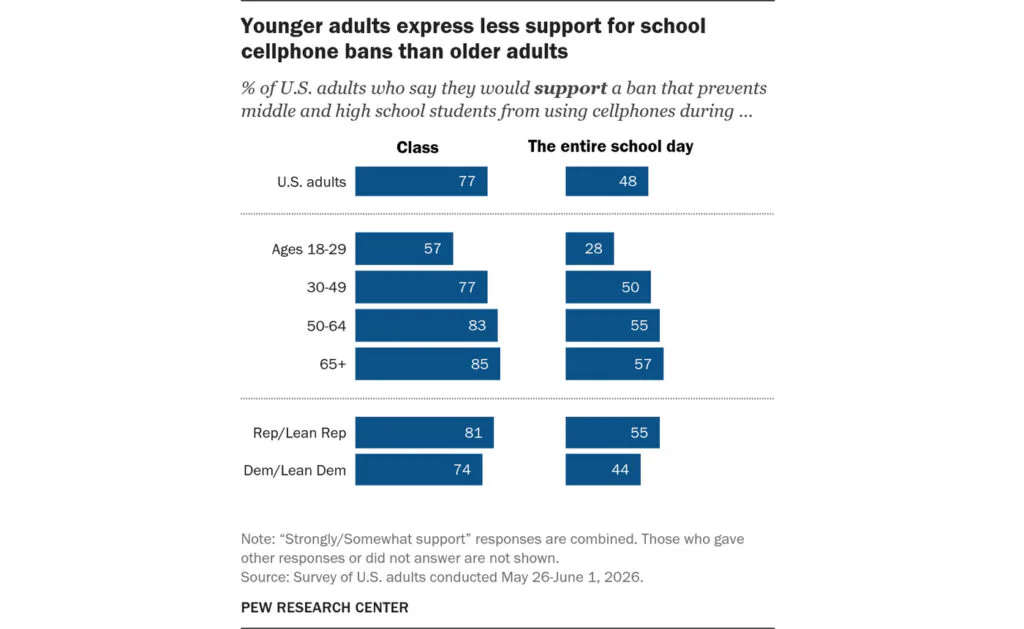
Backing for all-day phone bans has grown a lot over the past year. Nearly half of U.S. adults now support keeping students off their phones from the first bell to the last, compared with just 36% a year ago. While 43% still disagree, supporters are finally in the lead.
Support for student cellphone bans varies by age. Among adults ages 18 to 29, 57% support classroom restrictions, while 28% favor all-day bans. Support rises with age and reaches its highest level among adults aged 65 and older.
Views on student cellphone bans differ by political affiliation. Republicans show higher support for both classroom and all-day restrictions than Democrats. Democrats are more likely to support classroom bans than policies that prohibit phones throughout the school day.
For many parents, the issue involves competing priorities. They want to reduce distractions in the classroom but also value being able to reach their children during emergencies, including school shootings. Critics of classroom bans also point to the challenges of enforcement, the educational value of smartphones, and the view that parents, not schools, should decide when their children can use them.
State governments have also been moving ahead with new policies. A total of 42 states have introduced measures to reduce cellphone use in schools, including classroom-only bans, all-day restrictions, and policies that give school districts flexibility to set their own rules.
Students, however, are generally less supportive of cellphone restrictions. Some say listening to music through headphones helps them concentrate, while others rely on educational apps during the school day. Those who favor the bans argue that fewer phones in class allow teachers to spend more time engaging with students.
Maybe you would like other interesting articles?