
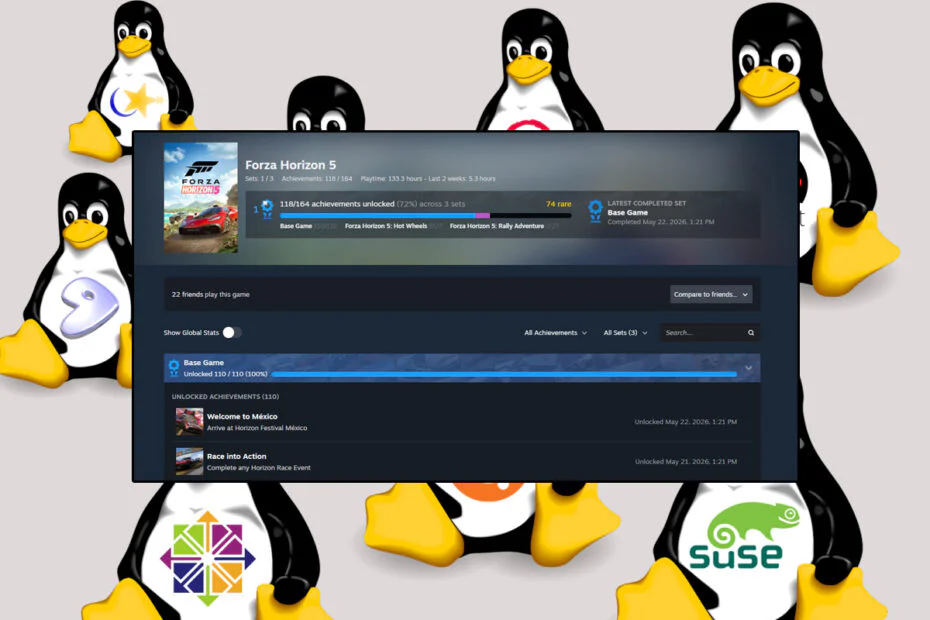
The latest Steam Client Beta makes the native Linux client a 64-bit application. This puts it on equal footing with the versions for other platforms and makes performance and security improvements possible in the future.
Before the beta update, Steam’s main binary was a 32-bit application, even on 64-bit Linux distributions. Certain components, including steamwebhelper, were already 64-bit. The main client now uses 64-bit code too, which is expected to greatly expand memory access and strengthen security, according to the available information.
The change does not end the need for 32-bit support on Linux. Steam still requires 32-bit libraries and graphics drivers for compatibility. Valve has said that operating systems that run only 64-bit software are not supported yet, which may make things harder for distribution maintainers. Fedora proposed dropping 32-bit library support last year, but withdrew the idea after complaints about Steam compatibility.
The beta update brings other changes as well. The Steam client now runs inside its own “Steam Runtime” container, which Valve expects will make it behave more consistently across Linux distributions. Steam games already use the same technology, and they can run 32-bit or 64-bit code regardless of the client’s architecture.
The beta also adds Steam Achievement Sets, a new way to organize and track achievements across a base game and its downloadable content. Developers can use the sets to create seasonal goals as well. Left 4 Dead 2, Portal 2, and Call of Duty: Modern Warfare 4 already support the feature, along with more than a dozen other games.
The 64-bit change on Linux arrives as Steam becomes a major force in Linux gaming. Most of Valve’s hardware devices use SteamOS, which is based on a special version of Arch Linux. Modders are also taking advantage of SteamOS being open source to build handheld projects.
The beta is a solid step for Steam on Linux. It adds capability, but 32-bit support is still required for now.
Maybe you would like other interesting articles?