
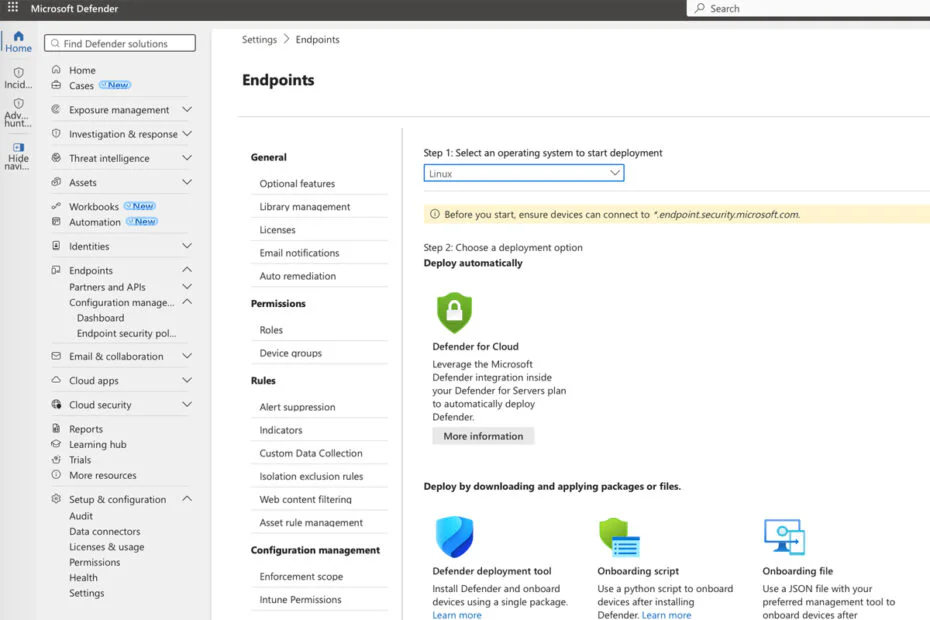
Microsoft is bringing its Defender anti-malware tool to Linux desktops and servers, extending it beyond Windows and the cloud. The move is part of a push to sell Defender as a security product for companies running a mix of operating systems.
Defender has come a long way. A few years ago, the file called it a “humble” anti-malware tool, but Microsoft has since built it into a full security suite for Windows and the cloud. Now Linux is getting support too, so companies that run both Windows and Linux machines can cover them all with the same platform.
Microsoft framed the launch of Defender for Linux around the rising threat to Linux systems. For developers working primarily on Linux, the attack surface spans the full software stack: remote code repositories, CI pipelines, and cloud infrastructure.
Microsoft states that Defender can provide effective endpoint protection against threats that target developers on Linux. It detects and protects against threats using a next-generation antivirus engine, and it also offers enterprise features such as vulnerability management, device inventory, and security settings management.
Defender for Linux lets security teams do more than just detect threats. They can hunt for threats, cut off infected devices, and more. Microsoft says these are the same tools companies already use on Windows, so the idea is that teams can handle Linux without learning a whole new setup.
Microsoft says that offering dedicated Defender protection for Linux can help enterprise customers integrate Linux systems into their current infrastructure. The endpoint security product is designed to be easy to deploy on desktops and servers, with the goal of reducing operational complexity and improving security in environments with many developers.
Defender for Endpoint supports RHEL, Ubuntu, Debian, SUSE, Fedora, and Oracle Linux, on both desktops and servers. Organizations can manage protection across their Linux environments.
The new security product is available to customers with a Microsoft Defender for Endpoint Plan 2 subscription, or a Microsoft 365 E5 or E7 subscription. Microsoft said Defender customers can handle threat response and analysis from one central portal, even if their Linux systems run in outside cloud environments or remote data centers.
Maybe you would like other interesting articles?