
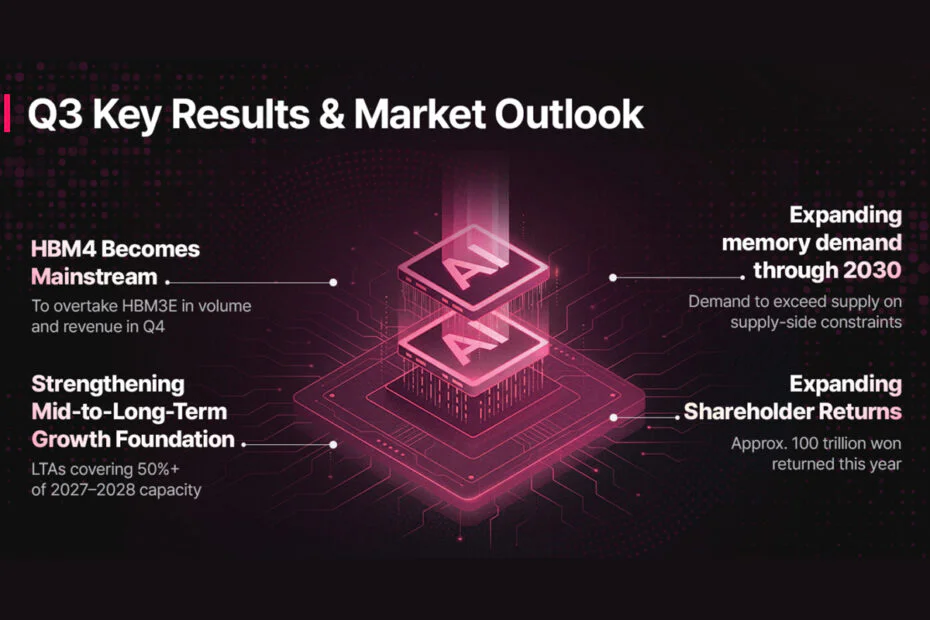
SK Hynix, one of the three largest memory manufacturers, has described the current memory shortage as a favorable cycle for its business. The company expects wider use of generative AI, chatbots, and other large language model applications to lead to more infrastructure investment and greater demand for memory products.
SK Hynix’s Q3 2026 revenue was 104.6 trillion won ($78 billion), its first quarter above 100 trillion. Operating profit was 83.3 trillion won ($63 billion), and net profit 39.8 trillion won ($30 billion). Revenue grew 32% from last quarter, operating profit 38%.
According to SK Hynix, the results were driven mainly by a sharp increase in sales of server DDR5 chips. Shipments of HBM4 began only recently. NAND sales for SSDs are also growing, as are higher-margin data center products in general.
SK Hynix said it expects the memory market to continue growing. In the short term, growth should be led by enterprise and personal AI. Over the medium to long term, it should be led by physical AI, including autonomous driving and robotics.
SK Hynix said new infrastructure projects are putting more pressure on memory makers’ ability to meet demand, even as data center projects face opposition in the United States and elsewhere. The company said supply is not keeping pace with the market’s rapid growth and now expects demand to exceed supply through 2030.
SK Hynix is expanding capacity faster, with new plants in South Korea and the U.S. They will take years to come online. Meanwhile, the company expects DDR5 shortages to continue for several more years.
Maybe you would like other interesting articles?