
Meta has disabled chat sharing in Muse after researchers found thousands of share URLs exposed through public DNS records. Because the links were unauthenticated, anyone who found one could read the underlying conversation, and some contained confidential business documents and personal financial data.
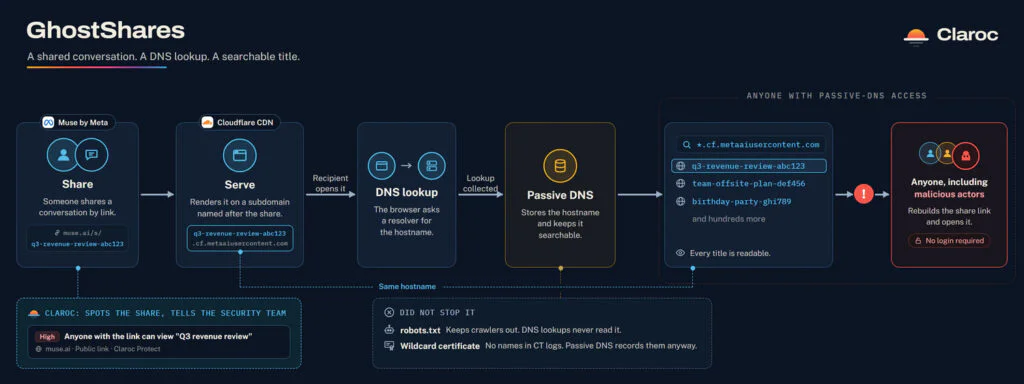
According to the security firm Claroc, the problem was in how Muse created web addresses for shared conversations. Each hostname combined a descriptive title with a random identifier, and both appeared in searchable DNS records. That was enough for researchers to reconstruct the link and view the page.
In a statement to The Verge, Muse spokesperson Tracy Clayton said users can share specific Muse artifacts, and doing so creates a page that anyone with the link can view. The company has paused the feature while it reviews the report and considers changes to how the links can be discovered.
Many sharing tools use long, random strings in their URLs so that no one can guess an address. Claroc said the identifiers Muse used were long enough to resist guessing. The weak point was their location, which was the hostname, alongside a title describing the conversation.
Every time someone opened a shared page, their browser had to run a DNS lookup to resolve the hostname. Passive DNS services can observe and store those lookups, building searchable records of the hostnames browsers have requested. With Muse, those records kept each conversation’s title and its random identifier together.
Claroc queried a commercial passive DNS dataset for Muse’s content domain, cf.metaaiusercontent.com. After filtering out unrelated scanning activity, the researchers found more than 6,800 shared hostnames. The links used the same titles and identifiers that DNS had recorded, so the team could reconstruct them without guessing. The titles frequently showed the subject of a conversation before the page was opened.
Muse’s crawler instructions did not prevent the exposure. The robots.txt file asked search and AI crawlers to avoid the share paths, but it did not restrict access to the pages or stop DNS services from recording hostnames. The researchers did not rely on a search engine to find the conversations.
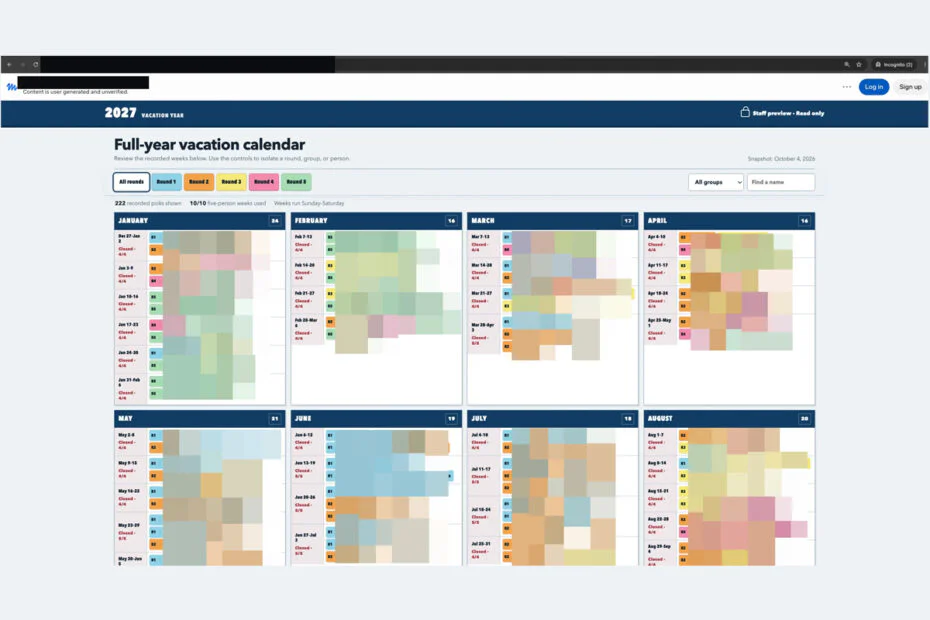
Claroc reviewed a few hundred pages. Most were unremarkable, but some seemed to contain material intended for a limited audience. Examples included a marketing company’s revenue review marked for its CEO, a small-business owner’s loan application, and a workplace calendar with employees’ vacation schedules.
Some of the other pages were just as sensitive. One was a real estate investor’s report with property addresses, mortgage amounts, income, and returns. Another was a set of prep notes for a confidential executive-search call with an AI lab, and it even named the person to contact there and said when the meeting was happening.
In general, an ordinary browser was enough to view the content, and no account was needed. Muse loaded conversations with JavaScript, so a basic page request returned little. Opening a link in a browser did display the conversation, including in the logged-out incognito sessions Claroc tested.
The findings have some limits. The total of more than 6,800 reflects hostnames that were discovered, not the number of sensitive conversations. Claroc examined only a few hundred pages and did not contact the people or companies involved, so their intentions about sharing remain unconfirmed. The firm said it found no evidence of misuse and could not determine whether anyone else had found the links.
Claroc reported the issue to Meta’s bug bounty program on October 8. On October 20, after Meta announced the suspension, the researchers retested 40 shares that had previously opened without an account. None were still accessible, and their content hostnames returned errors.
The pages were gone, but the titles were not. They stayed in passive DNS history, copied into outside records that Meta‘s suspension couldn’t reach. Access had been blocked in the tests, yet the descriptions of those conversations lived on. Meta says it is reviewing the findings and considering changes to how shared links can be discovered.
Maybe you would like other interesting articles?