

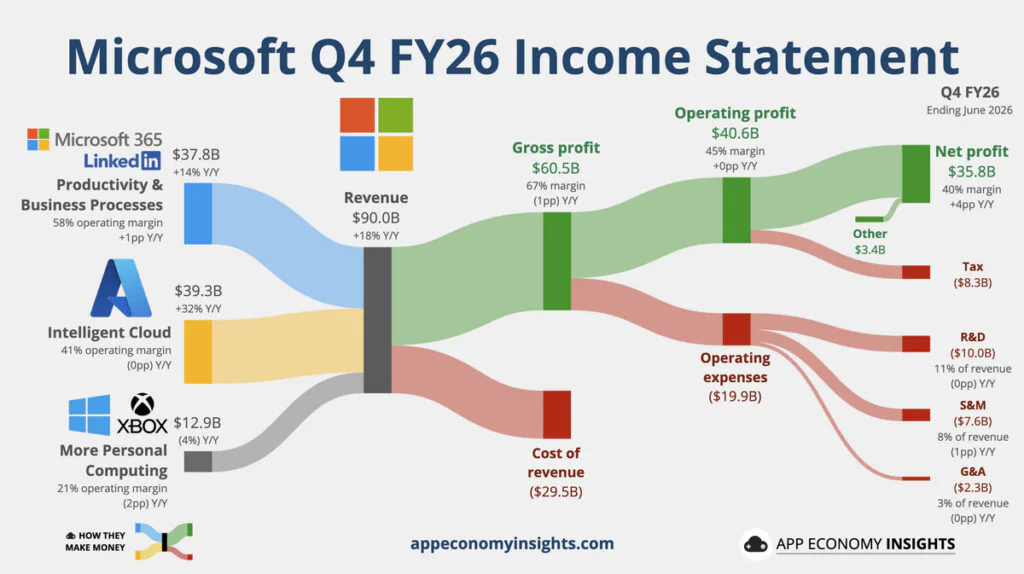
Microsoft ended fiscal year 2026 with two very different stories unfolding inside the company. While its AI business continued to fuel strong financial growth, the Xbox division remained under pressure. Fourth-quarter results released Thursday showed revenue rising 18% year over year and net income increasing 31%, mostly from cloud and AI services. In contrast, Xbox content and services revenue declined 10%, while hardware sales fell 13%, extending a year-long slump for the gaming business.
Although the 13% decline in hardware revenue was smaller than the 33% drop seen in the previous quarter, Xbox has yet to reverse its downward trend. Price increases and continued negative attention around the brand are widely viewed as contributing factors. The situation could become more challenging in August, when Xbox Series S and Series X consoles are expected to cost at least $100 more.
Xbox content and services revenue also lost momentum, with the decline widening to 10% from 5% in the previous quarter. Microsoft said the weaker result was largely due to a difficult year-over-year comparison, as last year’s quarter was boosted by strong performances from Call of Duty: Black Ops 6 and Minecraft. Although Forza Horizon 6 ranked among the company’s biggest launches, it was not enough to offset the slowdown.
Speaking during the earnings call, Microsoft CEO Satya Nadella said he expects Xbox to return to profitability in fiscal year 2027. The effort is now being led by Asha Sharma, who became Xbox CEO in February. Since then, Sharma has rolled out several changes, some of which have generated debate.
To help improve hardware sales, Microsoft is adjusting its strategy for first-party game releases. The company is backing away from its plan to launch all of its first-party games on rival platforms, meaning titles like Gears of War: E-Day won’t follow the same strategy. It’s also putting more focus on big names like Fallout and The Elder Scrolls. But those changes come alongside about 3,200 layoffs and the closure of five game studios this year, leaving many fans wondering what that means for future Xbox games.
While Xbox continued to struggle, Microsoft’s investment in AI delivered record results. Azure generated more than $100 billion in revenue during fiscal 2026 for the first time, driven by strong demand for cloud and AI services. Those businesses were the main drivers of the company’s 18% revenue growth and 31% profit increase during the quarter.
Still, not everyone is convinced the AI boom will keep going at this pace. Big tech companies are pouring billions into AI, but no one knows how long the momentum will last. Apple, meanwhile, has taken a more measured approach. It recently became the world’s most valuable company again and joined the $5 trillion club, with many investors viewing its AI restraint as a safer bet while competitors race ahead.
Maybe you would like other interesting articles?