
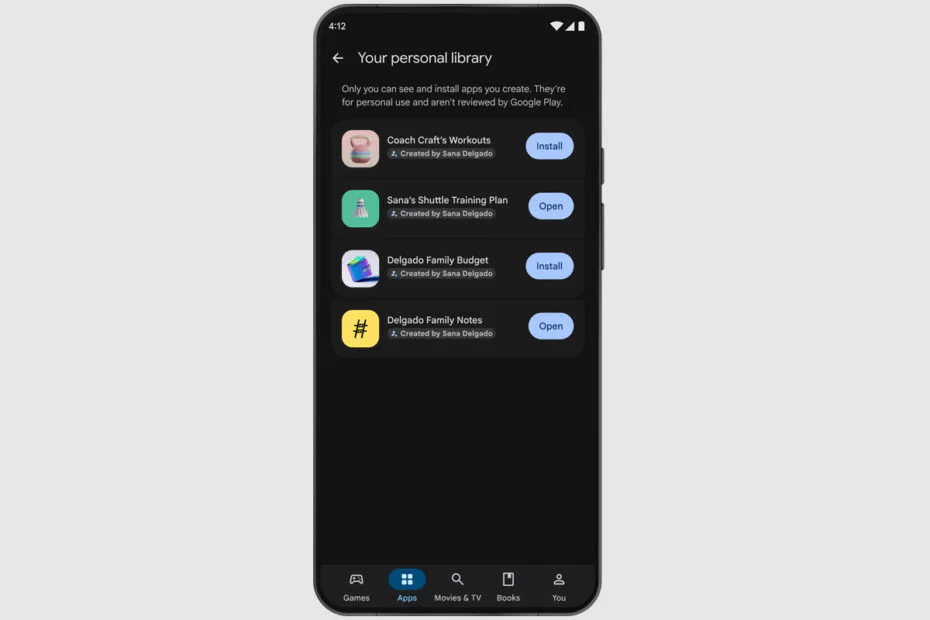
Google announced this week that US users who create Android apps in AI Studio can now install them through Google Play. The apps don’t need to be made public, and phones don’t need to be connected to a computer. The update is meant to help people turn AI coding projects into native apps for daily use, and to let them test their work before choosing whether to release it publicly.
Creators can use a standard Google account under the update, and their apps remain private. According to Google, the apps won’t appear in Play search results or public listings, and only the creator has access when the app launches.
The update closes a gap in the app-building process. Making an Android app doesn’t automatically put it on a phone. Google brought Android app creation to AI Studio in May, but installing apps could still require a computer. Publishing on Google Play was an alternative, though it made apps available to the public. Because of these limits, many users chose to build web apps rather than native Android apps.
Therefore, creators can now install their apps through Google Play without making them publicly available. The update affects distribution rather than the app-building tools. AI Studio creates the software, and Google Play provides a way to run it on an Android device. Creators can also begin using their apps without setting up a professional developer account first.
According to Google, the apps will remain secure and private, and they’ll be kept separate from the public store catalog. They must still comply with Google Play’s current policies. The change also doesn’t make AI-generated apps automatically eligible for public distribution.
Google intends to add small-group sharing in the coming months. Creators will then be able to give friends and family access to their apps without placing them in the public catalog. The company also plans to offer a way to move from personal apps to public releases. Creators who want broader distribution will need a professional developer account and must complete the required reviews.
This creates a more gradual route from personal Android projects to public releases. Users can build and run an app for themselves, then share it with a limited group, and eventually choose to release it publicly. The first stage is available now through Play. Small-group sharing will follow, and public releases will still require developers to meet Google’s existing publishing requirements.
Maybe you would like other interesting articles?