
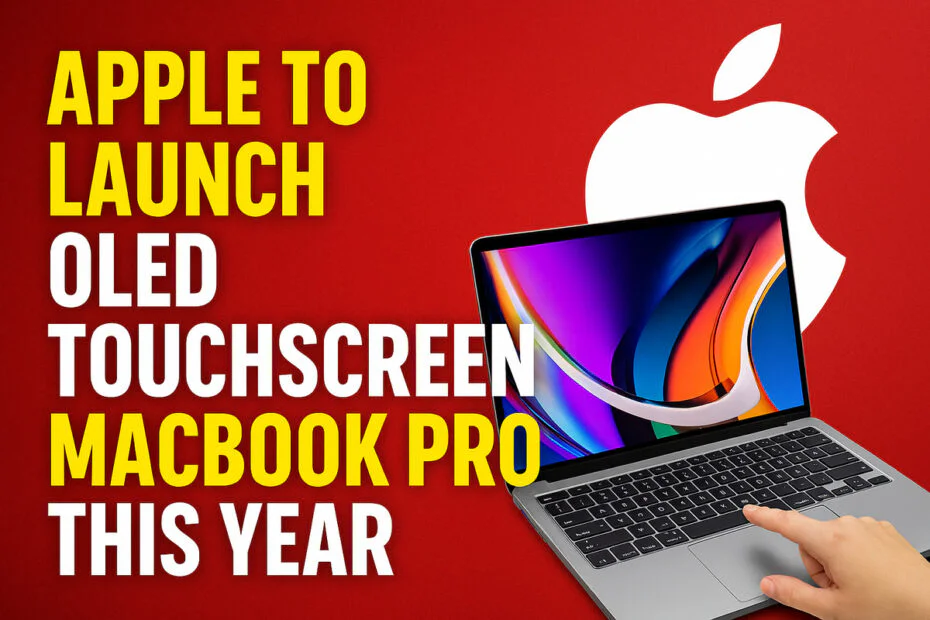
Rumors about Apple developing a touchscreen OLED MacBook Pro have been circulating for a long time, with a launch now anticipated in late 2026. The laptop is also said to include features like Dynamic Island, a hole-punch camera design, and an OLED display.
Apple has historically maintained that touchscreens are better suited to tablets, often directing consumers to its iPad lineup instead. However, the company now appears to be reconsidering that position.
According to Bloomberg reporter Mark Gurman, the first touchscreen MacBook Pro models are expected to debut this year. The notebooks are also said to replace the existing notch with a smaller version of the iPhone’s Dynamic Island, offering similar interactive features that adjust depending on the app in use.
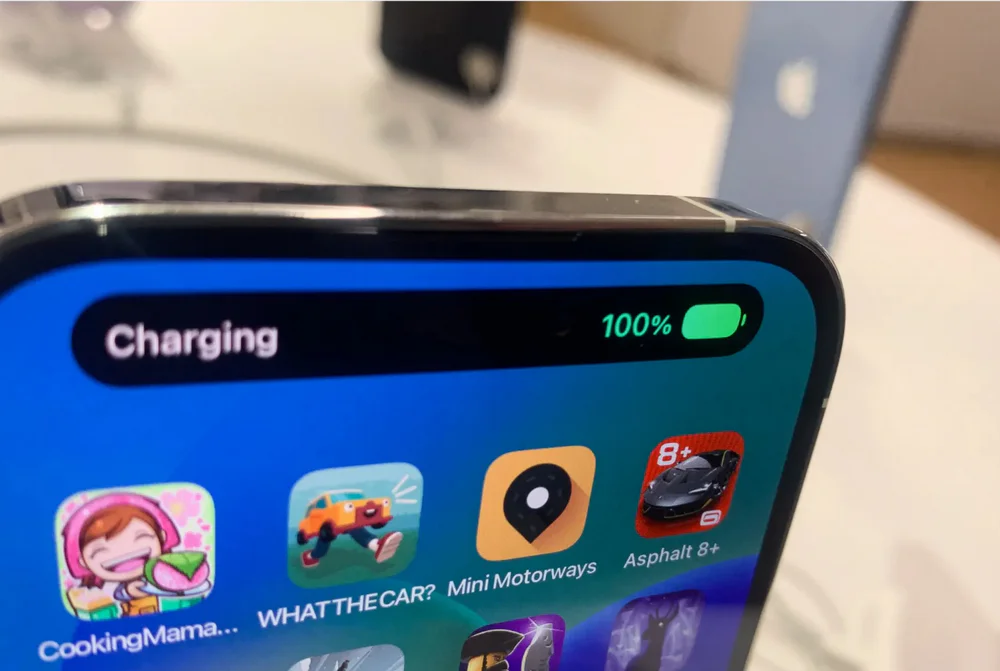
The Dynamic Island is expected to sit around a centrally placed hole-punch camera and surface real-time information, including active processes, sports scores, alerts, timers, and other ongoing activities on the MacBook.
Apple isn’t marketing the new MacBook Pro as a substitute for the iPad. According to Mark Gurman, the goal is to give users the flexibility to choose how often they rely on touch input, alongside the traditional cursor-based interface.
According to Mark Gurman, touching a control could bring up a contextual menu positioned around the user’s finger, featuring options optimized for touch. Menu bar selections would expand into larger touch targets, and standard gestures such as fast scrolling and pinch-to-zoom would likely be included.
Mark Gurman says Liquid Glass quietly added tweaks that would make a touchscreen MacBook Pro feel more natural, like easier-to-use sliders in Control Center. That might be why Apple stuck with the new design even though plenty of people weren’t fans.
The upcoming 14-inch and 16-inch OLED MacBook Pro models are expected to feature a thinner chassis than the current versions, while retaining an otherwise largely unchanged design.
Apple is set to update the current MacBook Pros with the M5 Pro and M5 Max chips this spring, while the OLED MacBook Pros will use the 2nm M6 and M6 Max chips when they land near the end of the year.
Touchscreen laptops have generally remained a niche option, as the feature alone is rarely a deciding factor for buyers. In 2010, Steve Jobs criticized the concept, saying vertical touch surfaces were ergonomically impractical. Tim Cook later shared a similar view, comparing touchscreen laptops to combining a toaster and a refrigerator.
Maybe you would like other interesting articles?