

A lot of open-source maintainers are currently dealing with waves of AI-generated spam. Mozilla, however, says it’s had a much better experience, using AI to help improve its security instead.
The developers of Mozilla Firefox have begun working with Anthropic to reinforce the browser’s security. Some of the results are already part of the codebase. According to Mozilla, an AI-supported bug-finding technique from Anthropic’s Frontier Red Team uncovered more than 100 vulnerabilities in Firefox’s JavaScript engine in roughly two weeks.
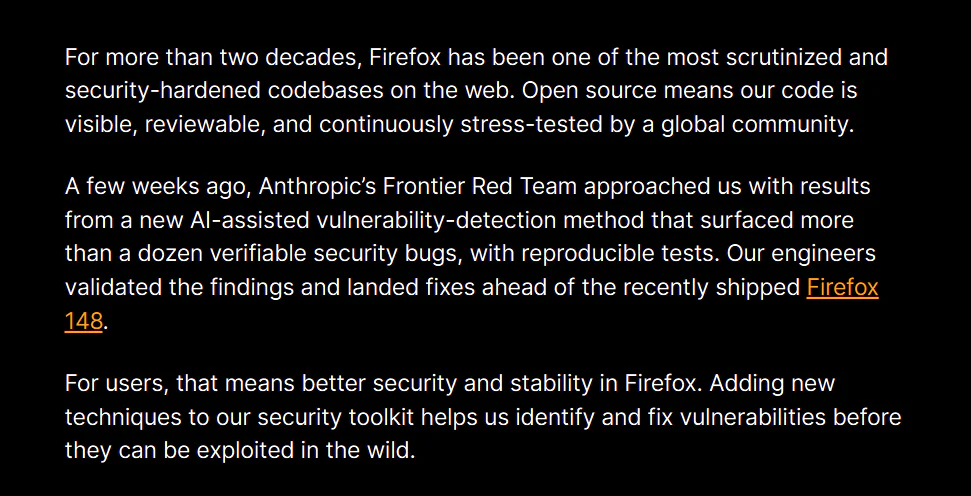
Anthropic reached out to Mozilla several weeks ago with findings from a new analysis technique. The work centered on the JavaScript engine inside Mozilla Firefox, chosen in part because the “Red Panda” browser maintains a widely used and heavily reviewed open-source codebase, an ideal environment for testing new security methods.
Rather than only identifying potential crashes, the AI system generated concise test cases for each finding, allowing developers behind Mozilla Firefox to quickly confirm and reproduce the issues. This streamlined reporting contrasts with the situation faced by projects like curl, which have restricted AI-generated reports after receiving large numbers of poorly vetted submissions tied to bug bounty claims.
In total, developers verified 14 high-severity security flaws uncovered through the effort. The issues were assigned 22 separate identifiers in the Common Vulnerabilities and Exposures system. Mozilla says all of them have already been patched in Mozilla Firefox. The review also revealed about 90 lower-priority bugs, which have since been resolved.
Mozilla noted that the AI system was capable of more than standard automated testing. While several of the vulnerabilities it uncovered are commonly found using Fuzzing, a method that injects unusual inputs to trigger failures, the model also identified multiple logic-related bugs that fuzzing tools frequently miss.
Following the promising early results, Mozilla plans to integrate the AI-assisted technique into its wider security and development workflow. The organization expects models such as Claude from Anthropic and other advanced AI systems to help identify additional vulnerabilities in the future.
If the method scales successfully, it could help uncover a wide range of previously overlooked bugs across major open-source projects, especially in areas where techniques like Fuzzing and other traditional tools have started to reach their limits without AI support.
Maybe you would like other interesting articles?