
During the first month of Australia’s under-16 social media ban, Meta disabled close to 550,000 accounts it identified as belonging to minors. At the same time, the company has continued to oppose the law publicly, saying it is flawed and should be rolled back.
The law, which took effect on December 10, requires major platforms such as Facebook, Instagram, TikTok, Snapchat, and YouTube to verify the ages of Australian users and shut down accounts belonging to anyone under 16. Companies that fail to comply face fines of up to AU$49.5 million (about $33 million).
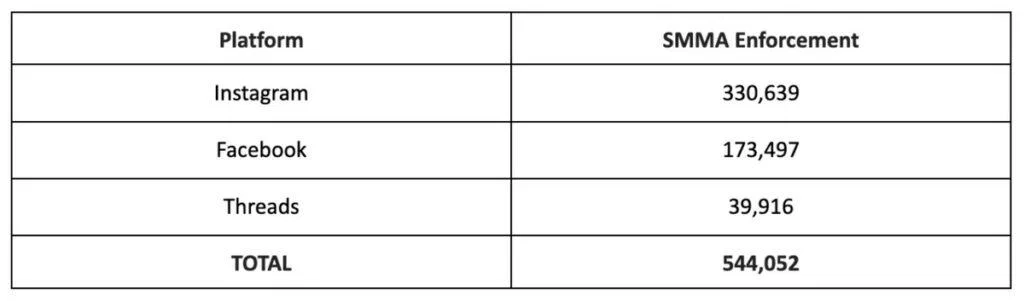
Outlining its initial compliance in a detailed Medium post, Meta reported shutting down 544,106 accounts believed to be operated by underage users. Instagram, the most popular platform among younger demographics for the company, accounted for the majority with 330,693 removals. Facebook followed with 173,497 accounts disabled, and Threads with 39,916.
The law requires platforms to implement age verification systems, with facial estimation scans being a common method. However, the technology’s accuracy has been inconsistent. Reports have cited extreme cases where children as young as 11 were estimated to be over 30. Teenagers have also found ways to circumvent the scans by making unusual facial expressions, wearing makeup, or using VPNs. There are also accounts of those who successfully pass verification using their faces to help friends and family bypass the ban.
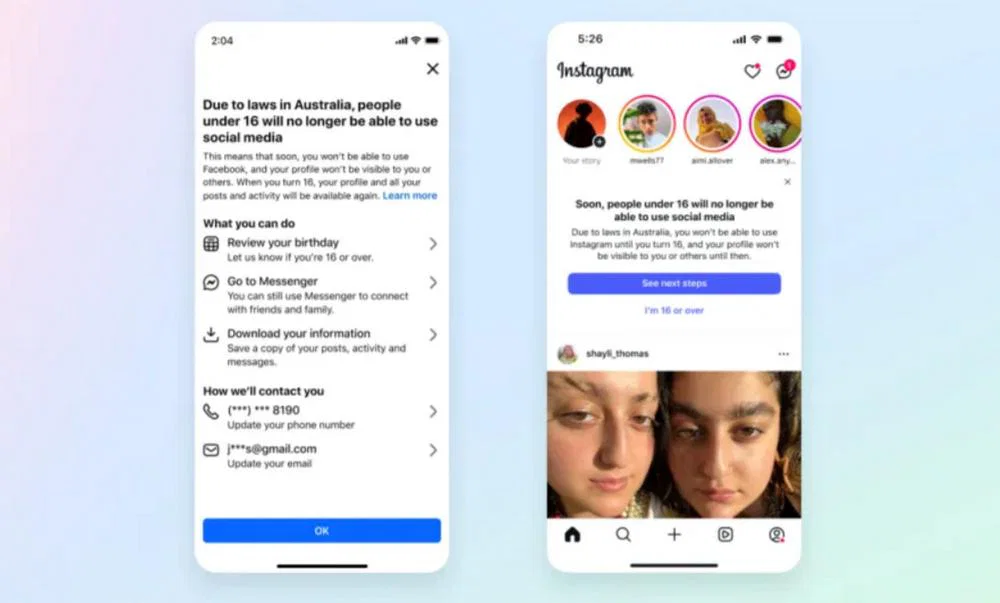
Meta cites these unreliable verification methods as a core concern with the law. The company contends that the ban drives vulnerable teens away from regulated platforms where they might find support, pushing them toward less supervised parts of the internet. Meta also notes observed resistance to compliance from many teenagers and parents.
Meta has urged Australian policymakers to move away from a blanket ban and instead incentivize the development of stronger industry standards for safe, privacy-preserving, and age-appropriate online experiences. The argument, however, is colored by Meta’s own contentious history with child safety and user privacy.
Meta is not the only platform expressing dissent. Reddit, which lists Australia as its fourth-largest market, has objected to its inclusion under the law. The company argues it is not a traditional social media site but a “collection of public forums,” and has voiced dissatisfaction with both the legislation and its classification as an affected platform.
Maybe you would like other interesting articles?