
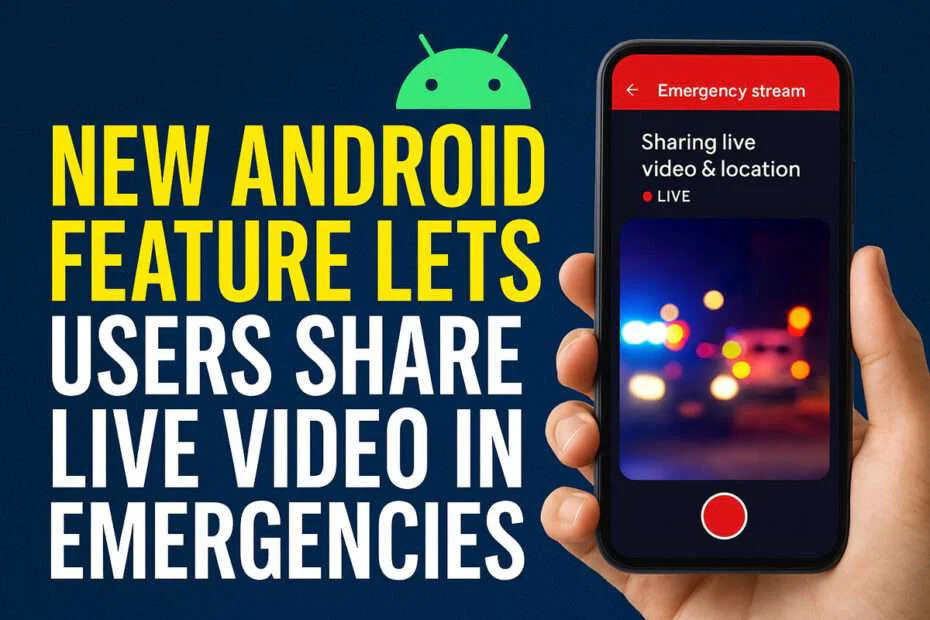
In a high-stakes emergency, words can fail. Describing a chaotic car crash, a complex medical issue, or the fast-approaching flames of a wildfire to a 911 dispatcher is incredibly difficult under stress. What if you could simply show them?
Starting Dec 10, 2025, millions of Android users can do exactly that. Google is rolling out a new feature called Emergency Live Video, designed to give first responders a real-time, eyes-on view of a crisis the moment it happens.
How It Works: One Tap to Show
The system is built for speed and simplicity during moments of panic. Here’s the process:
- The Call: A user places an emergency call or sends an emergency text (where available).
- The Request: If the dispatcher believes seeing the scene would be helpful, and if it is safe for the caller to do so, they can send a request directly to the caller’s Android phone.
- The Choice: A prompt appears on the user’s screen. With a single tap, they can choose to start a secure, encrypted live stream directly from their phone’s camera.
- The Response: Dispatchers and responders gain an immediate visual assessment, allowing them to prioritize resources, give precise instructions (like how to perform CPR or secure an accident scene), and get the right help en route faster.
The live stream is encrypted, and the user must explicitly grant permission to share. They remain in complete control, able to stop the video stream instantly at any time.
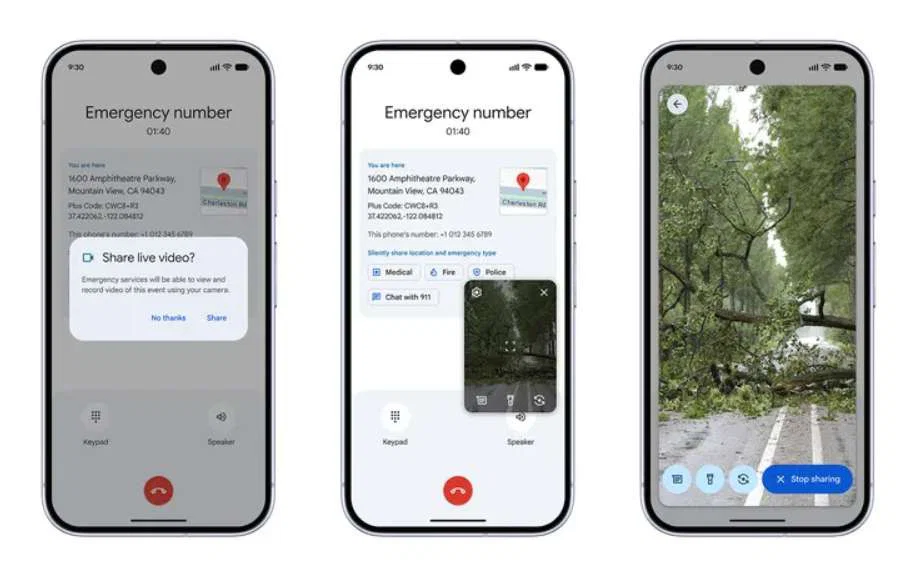
Emergency Live Video is the latest addition to Android’s emergency tools. It builds on the Emergency Location Service (ELS), which provides dispatchers with quicker and more accurate location data by combining Wi-Fi, sensor information, and other signals instead of relying only on cell towers or GPS.
This ecosystem also includes features like Car Crash Detection and Fall Detection, which can automatically contact emergency services, and Satellite SOS for areas without cellular coverage.
The feature is launching first in the United States, with select regions in Germany and Mexico also gaining access. It requires an Android phone running Android 8.0 (Oreo) or later with Google Play services.
Google is working with public safety organizations globally to broaden the availability of Emergency Live Video. The rollout signals a shift in how emergencies can be managed, with smartphones serving not just as communication devices but as tools for sharing real-time visuals.
Maybe you would like other interesting articles?