
Qualcomm is making an assertive play in the PC market, publishing benchmark results that it says show its forthcoming Snapdragon X2 Plus chip outperforming AMD’s Ryzen and Intel’s Core Ultra processors on both speed and power efficiency.
Pulled from Geekbench and UL’s Procyon benchmarks on Windows 11 machines, the numbers point to progress for Arm-powered PCs. Qualcomm is leaning hard into two claims: more speed and much better efficiency, which could mean longer battery life and steadier performance in slim laptops.
Qualcomm claims the 10-core Snapdragon X2 Plus can push about three times the multi-core performance of competing processors at the same power, and still post peak scores that are more than 50 percent higher.
Qualcomm says the Snapdragon X2 Plus delivers up to 3.5× higher efficiency in single-core workloads, which remain central to everyday PC use. In Geekbench 6.5 single-core testing, the chip reportedly scored 28 percent higher than AMD’s Ryzen AI 7 350 and Intel’s Core Ultra 7 256V and 265U reference platforms.
According to Qualcomm, the benchmark data suggest the X2 Plus sustains higher per-core performance at lower power consumption, a characteristic the company is positioning as central to modern, mobile-first PC designs.
The benchmarks also point to improvements over Qualcomm’s first-generation Snapdragon X Elite. For the 10-core X2 Plus, the company claims:
- Up to 35% higher single-core CPU performance
- 17% higher multi-core performance
- 29% better GPU performance
- A 78% increase in NPU (Neural Processing Unit) performance
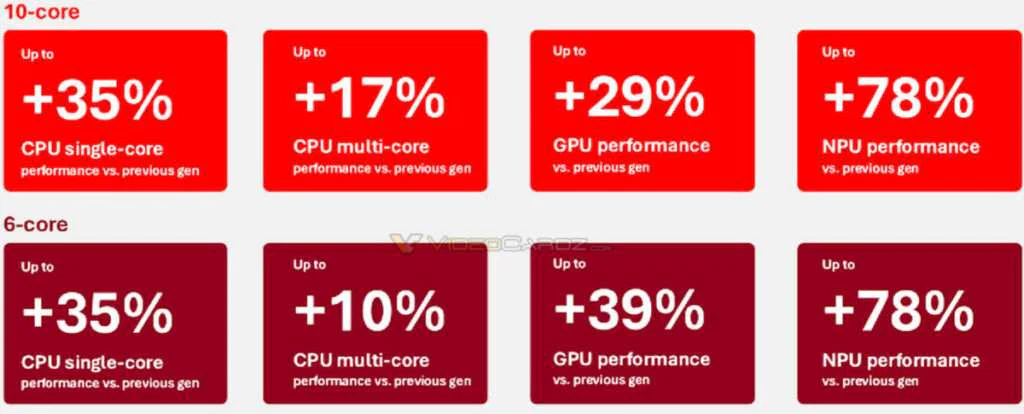
According to Qualcomm, the 6-core Snapdragon X2 Plus (X2P-42-100) delivers similar generational improvements to the higher-end model, including a 78 percent increase in NPU performance.
The company reports an NPU score of 83,624 in Geekbench AI, which it characterizes as around six times higher than Intel’s Core Ultra 7 265U. In UL’s Procyon Computer Vision benchmark, Qualcomm claims a 6.4× advantage over Intel’s reference system, while noting that the Ryzen AI 7 350 configuration did not generate a valid result in that test.
To establish its comparisons, Qualcomm used specific retail laptops:
- The 10-core X2 Plus was tested against an AMD Ryzen AI 7 350 in an Asus ZenBook 14
- Intel comparisons were made against a Core Ultra 7 265U in a Dell XPS 13 and a Core Ultra 7 256V in a Dell Pro 16 Plus.
Qualcomm positions the Snapdragon X2 Plus as a high-performance chip for mid-range premium laptops, sitting below the 18-core, 5.0 GHz Snapdragon X2 Elite series.
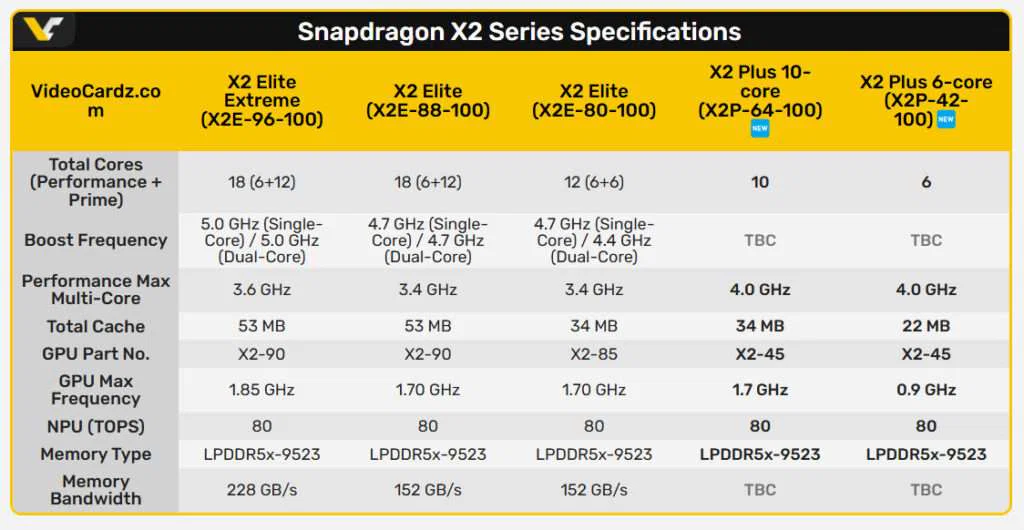
Both the 10-core and 6-core X2 Plus models list a maximum boost frequency of 4.0 GHz, though their maximum sustained multi-core frequencies remain undisclosed.
If Qualcomm’s vendor-supplied benchmarks hold up in real-world use, the Snapdragon X2 Plus could pose a challenge to x86’s long-standing grip on the Windows laptop market. Claims of higher peak performance, sizeable efficiency gains, and a clear AI advantage together form a persuasive pitch to both PC makers and buyers.
Independent testing will be needed to validate Qualcomm’s claims when devices launch later this year, but the data signals a challenge to AMD and Intel on performance as well as efficiency.
Maybe you would like other interesting articles?