
OpenAI announces it is expanding its low-cost ChatGPT Go subscription to the United States and all current markets, while also preparing to test advertisements in the chatbot in the weeks ahead. The company described the changes as a way to widen access to advanced AI tools while supporting a sustainable business model.
OpenAI says AI is becoming a personal “super-assistant,” but its impact will depend on who gets to use it. The $8-per-month ChatGPT Go plan, now available in the U.S. after launching in 171 countries, supports that goal with features like advanced messaging, image creation, file uploads, and memory.
To support that effort, OpenAI said it will begin testing advertisements for users on the free and ChatGPT Go tiers in the U.S., while stressing that its Pro, Business, and Enterprise subscriptions will continue to operate without ads.
OpenAI says it understands how much people rely on ChatGPT for important and personal tasks, which is why it laid out clear rules for how ads will work. The company says those guidelines are meant to protect what makes the product useful in the first place. They include:
- Mission Alignment: Advertising must support OpenAI’s core mission of ensuring artificial general intelligence (AGI) benefits all of humanity by making AI more accessible.
- Answer Independence: Ads will not influence ChatGPT’s responses. Answers will be optimized for helpfulness, with ads kept separate and clearly labeled.
- Conversation Privacy: User conversations will remain private from advertisers, and personal data will not be sold.
- Choice and Control: Users can turn off ad personalization, clear data used for ads, and will always have an ad-free option via paid tiers.
- Long-Term Value: The company states it prioritizes user trust and experience over advertising revenue and does not optimize for increasing time spent in ChatGPT.
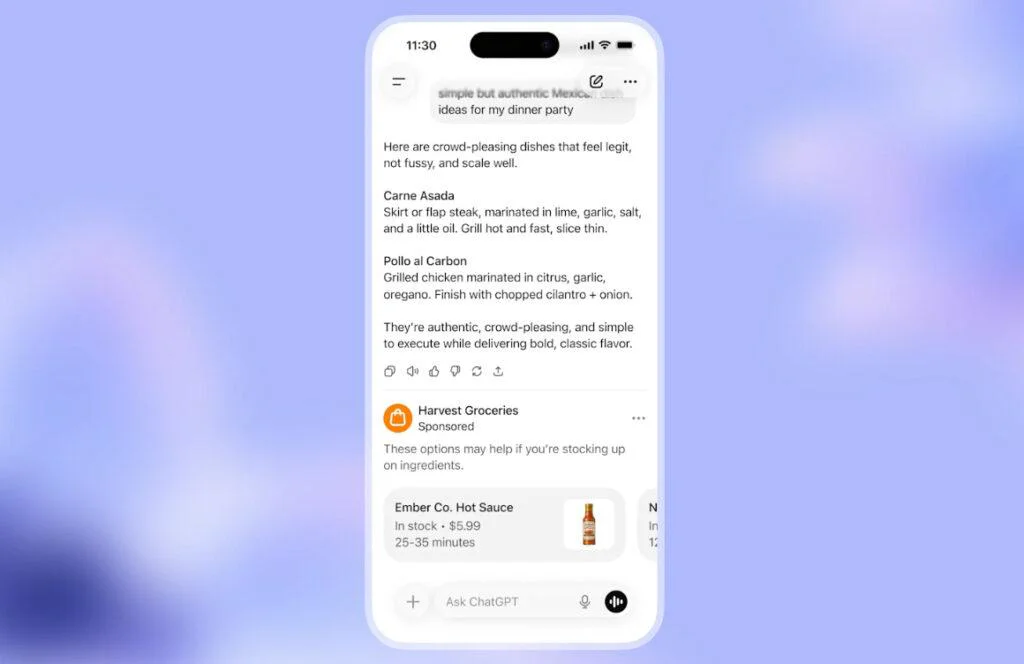
The initial test will target logged-in adult users in the U.S. on free and ChatGPT Go plans, with clearly labeled ads appearing at the bottom of responses when a sponsored product or service is relevant to the conversation. OpenAI said ads will not be shown to users under 18 and will be excluded from sensitive topics such as health, mental health, and politics.
Users will have the ability to learn why a specific ad was shown, dismiss it, and provide feedback. OpenAI suggested that ChatGPT’s conversational interface could eventually allow for new ad experiences, such as enabling users to directly ask the ad questions to inform a purchase decision.
The company described ads as a possible benefit for small businesses and emerging brands, noting that AI tools can help them create higher-quality experiences and compete more effectively.
OpenAI stated its long-term focus remains on building valuable products for individuals and businesses, noting its enterprise and subscription services are already strong. The ad testing is described as part of building a diverse revenue model to support broad access. The company said it will refine the ad experience based on user feedback, with a commitment to maintaining trust.
Maybe you would like other interesting articles?