
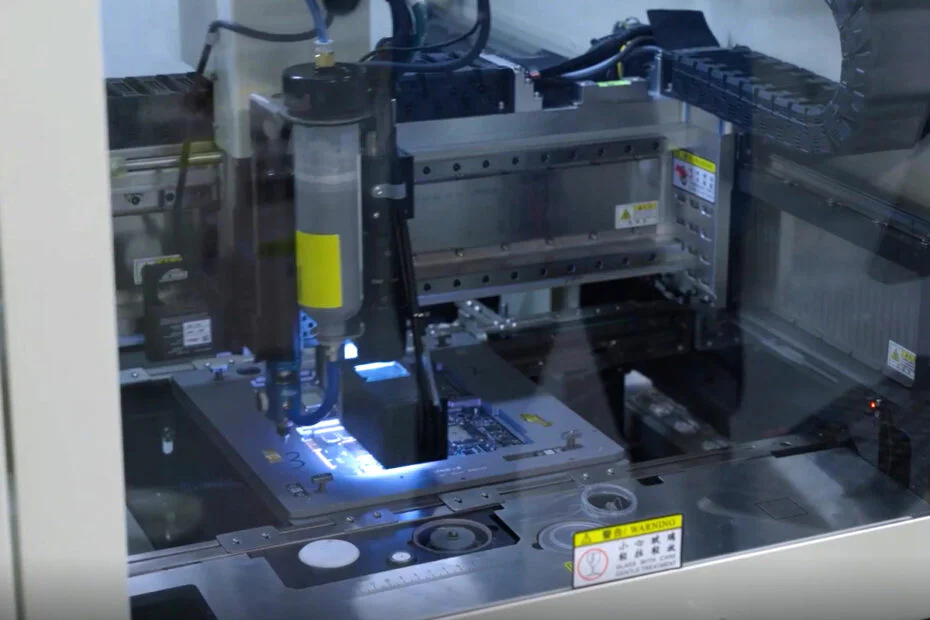
Apple may be changing the way some of its biggest components are made. According to people familiar with the discussions, the company has reached an early agreement with Intel to manufacture some of the chips used in Apple devices. The talks have apparently been going on for more than a year and have now become more official, though a lot of details still need to be worked out. Right now, nobody knows exactly which Apple products would be included.
Because Apple sells hardware on such a massive scale, even a relatively small production change could have a big impact. The company moves more than 200 million iPhones every year, along with huge numbers of Macs and iPads. Neither Apple nor Intel provided a comment.
The discussions come as Apple faces growing pressure from its heavy dependence on TSMC. While Apple develops its own chips, production is handled almost entirely by the Taiwanese manufacturer. That arrangement has served the company well for years, but rising demand for advanced chipmaking capacity has made supply increasingly tight. Rivals, including Nvidia, are also vying for the same cutting-edge production lines, reducing Apple’s room to maneuver.
Apple CEO Tim Cook has acknowledged the issue publicly. Speaking during a recent earnings call, he said the company expects supply and demand for the Mac Mini and Mac Studio to remain out of balance for “several months” due to ongoing constraints. Apple later raised the starting price of the Mac Mini, reflecting some of that pressure.
Intel, meanwhile, is working to rebuild its reputation as a viable alternative in chip manufacturing. In addition to designing its own processors, the company also runs a foundry business that manufactures chips for outside clients. That operation has spent years trying to catch up after a series of technical delays and executive shakeups left it trailing rivals such as TSMC and Samsung.
Since taking over as CEO in March 2025, Lip-Bu Tan has focused on rebuilding the company by investing in advanced manufacturing technologies such as Intel’s 14A node and reorganizing the leadership team.
Those changes inside Intel have come alongside a bigger push to win over major customers. The US government has been involved, too. Last year, it turned nearly $9 billion in grants into equity and ended up with a 10 percent stake in the company. Reports say Commerce Secretary Howard Lutnick has spent months talking with tech leaders like Tim Cook, Jensen Huang, and Elon Musk to encourage deeper cooperation with Intel.
Donald Trump has reportedly been supporting the effort in both public and private discussions. In January, he said, “I like Intel,” and claimed the government had made “tens of billions of dollars” from its investment. He also argued that the government’s involvement helped attract other tech companies, saying, “As soon as we went in, Apple went in, Nvidia went in, a lot of smart people went in.”
Intel has already secured several partnerships, indicating that its recovery efforts may be gaining momentum. Nvidia invested $5 billion in Intel in September and is collaborating with the company on custom CPUs for data center systems. Intel is also reportedly working with Elon Musk on a planned manufacturing facility in Texas tied to the Terafab project, which is expected to produce chips for Tesla, xAI, and SpaceX.
Even on a small scale, bringing Intel into Apple’s supply chain would be a big shift. Apple moved away from Intel processors in Macs back in 2020 when it started using its own Arm-based chips instead. This situation would work differently, though; Apple would still design the chips itself, while Intel would simply manufacture them.
Apple executives have hinted that discussions with Intel remain active, though few details have been disclosed publicly. In a February interview with The Wall Street Journal, Apple’s global head of procurement, David Tom, said, “We talk to Intel all the time.”
It’s still unclear whether Intel can deliver at the level Apple needs on a massive scale. TSMC remains well ahead in advanced manufacturing, especially in areas like production consistency and yields for cutting-edge chips. But with supply constraints continuing across the industry, even companies as tightly controlled as Apple are being forced to adjust.
If the agreement moves forward, Apple would gain another manufacturing option as competition for advanced semiconductor production continues to intensify across the industry. For Intel, winning Apple as a customer, even in a limited capacity, would suggest its manufacturing business is beginning to recover its position in the market.
Maybe you would like other interesting articles?