
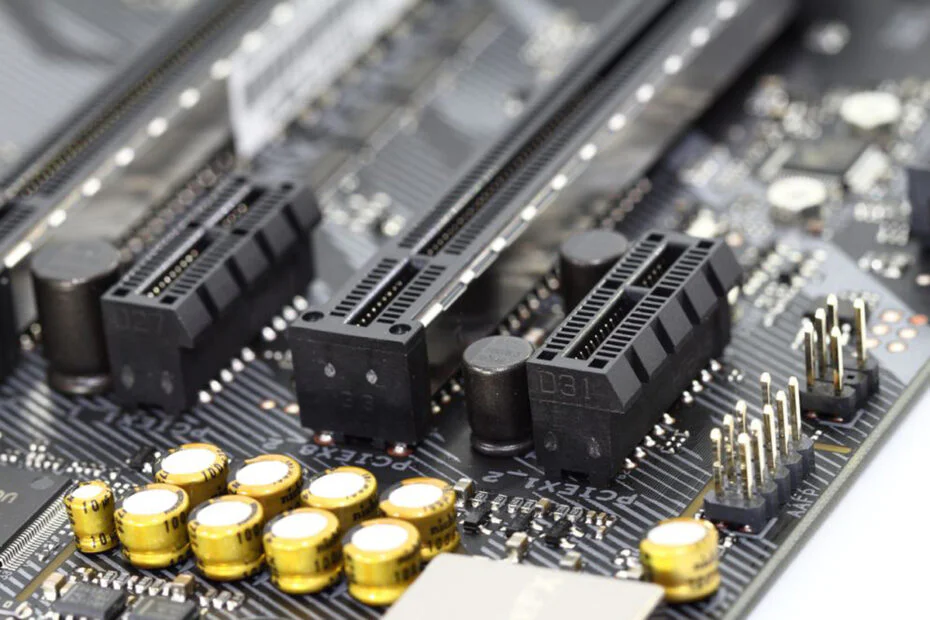
The PCI Special Interest Group (PCI-SIG) has reached a new milestone in the development of the next-generation PCIe interconnect, releasing the 0.5 draft specification for PCIe 8.0. The preliminary document gives manufacturers their first detailed look at a technology roadmap that aims to keep alive a remarkable two-decade streak: doubling the raw bandwidth of PCI Express with every major revision.
Under the draft plan, PCIe 8.0 will deliver a raw bitrate of 256 gigatransfers per second (GT/s), translating to 1 terabyte per second of bidirectional bandwidth in a standard x16 configuration. That would represent an eightfold leap over the fastest PCIe 5.0 slots found in today’s cutting-edge consumer motherboards, and a doubling over the just-finalized PCIe 7.0 specification. If the schedule holds, the final PCIe 8.0 specification will be published before the end of 2028, a timeline the consortium describes as ahead of its original internal projections.
The draft isn’t just about making PCIe faster. It’s also focused on cutting power use, which has become a bigger issue as computing systems get denser and more demanding. PCI-SIG says PCIe 8.0 could even move toward new connector designs, since traditional copper cables are starting to hit their limits and more companies are exploring fiber-based options instead. On top of that, the group wants to keep latency low, improve how bandwidth is used, and continue supporting older PCIe generations so existing hardware doesn’t get left behind.
Demand for higher interconnect bandwidth has been growing for more than twenty years, ever since early 3D accelerator cards revealed the limitations of shared bus systems. NVMe solid-state drives are now among the most noticeable beneficiaries of PCIe improvements. Each new PCIe generation generally doubles the maximum sequential transfer speeds, and the PCIe 8.0 draft continues that pattern. When PCIe 8.0 hardware eventually arrives, it is expected to provide bandwidth far beyond what current enterprise SSD prototypes require.
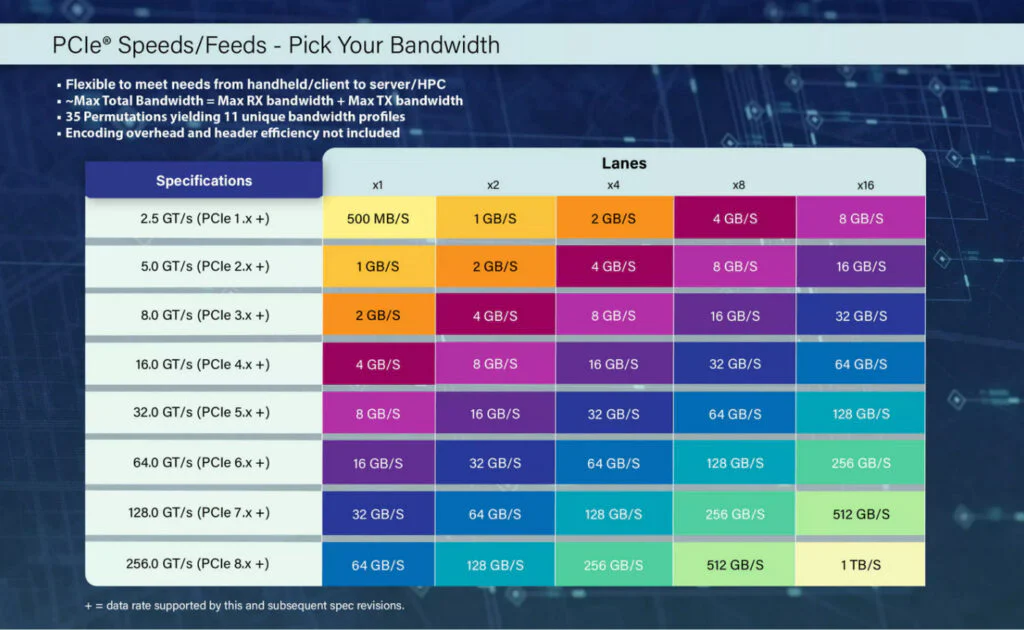
To see how quickly PCIe keeps evolving, just look at where things stand today. PCIe 3.0 and 4.0 are still fast enough for most consumer devices in 2026, while PCIe 5.0 is currently the top tier for desktop systems. Some PCIe 5.0 SSDs can already hit read speeds close to 14 GB/s, and Micron recently showed off a PCIe 6.0 enterprise drive capable of 28 GB/s. PCIe 7.0 was finalized last year, and now PCIe 8.0 is getting ready to raise the bar once again.
With so much bandwidth available, PCIe 8.0 will probably show up first in enterprise and specialized systems instead of everyday consumer PCs. Industries like AI, data centers, machine learning, edge computing, aerospace, and automotive tech are expected to adopt it early because they constantly need more throughput than current standards can provide.
Now that manufacturers have access to the 0.5 draft, the real testing and feedback process can begin. The spec is detailed enough for companies to start early engineering work, but there’s still time to refine parts of it before everything is finalized. PCIe has managed to double bandwidth with every generation since version 1.0, and PCIe 8.0 looks set to keep that streak going.
Maybe you would like other interesting articles?