
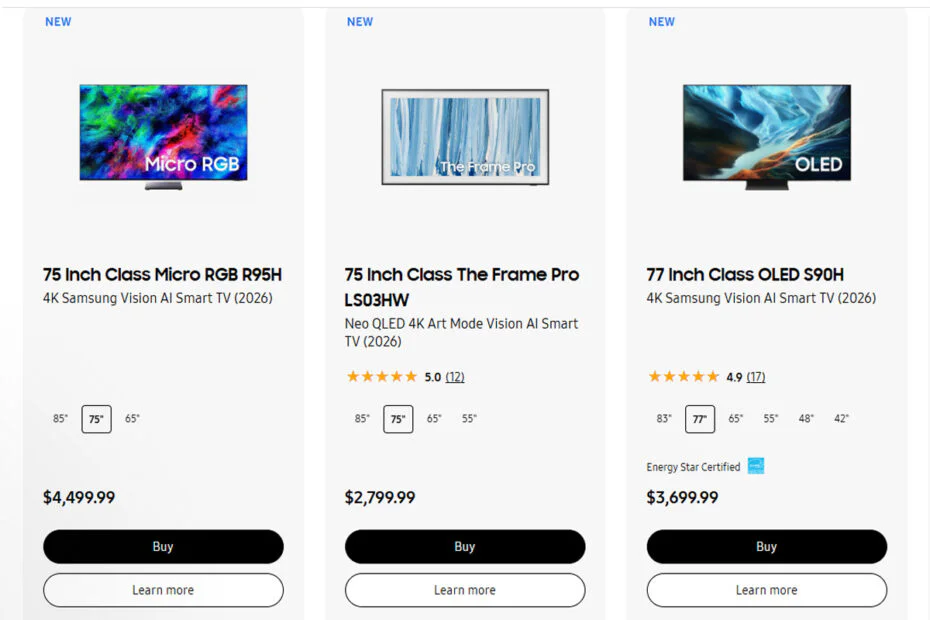
Samsung Electronics is exiting its television and home appliance business in China as growing competition from local companies and changes in the market have made the business no longer viable.
The South Korean tech giant confirmed the decision and said it would work to reduce disruptions for existing customers while reassessing support operations for regional business partners. Samsung added that smartphones, tablets, and its other product lines will continue to be sold in China.
The decision follows a difficult year for Samsung’s television and appliance business, which reportedly recorded losses of about $138.4 million last year, according to The Wall Street Journal. Samsung’s difficulties also reflect wider challenges across the television industry, where hardware sales are often no longer highly profitable.
According to observers like Linus, many television manufacturers now earn little or no profit from selling the hardware itself. Instead, revenue increasingly comes from software, particularly advertising and partnerships tied to streaming services integrated into smart TV platforms. As a result, basic televisions without smart features have largely disappeared from the market.
The advertising-focused model gives TV manufacturers a strong incentive to sell more screens, even with minimal profit on the hardware. This has helped drive television prices down over time, despite improvements in display size and features, while prices in many other electronics categories have increased. Each television can continue producing revenue through ads and built-in services after purchase.
While Samsung never held a major share of China’s TV and appliance market, the company’s exit could point to broader challenges in other regions facing weaker demand. The announcement also comes alongside a leadership change within Samsung’s visual display division, confirmed earlier this week, fueling speculation that the company may be shifting its overall strategy.
Maybe you would like other interesting articles?