
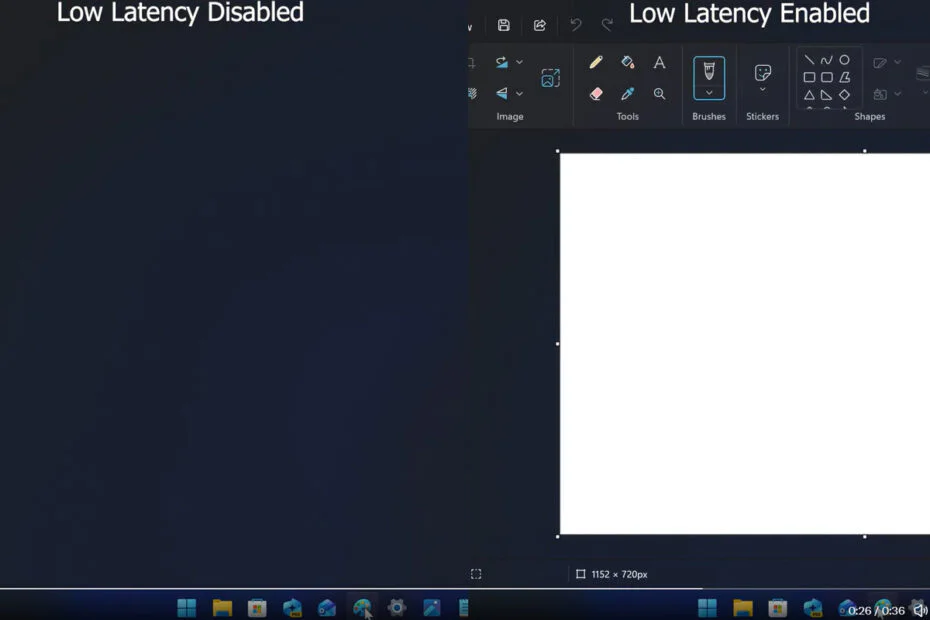
Microsoft is reportedly developing several improvements for Windows to address ongoing performance concerns, including responsiveness and CPU efficiency. One of the hidden upgrades has already appeared in recent Windows 11 preview builds, with initial results indicating faster application launches and improved UI responsiveness.
Insider reports indicate that Microsoft is testing a new Windows 11 optimization called “Low Latency Profile” (LLP), which targets performance improvements across latency-sensitive system processes. The feature has already surfaced in the latest Windows Insider preview builds, giving advanced users an opportunity to evaluate it before broader deployment.
According to sources, LLP functions by momentarily driving the CPU to peak frequencies during latency-sensitive interface operations. The boost reportedly lasts for one to three seconds and is intended to reduce perceived lag when opening applications, triggering context menus, or interacting with Windows flyouts like media controls.
Reports from Windows Central indicate that insider testing has produced measurable performance improvements. LLP is said to make built-in applications, such as Microsoft Edge and Microsoft Outlook, launch about 40 percent faster, while UI components like the Start Menu and context menus may load up to 70 percent more quickly. The feature could also improve performance in third-party software, though the extent of those gains is still uncertain.
LLP is reportedly tied to Microsoft’s broader Windows K2 initiative, an internal effort focused on improving the operating system’s performance, reliability, and stability after years of criticism surrounding Windows 11. The project appears aimed at making the OS feel faster and more responsive, closer to the experience many users associated with Windows 10.
LLP is expected to function entirely in the background, meaning users likely will not have access to a dedicated toggle. Sources further state that the short CPU frequency increases should not significantly affect laptop thermals or battery performance.
Prominent Windows insider “Phantomofearth” has confirmed the existence of the feature in recent preview builds. The main LowLatencyProfile uses feature ID 60716524, while LowLatencyProfileForApplicationLaunch is associated with feature ID 61391826. Both features can currently be enabled using the open-source ViVeTool utility.
Because Microsoft is still working on it, the feature could end up looking quite different by the time it officially rolls out.
Maybe you would like other interesting articles?