
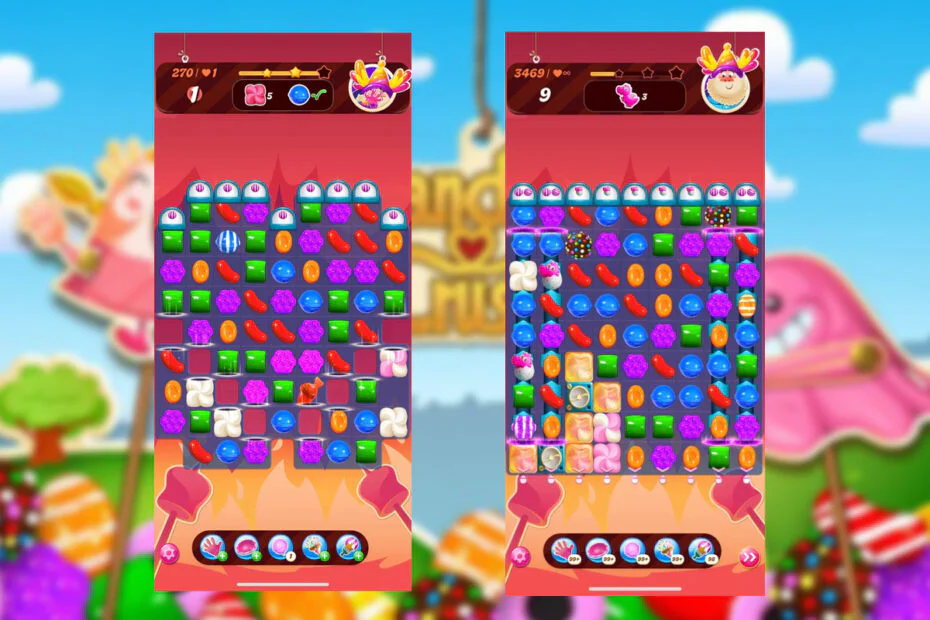
Fourteen years after its launch, Candy Crush Saga remains one of the most successful mobile game franchises ever made. King, the Swedish game developer and publisher, released the original match-three puzzle game in 2012, and it quickly became a hit on both Android and iOS. The game generated an estimated $876.5 million in revenue during fiscal 2025, with in-app purchases accounting for most of that total.
That is still a huge amount of revenue, although it is lower than what Candy Crush Saga made during the previous six years. During that period, the game brought in more than $1 billion each year.
Like many mobile games, Candy Crush Saga is free to play. Players can choose to spend money on things such as extra lives, boosters, and special passes, which can make it easier to get through its more than 23,000 levels.
King has not provided detailed revenue or profit figures in recent years, but the company said its cumulative revenue had passed $20 billion in 2023. King also reported that its Candy Crush games had reached 5 billion installs by the end of that year. The figure covers the entire series, including Candy Crush Saga and its spin-offs, such as Soda Saga, Jelly Saga and Friends Saga.
Data from David Curry, a data editor at app analytics platform Business of Apps, puts the original Candy Crush Saga at about 81.5 million monthly active users. The game was also downloaded more than 190 million times across Android and iOS in 2025, according to Curry’s research.
The game was even bigger in its early years. King reported 93 million daily active users worldwide in December 2013 in its 2014 IPO filing. That figure is not directly comparable with Curry’s estimate because one counts daily users while the other counts monthly users. Still, both numbers show just how large Candy Crush Saga’s audience has remained over the years.
It is not easy to explain why Candy Crush has stayed popular for so long. One reason could be its turn-based format. Players can close the game whenever they want and come back later without losing progress or being punished for taking a break.
Paula Ingvar, the general manager of Candy Crush Saga, has said the game is designed around small wins. A player can make some progress and feel a sense of achievement in a 10- to 20-minute session without needing to sit down and finish a level in one go.
David Nieborg, a professor of media and platform studies at the University of Toronto and a video game researcher, has offered another explanation. He argues that Candy Crush avoids being tied to a particular place, gender or race, allowing it to connect with players across different countries, languages, cultures and socioeconomic backgrounds.
Maybe you would like other interesting articles?