
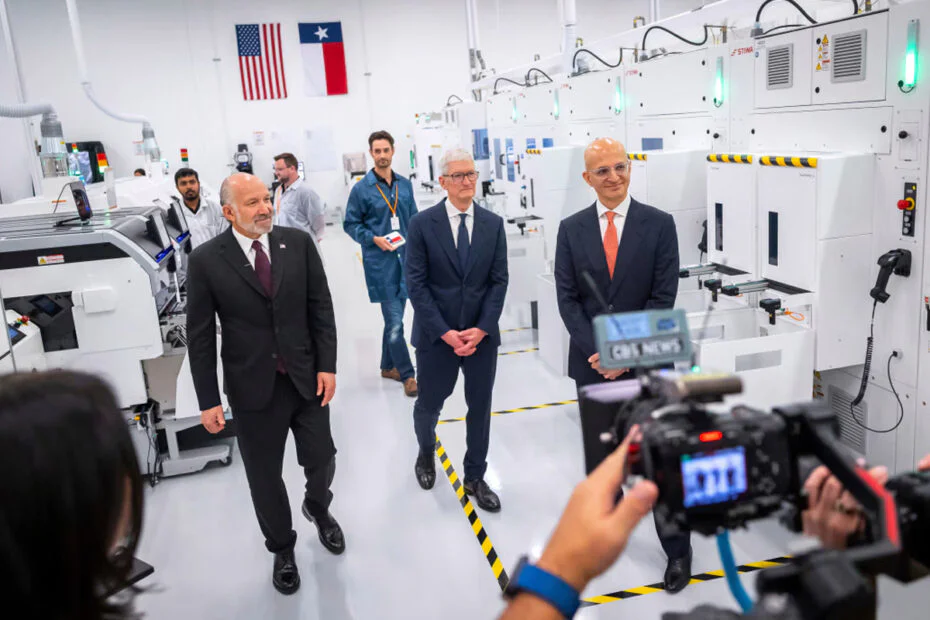
A new Mac mini production line at Foxconn’s Houston facility is expected to begin operating later this year. The move will expand Apple’s U.S. manufacturing operations for AI-related hardware while the company continues to work with contract manufacturers and suppliers worldwide.
The line will be housed in a new 170,000-square-foot space at the plant, which already produces AI servers for Apple. Foxconn will fund the construction and setup, while Apple has committed to buying the products made there.
Demand for the Mac mini has increased over the past year, especially among users running AI models locally on the compact desktop. The planned Houston production also follows Apple’s decision to discontinue the Mac Pro, which was previously assembled in the U.S. at a Flextronics facility that President Trump and Apple CEO Tim Cook visited in 2019.

Tim Cook and Commerce Secretary Howard Lutnick toured Apple’s Houston site last week. The visit also included a look at a new manufacturing school designed to give small and midsize U.S. companies practical, hands-on training. Apple has already opened a classroom-based manufacturing program in Detroit.
Lutnick told workers in an Apple manufacturing course that advanced manufacturing is becoming increasingly important. He said the U.S. needs to focus on training more Americans for these jobs.
Cook said Apple’s U.S. investments support its broader push for domestic production. “We believe in the promise of this nation, and we’re proud to put our money where our mouth is,” he said during a speech.
Apple tends to use its buying power instead of spending heavily on factories of its own. That leaves its capital spending well behind Amazon, Microsoft, and Google, which have been investing heavily in AI infrastructure and chip production. In fact, Apple has spent less since 2023 than each of those companies spent in just its most recent quarter.
Houston offers a clear example of how Apple prefers to operate. Foxconn is putting up the money for the production lines, while Apple provides the demand through its product orders. Apple can keep its manufacturing partners in place while still having a say in where products are assembled and components are sourced.
Apple has made similar moves in the semiconductor industry. The company is among those that have agreed to purchase chip wafers from TSMC’s Arizona facility, a project expected to cost more than $200 billion. Apple has also reached a preliminary deal with Intel to manufacture some of its chips and plans to spend $30 billion on chips made in the U.S. by Broadcom.
The company has committed to investing $600 billion in the U.S. over four years. The amount includes spending already planned for its American operations, including employee compensation, retail and corporate activities, and purchases from domestic suppliers.
The Trump administration has urged Apple to increase manufacturing in the U.S. President Trump has repeatedly called on the company to make iPhones domestically, but Apple hasn’t announced plans to do so. Instead, the company is expanding iPhone assembly in India.
The Houston event was one of Cook’s final public appearances as Apple CEO. He is expected to take over as chairman next month, while John Ternus, the company’s longtime hardware engineering chief, is expected to become CEO.
Maybe you would like other interesting articles?