
Several European countries are working to build digital infrastructure they control themselves, in place of Microsoft and other US-made products. The Netherlands is developing a government Linux distribution, reportedly because The Hague is frustrated by US threats against European institutions.
The Dutch government is turning to its own Linux operating system to tackle its dependence on foreign technology. A Dutch outlet recently reported on the work going into NixOS, a distribution that grew out of a package manager written by Dutch developers. The plan is for NixOS and open-source productivity software to gradually replace American products, Microsoft’s above all.
Nix is a package manager that runs on multiple platforms and comes with its own functional programming language for configuring Unix and Unix-like systems. It was first released in 2003, and NixOS followed three years later. The distribution is built on Nix and is backed today by the NixOS Foundation, a Dutch nonprofit.
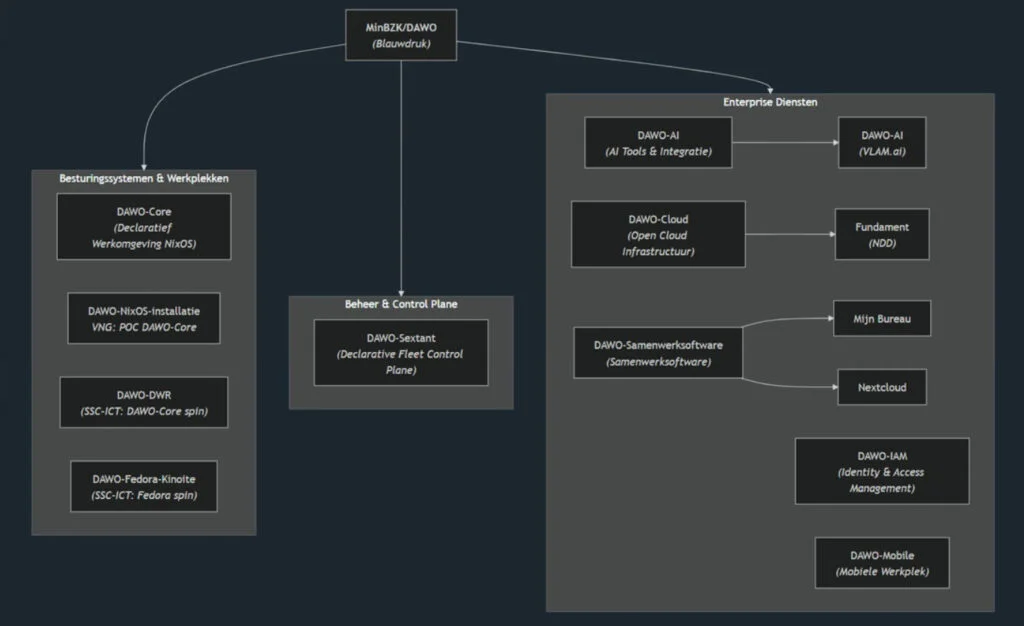
Nix and NixOS form the backbone of the Digitaal Autonome Werkomgeving Overheid (DAWO), a project meant to bundle every tool needed for a sovereign IT infrastructure. Through DAWO, The Hague intends to give government bodies and public institutions a custom operating system, office and productivity software, cloud services, management tools, and the rest of the stack.
Work on the DAWO-based sovereign infrastructure appears to have begun in earnest a few months ago, after Dutch authorities agreed to standardize how a national IT ecosystem would be built. Accessibility is a central concern of the project, in part because the NixOS developers are not known for championing graphical interfaces.
The first DAWO pilot programs have been deployed in private and local environments, and the plan is to eventually cover all institutions in the Netherlands. Efforts toward sovereignty appear to have stalled for years, but the new US administration provided the motivation to complete them.
Washington recently imposed sanctions on the International Criminal Court in The Hague, and Microsoft allegedly cut off the court’s prosecutors from their email and other essential IT services. The ICC is already switching from Microsoft Office to an open-source alternative, and DAWO and NixOS are expected to push the Dutch sovereignty effort further still.
Earlier this year, the Netherlands blocked a US company from buying an important app used by Dutch citizens. Elsewhere in Europe, countries are spending millions on large migration projects with the same aim: replacing Windows, Microsoft products and most US software services with Linux, open-source software or custom-built solutions.
Maybe you would like other interesting articles?