
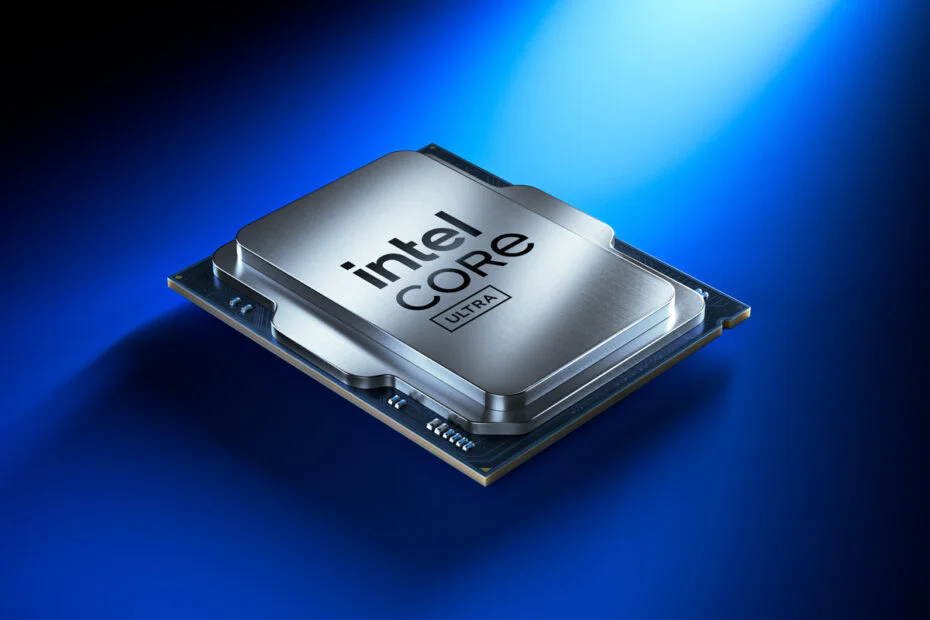
Recently leaked roadmaps provide new insight into Intel’s processor plans through 2028, highlighting a significant move away from the company’s hybrid-core architecture and a surprising partnership with Nvidia. Earlier leaks had already outlined Intel’s upcoming Nova Lake lineup, but the latest report expands on the generations expected to follow over the next two years. The documents also point to future APUs that may integrate Nvidia RTX GPU tiles.
Sources cited by DigiTimes claim Intel plans to launch Razor Lake in late 2027 following the release of Nova Lake processors in the second half of this year. Titan Lake and Moon Lake are then expected to arrive in 2028. The upcoming desktop and mobile chips are reportedly designed to help Intel regain ground against AMD in segments where it has recently struggled.
Nova Lake socketed desktop CPUs are expected to launch in late 2026, with Nova Lake-S potentially arriving in early 2027. More information is currently available about Nova Lake than the other processor families mentioned in the roadmap.
Expected to launch under the Intel Core Ultra 400 branding, Nova Lake desktop processors could feature as many as 52 cores built from a mix of Coyote Cove performance cores and Arctic Wolf efficiency cores. The platform is also set to introduce Intel’s new LGA 1954 socket alongside 900-series motherboards, including the Z990, Z970, W980, Q970, and B960 chipsets.
Manufactured on TSMC’s N2 process, Nova Lake processors could include as much as 288MB of L3 cache in an effort to narrow the gaming performance gap with AMD’s X3D chips. Intel has also highlighted software optimization as another important factor in improving performance. Nova Lake-S laptop processors, potentially launching at CES 2027, are rumored to feature up to 28 cores.
Although information about Razor Lake, Titan Lake, and Moon Lake is still limited, the current leaks provide some insight into Intel’s plans to compete more directly with AMD in gaming performance. Razor Lake is expected to succeed Nova Lake while continuing to use the LGA 1954 socket. The processors, reportedly planned for Q4 2027, may deliver higher IPC performance through new Griffon Cove performance cores and Golden Eagle efficiency cores.
New details about Intel’s 2028 roadmap suggest the company may abandon its current mix of performance and efficiency cores. The hybrid-core design, introduced with Alder Lake, has presented optimization challenges in gaming and certain workloads. Titan Lake is expected to adopt a unified architecture known as Copper Shark.
Titan Lake is also expected to introduce Intel’s partnership with Nvidia. Reports suggest the companies plan to combine Copper Shark CPU cores with RTX GPU tiles to compete with AMD’s Strix Point and Strix Halo integrated graphics designs, particularly in high-end mobile devices.
Maybe you would like other interesting articles?