

For anyone who has watched YouTube Shorts slowly crowd out long-form search results, the frustration has been familiar. Now, after sustained user pushback, YouTube is responding with a new search filter that finally lets viewers decide whether Shorts belong in their results at all or not.
YouTube has added “Shorts” as a separate category in the “Type” filter, giving users the option to view only long-form videos or only Shorts in search results. For those seeking longer content, the change directly responds to long-standing user feedback.
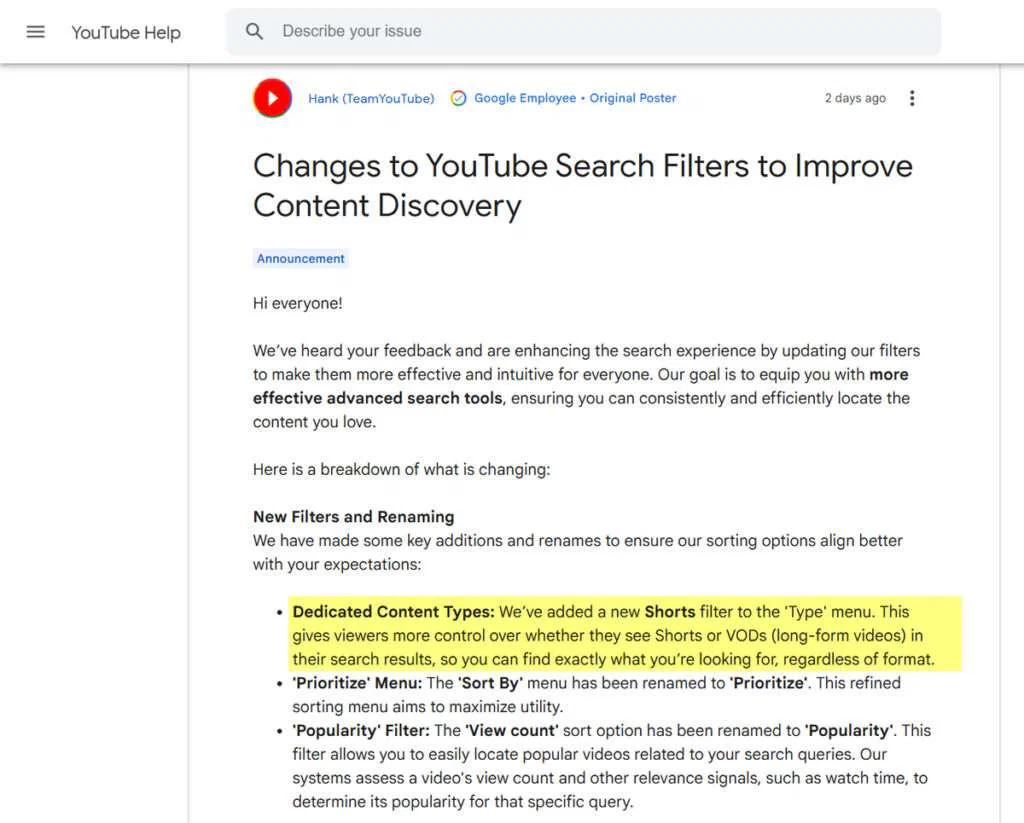
Alongside the feature changes, YouTube is refining its terminology to more clearly describe functionality:
- The “Sort by” menu is being renamed to “Prioritize,” which the platform states is meant to maximize utility and clarity.
- Within that menu, the “View count” option is becoming “Popularity.” This isn’t just a name change; YouTube says it will now weigh factors like watch time alongside raw views to determine what’s “popular” for a given query, potentially promoting more engaging content over mere clickbait.
Not all filters are surviving the update. YouTube is removing two specific options:
- Upload Date – Last Hour
- Sort by Rating
The platform admits these filters “were not working as expected” and had become a source of user complaints. Other time filters like “Today,” “This Week,” “This Month,” and “This Year” will remain.
The filter updates come as concerns grow over the spread of AI-generated content on YouTube. A recent report found that more than 21% of videos recommended to new users fell into the category of so-called “AI slop,” a term used to describe low-effort, machine-generated videos created to chase views, subscribers, or influence opinions.
Some of the largest AI slop channels have accumulated tens of billions of views, with top creators earning more than $4 million annually in ad revenue, much of it coming from audiences in South Korea, Pakistan, and the United States.
However, YouTube’s new filters don’t actually tackle the AI slop problem, since creators still aren’t required to clearly label AI-generated videos in a searchable way. That means users still don’t have a native tool to filter this stuff out.
Maybe you would like other interesting articles?