
There’s still no official launch date for the Steam Machine, but the latest SteamOS update suggests Valve is making progress. SteamOS 3.8.0 includes improvements for desktop users, handheld gaming PC partners, and external display support, pointing to something broader than a routine maintenance release.
The update is currently limited to Steam Deck users in the Preview channel, where Valve typically tests updates before wider distribution. Alongside stability fixes and quality-of-life improvements, it also includes changes that reach beyond the Steam Deck’s typical use, implying support for hardware that hasn’t been released.
The most significant change is early support for the Steam Machine, Valve’s desktop gaming PC expected sometime in 2026. The company had initially aimed for an early-year release, but widespread GDDR6 memory shortages pushed those plans back. The system is said to feature a custom graphics solution with 8GB of dedicated memory, based on AMD’s RDNA 3.5 architecture.
That specification makes another 3.8.0 update especially relevant. Valve claims significant enhancements to VRAM management for discrete GPUs. Previous benchmarks identified a performance gap in SteamOS: it handled unified memory systems like the Steam Deck well, but underperformed compared to Windows when paired with dedicated graphics hardware, particularly in the 8GB VRAM tier aligned with the Steam Machine.
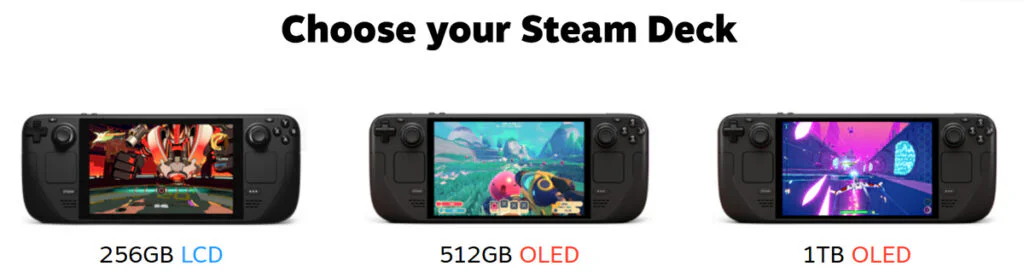
The update also expands SteamOS support for external displays. It adds HDR and variable refresh rate output for external monitors, along with independent scaling across multiple screens. Valve has adjusted the default TV scaling, added support for rotated displays, and updated KDE Plasma to a newer version, changes that benefit docked Steam Deck setups while also preparing the Steam Machine for living room use. The KDE upgrade further improves desktop-mode gaming performance and refines the broader Linux-based environment.
Version 3.8.0 also expands SteamOS compatibility with third-party handheld gaming PCs. It improves support for controllers, power controls, SD card slots, and other hardware used by non-Valve devices. The Lenovo Legion Go S is currently the only officially certified handheld outside Valve’s own lineup, with the Legion Go 2 expected to join it. Hardware from Asus, OneXplayer, GPD, Zotac, and Anbernic may follow.
Better compatibility with newer Intel and AMD chips also points to where things are heading. SteamOS looks increasingly like it’s being shaped into a general PC operating system, not just something meant for Valve’s own devices.
Valve appears to be positioning SteamOS as an alternative to Windows across handheld, desktop, and living room systems. Microsoft, facing ongoing criticism of Windows 11, is expected to introduce an “Xbox Mode” next month designed around controller navigation. The timing creates a direct comparison, with both platforms competing for the same gaming-oriented users.
Maybe you would like other interesting articles?