
Arjan Brussee, a veteran developer who has worked through several generations of game technology, is building a new game engine called The Immense Engine. Known for co-founding Guerrilla Games and later working on Unreal Engine at Epic Games, Brussee says the project is focused on creating a game engine developed and operated entirely in Europe. It is intended to serve as an alternative to the leading engines produced by companies in the US and China.
Brussee began his career in the 1990s as a programmer on Epic’s Jazz Jackrabbit games. In 2003, he co-founded Guerrilla Games and helped lead the studio during its early development. He later co-founded Boss Key Productions with Cliff Bleszinski before returning to Epic Games, where he spent eight years working in senior Unreal Engine positions.
Now back in the Netherlands and working independently, Brussee is framing his latest project around both regional identity and regulatory considerations.
“No one is currently making an engine that is fully European-hosted, built by Europeans, and complies with European rules and guidelines,” he said on the Dutch podcast De Technoloog.
The change reflects how game engines are now being used for more than entertainment. According to Brussee, industries such as defense and logistics are increasingly interested in real-time 3D tools, particularly where data handling and infrastructure requirements are closely monitored.
“Creating usable 3D worlds is becoming increasingly important, certainly for purposes other than just gaming,” he said.
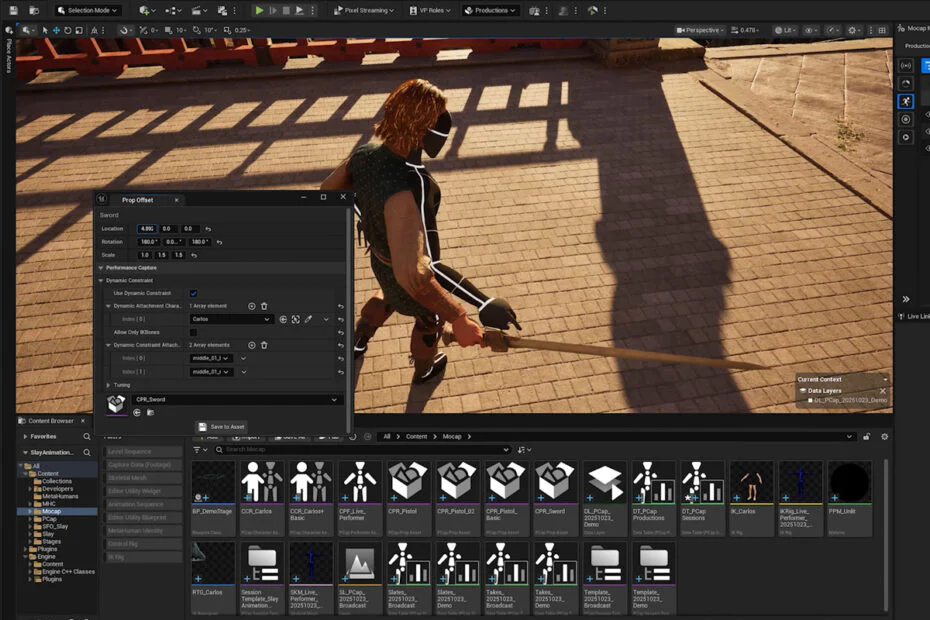
At the same time, Brussee’s criticism of existing engines is rooted in their technical design. He argues that platforms such as Unreal and Unity were created around traditional workflows, where developers manually navigate menus and apply changes step by step. In his view, that model does not adapt well to development environments increasingly shaped by AI-driven tools.
He described current engines as systems that were “made for and by people who have to click through a menu with a mouse. If you want to change something, it has to be done for the entire engine.”
Brussee says his goal is to create an engine where AI is part of the core design rather than an added feature. According to him, the rise of AI is pushing developers toward new approaches for building foundational software, and his experience gives him a strong sense of where new opportunities are developing.
Brussee believes that, with the proper foundation, AI could take over a large portion of tasks that are currently divided among multiple teams. According to him, the right AI-driven framework could allow a small group of developers to manage work that would traditionally require ten to fifteen people.
Few details have been shared about how The Immense Engine will be developed or when it could eventually launch. Still, Brussee’s broader vision is becoming increasingly clear. He appears to be betting that the next generation of game engines will be defined not only by graphics and performance gains, but also by changes in how these platforms are designed and governed.
Breaking into a market dominated by a small number of established engines will not be easy. Still, the project aligns with several broader industry trends, including the expansion of real-time 3D technology beyond gaming and the growing influence of AI in development workflows. Whether that will be enough to create room for a new engine remains uncertain, but the case Brussee is making is beginning to take clearer form.
Maybe you would like other interesting articles?