
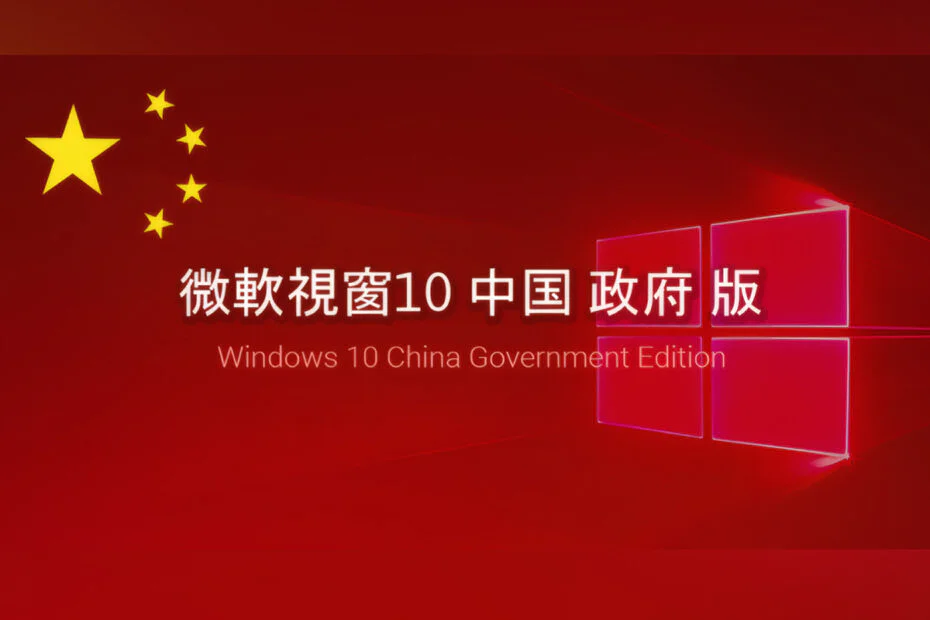
China is moving away from Windows faster than expected. Several state-linked organizations have been told to uninstall a customized version of Windows 10 ahead of schedule. The move, reportedly directed by the Ministry of State Security, could bring Microsoft’s plans for a China-specific operating system to an early end.
The order is reportedly linked to data-security concerns, but no details about specific vulnerabilities have been made public. CMIT, which was responsible for the customized operating system, had originally planned to retire it in February 2027. The decision to move faster fits with China’s wider effort to replace foreign software and hardware with domestically produced technology.
Microsoft said it has not seen any security incidents linked to the product and is still providing regular security updates. The company also said nothing had changed on its end despite the earlier retirement plan. China’s State Council Information Office and CMIT didn’t respond to requests for comment.
The directive comes several weeks ahead of a planned meeting between Donald Trump and Xi Jinping, at a time when tensions over technology and national security remain high. The earlier phase-out reportedly surprised some state agency employees. However, there is no indication yet that the timing was directly tied to the summit.
CMIT was set up in 2016 as a joint venture between Microsoft and state-owned China Electronics Technology Group Corporation. A year later, it launched Windows 10 China Government Edition for government users. The version came after lengthy talks involving Microsoft CEO Satya Nadella and Chinese finance officials, and included changes such as removing extra features and giving authorities more control over telemetry and updates.
Even with those changes, the customized version of Windows has struggled to gain the adoption Microsoft was hoping for. Reviews of Chinese government procurement guides show that five of the six documents published from December 2023 through May 2026 didn’t recommend Microsoft products. The only exception mentioned Windows 10 China Government Edition, and even then, it came with vague management requirements.
China has spent years working to reduce its dependence on foreign technology. In 2023, the government introduced guidelines requiring the use of “safe and reliable” processors and operating systems, with only Chinese products meeting the listed criteria. Companies such as Intel and AMD have also faced pressure as China gradually moves to phase out foreign technology, a trend that is increasingly affecting Microsoft as well.
Domestic operating systems from companies such as Kylin Software and Tongxin Software Technology are gaining ground, with many of their products based on Linux. China is also supporting openKylin, an open-source project focused on developing an alternative to Windows and macOS.
These policies have coincided with a significant reduction in Microsoft’s presence in China. At least 15 of its branch offices and joint ventures have closed over the past five years. Microsoft continues to operate in the country, mainly providing cloud and AI services to local businesses that operate internationally.
Maybe you would like other interesting articles?