
In an all-too-familiar scenario for system administrators and home users alike, Microsoft’s January 2026 “Patch Tuesday” cycle has gone awry, forcing the company to issue a series of emergency fixes for problems introduced by its own security updates.
The company released its scheduled cumulative updates on January 13. Soon after, users reported widespread system issues across consumer and enterprise environments. Microsoft responded by issuing multiple out-of-band updates aimed at resolving the most critical problems.
The situation has once again raised doubts about how reliable Windows really is, even with Microsoft’s large Windows Insider testing effort. In just the past month, the company has admitted to two major new issues in the OS.
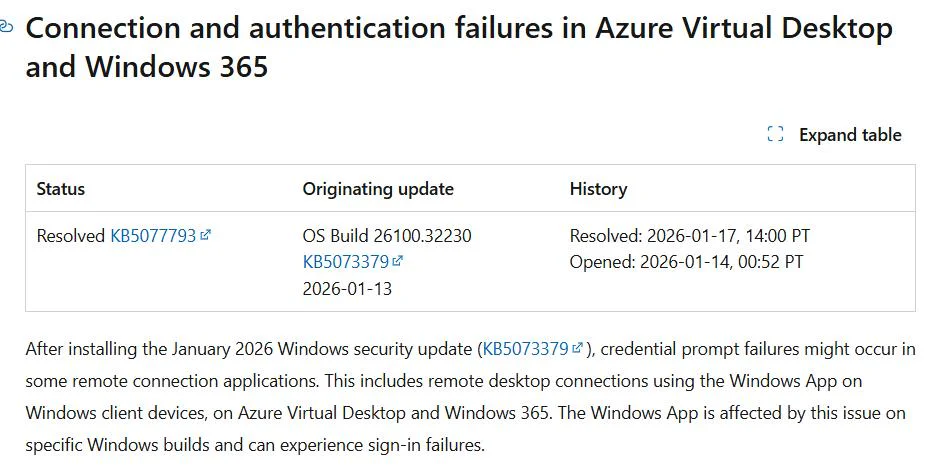
The first critical bug breaks access to Azure Virtual Desktop and Windows 365 Cloud PC services. After applying the January patches, remote desktop connections began failing, disrupting remote work and cloud infrastructure.
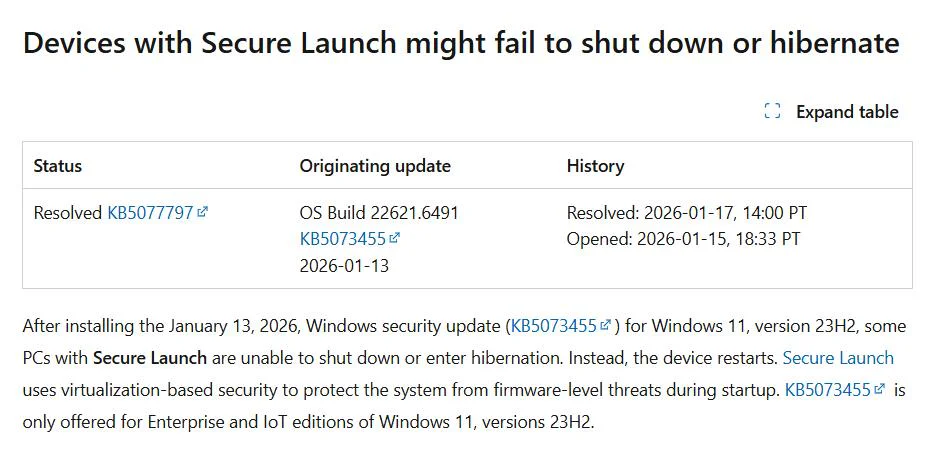
The second issue affects devices with Secure Launch enabled, a security feature designed to prevent firmware-level attacks. On affected systems, shutdown or hibernation commands trigger repeated restarts, resulting in system instability.
Given the likely large number of affected users, Microsoft opted to release standalone fixes rather than wait until the next scheduled update cycle in February. The company has published six different OOB updates covering supported versions of Windows 11 (from 23H2 to 25H2), Windows 10 (22H2), and Windows Server versions 2019 through 2025. These fixes are currently available for manual download via the Microsoft Update Catalog and are expected to be integrated into next month’s standard patches.
Beyond the two confirmed issues, users have reported a range of additional problems following the January updates, including failures to launch Microsoft Outlook, black screen incidents, and other system glitches.
Recurring concerns around Windows update reliability continue to drive user frustration within the community. In some corners, that dissatisfaction has manifested in the use of the pejorative nickname “Microslop.”
All of this is happening as Microsoft pushes deeper into AI. CEO Satya Nadella has said that AI could soon be writing most software code, and that about 30% of Microsoft’s own projects already use what he calls “vibe coding.” But for users dealing with machines that won’t connect to the cloud or power off properly, those promises don’t mean much when there’s another emergency patch to install.
Maybe you would like other interesting articles?