
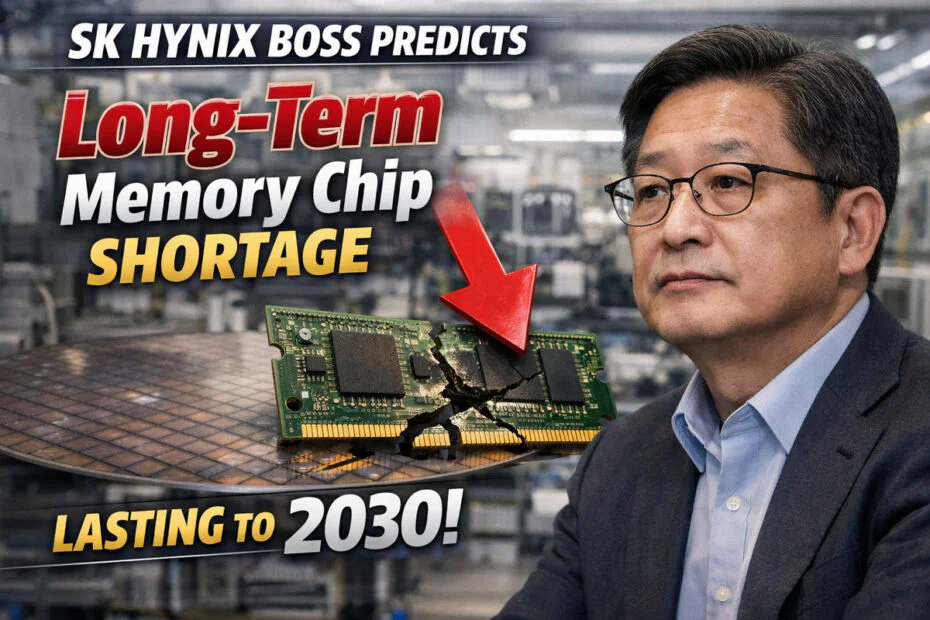
The global semiconductor sector, a key part of both the modern economy and the growth of AI, is expected to face ongoing supply shortages. One of the world’s leading chipmakers believes this isn’t a short-term issue, but a longer-lasting challenge that could continue throughout the decade.
Speaking at Nvidia GTC in San Jose, Chey Tae-won of SK Group warned that the chip industry is likely to remain unable to meet demand through 2030.
SK Group is the parent of SK Hynix, the world’s third-largest chipmaker. As an integrated manufacturer with its own foundry operations, SK Hynix offers a useful snapshot of global supply chain conditions. Even with revenue climbing, the company is finding it difficult to keep up with strong demand from enterprise customers.
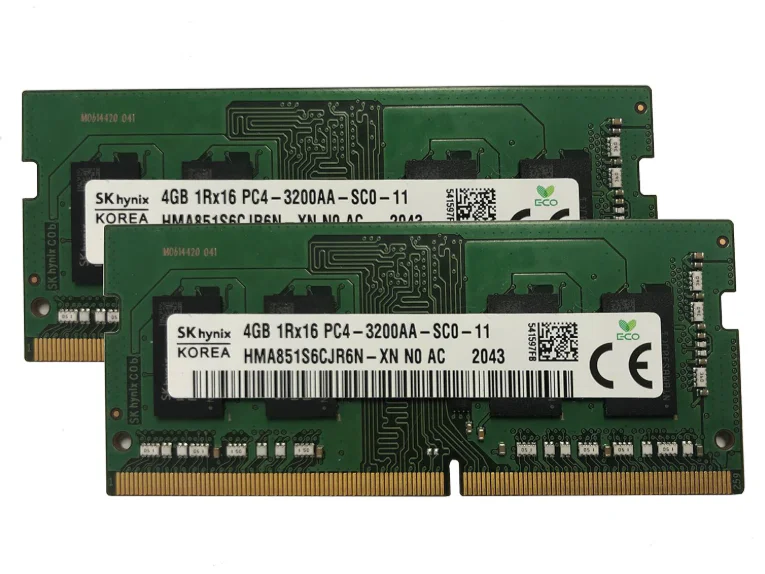
The strain starts at the very base of production. SK Hynix is currently dealing with a roughly 20% backlog in orders for the wafers used to make memory chips. That shortfall is feeding through the supply chain, tightening availability of the advanced components used in everything from data centers to consumer devices.
The pressure is most evident in the high-performance markets where SK Hynix has a strong foothold. The company holds over 50% of the global High Bandwidth Memory (HBM) market, key for Nvidia’s AI accelerators, and about 32% of the broader DRAM sector. Alongside Samsung and Micron, it remains central to both AI development and the wider tech ecosystem.
Although strong demand would typically drive prices higher, Chey Tae-won noted that falling short on orders is beginning to hurt profit margins. It’s a sign that the current conditions may not be sustainable, even for leading companies.
SK Hynix has already made major investments to expand its manufacturing capacity, and additional plans are reportedly being developed to stabilize prices. However, the chairman didn’t go into detail about what those plans involve.
The seriousness of the shortage was highlighted recently when SK Hynix announced that its full memory production capacity for 2026 had already been reserved.
Looking ahead, the semiconductor market faces continued volatility. Chey Tae-won’s outlook of multi-year shortages coincides with intensifying geopolitical risk. A recent drone strike on a helium facility in Qatar further exposed supply chain vulnerabilities, as helium remains a critical input in chip fabrication. These external shocks are expected to compound existing market pressures.
Maybe you would like other interesting articles?