

Valve has released a new beta version of Proton, its official compatibility layer for Linux gaming. Proton 11.0-beta1 brings several notable changes, including better support for games from the 1990s. It also helps pave the way for more improvements in the near future.
Proton is a compatibility layer built to run Windows software, mainly games distributed through Steam, on Linux-based operating systems. It combines a modified version of Wine with extra components and libraries, allowing it to achieve better compatibility than standard Wine.
Proton 11 uses Wine 11 as its base, bringing major updates to how the compatibility layer operates. The release includes support for the NTSync kernel driver, which moves parts of the NT synchronization model into the Linux kernel. This is expected to improve reliability when running Windows software, while potentially reducing CPU overhead and improving frame-rate consistency. At minimum, games should perform more smoothly than on previous Wine releases.
Although it was introduced only a few years ago, Proton has quickly become a major success for Steam and the wider Linux gaming ecosystem. With continued support from Valve, it can now run a large share of games originally built for Windows.
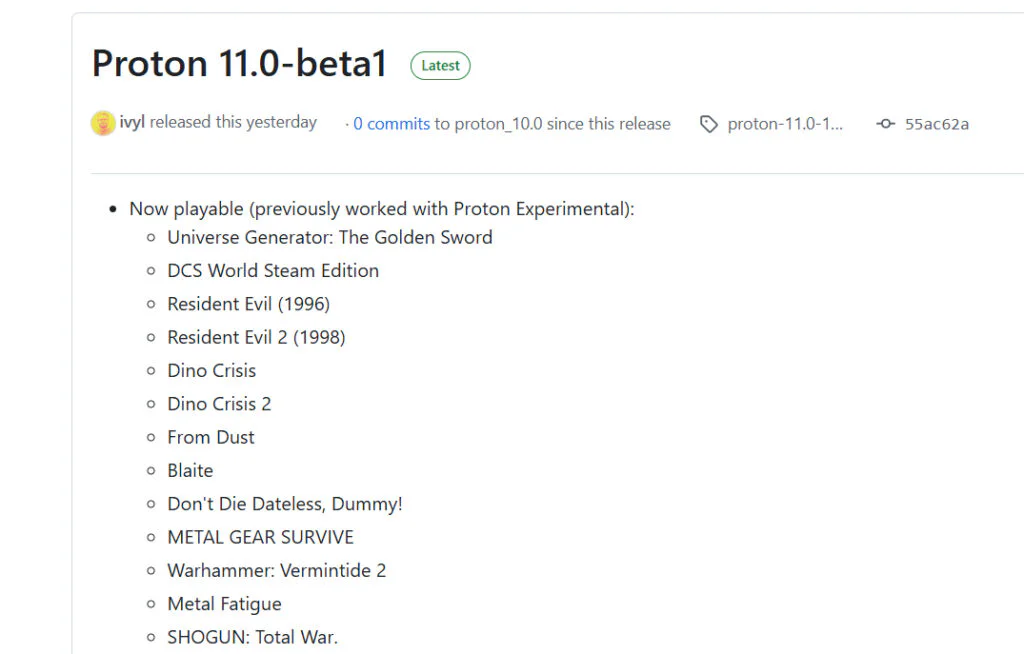
The update is not focused solely on newer releases like Crimson Desert or Resident Evil Requiem. Proton 11.0-beta1 also introduces support for earlier Capcom survival horror games such as Resident Evil and Dino Crisis, as well as titles like Shogun: Total War. Additional fixes are included for classics such as Chrono Trigger, Metal Gear Solid 2, and Call of Duty 2.
Finally, it looks like Proton 11.0 may bring official support for the Steam Frame. The new beta includes a “Proton 11.0 (ARM64)” option, which could be a sign that Valve is working on a compatibility layer for its upcoming VR headset. This version might help run x86-based game code on the Steam Frame’s ARM hardware, but Valve still hasn’t shared exactly what it has planned.
Maybe you would like other interesting articles?