
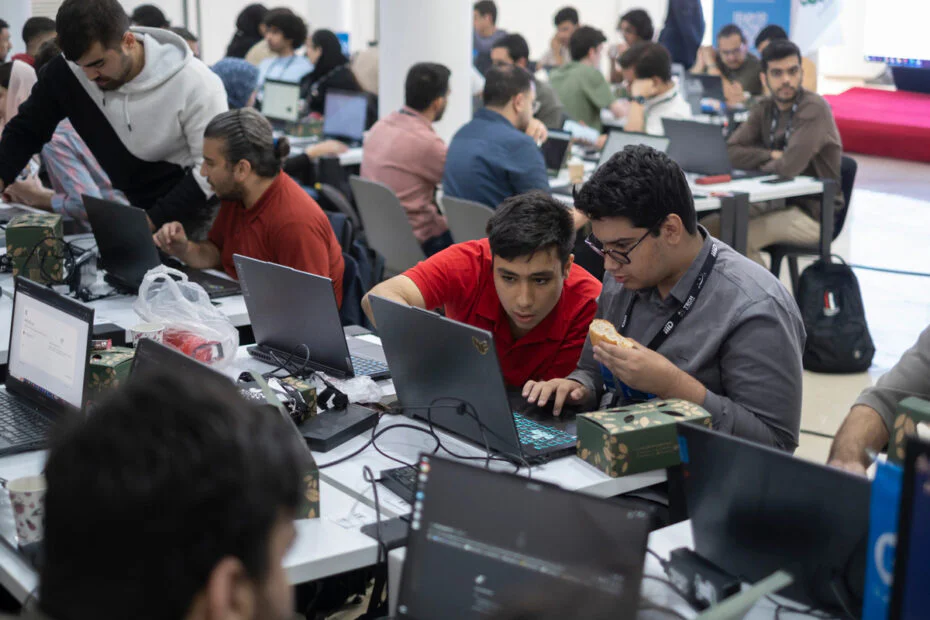
An anonymous software engineer says Claude Code is generating specs, tests, tickets, and reports-and leaving workers little time to understand the code.
AI was supposed to make developers far more productive. But according to a viral post from one software engineer, it’s had the opposite effect – turning skilled work into a routine of waiting around just to press enter for 12 to 13 hours a day.
Posting under the name voxium on X, the engineer chose to stay anonymous out of concern his employer might retaliate. He described his new role at the company, which he didn’t name, as “soul-sucking.”
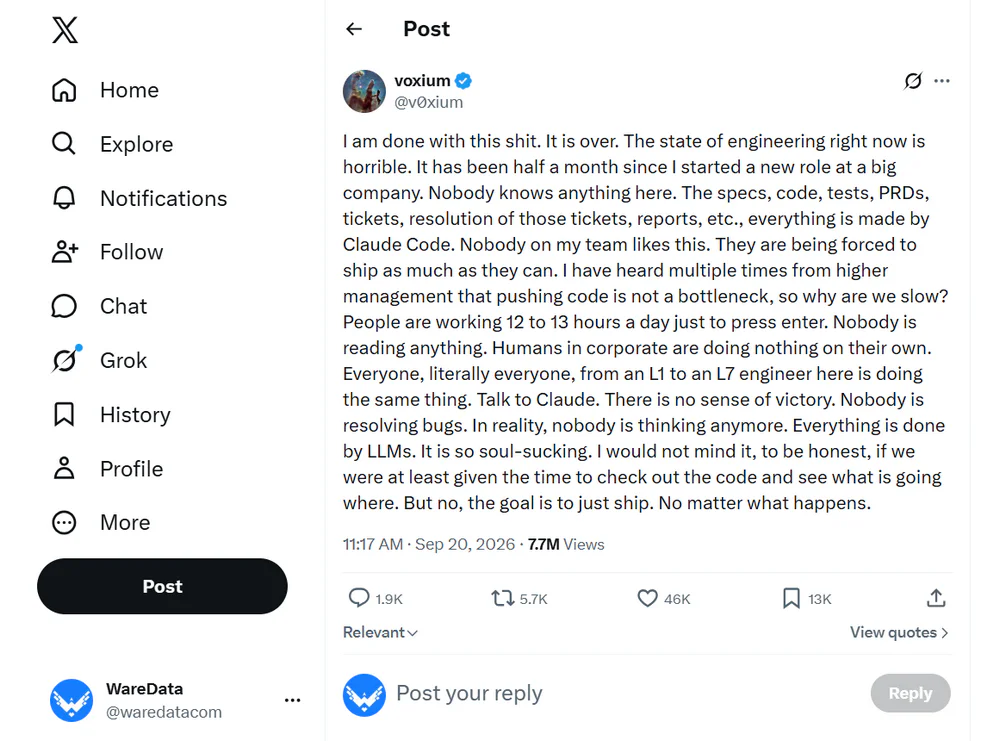
There are doubtlessly quite a few people who would describe their jobs the same way, but the source of voxium’s misery is Claude Code. He says that Anthropic’s AI is now generating everything from product specifications and tests to tickets and reports.
“Nobody knows anything here,” voxium wrote in a Sunday post. “People are working 12 to 13 hours a day just to press enter.”
He added that employees now face pressure to ship products as quickly as possible, leaving little room to review Claude’s output or actually understand the code it produces. According to voxium, the situation would be tolerable if workers simply had more time to check the work.
“Everyone, literally everyone, from an L1 to an L7 engineer here is doing the same thing. Talk to Claude,” he added. “There is no sense of victory. Nobody is resolving bugs. In reality, nobody is thinking anymore.”
Some might wonder what’s so bad about that – getting paid to do next to nothing sounds like a dream to plenty of people. But meaningless work takes a toll on most. Voxium told Business Insider that once engineers stop understanding the code and solving hard problems, “there is nothing left … Not even our soul. There will be no purpose.”
The real issue, he argued, is leadership’s fixation on feature velocity. Success gets measured in sprint cycles, PR counts, and shipped features – metrics that, in his view, say little about whether those additions actually improve the product.
Several other developers responded to say the same thing was happening at their own companies. Beyond the shared sense of lost purpose, some also worry it could eventually cost them their jobs as Claude absorbs more of the coding workflow.
The post attracted responses from several well-known figures. Elon Musk replied with his go-to “Yikes,” while Chamath Palihapitiya, co-host of the All-In Podcast, warned that AI is reducing a generation of technical experts to people “pushing a button in front of casino slot machines.”
A 2025 study found that AI coding assistants were actually slowing down experienced developers rather than helping them. Since then, the trend has shifted toward what’s being called “loop engineering,” where AI systems essentially prompt themselves. And these tools aren’t foolproof – one AI agent in April wiped out a startup’s production database and its backups in just nine seconds, using a single API call to its cloud provider.
Maybe you would like other interesting articles?