
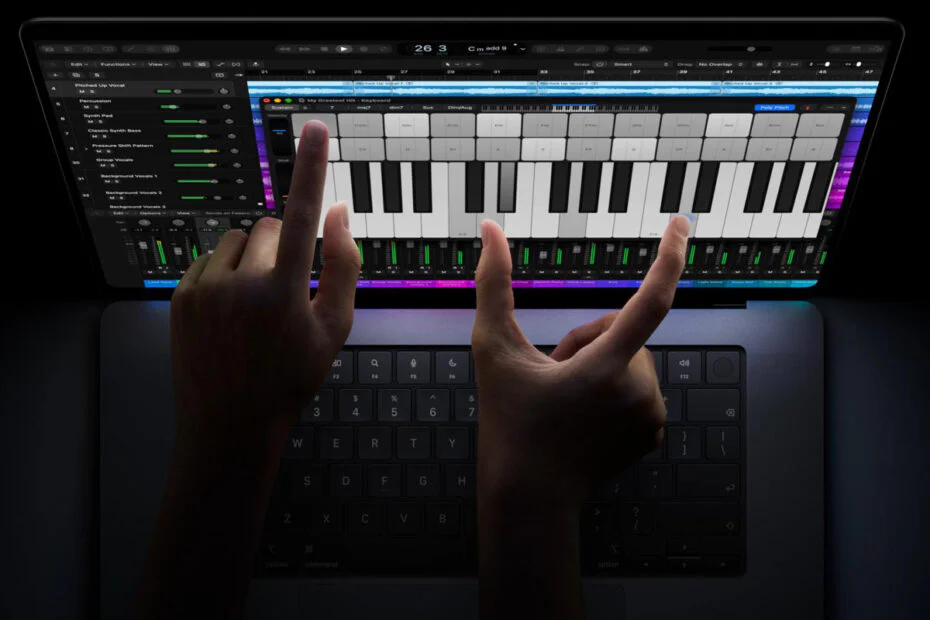
About 16 years ago, when many PC makers were starting to add touchscreens to laptops, Apple co-founder Steve Jobs described the combination as ergonomically terrible. Apple has avoided putting a touchscreen on the MacBook since then, but that is now changing.
Apple’s latest high-end laptop, the MacBook Pro with PROLED XDR, begins shipping on November 6. It is the company’s first laptop with an OLED panel and its first with a touchscreen.
The 14-inch MacBook Pro starts at $2,900 and the 16-inch at $3,400, each with an M5 Pro chip. The 16-inch model with the M5 Max starts at $4,800. The most expensive 16-inch configuration costs $14,549.
Anyone who has used a recent iPad has a good idea of what touch on macOS will feel like. When Apple pushed iPadOS closer to the Mac last year, observers quickly guessed that macOS was next in line for touchscreen support, and they were right.
The new MacBook also includes a version of the iPhone’s Dynamic Island. Located at the top center of the screen, it lets users get to music, Spotlight search, and Siri conversations quickly.
Apple chose tandem OLED for its first OLED laptop display. The technology stacks two OLED layers, which improves brightness, color range, and longevity. Compared with the earlier mini-LED models, peak HDR brightness increases from 1,600 to 2,000 nits, and SDR brightness now also reaches 2,000 nits for outdoor use. The display covers Adobe RGB in addition to P3, and the glowing Apple logo returns.
Aside from the screen, not much has changed. The new PROLED XDR MacBook Pro runs the same M5 Pro and M5 Max chips as before, with the same RAM, wireless, battery life, and ports. You can now get up to 16TB of storage, though, and the new six-speaker setup supposedly has 50% deeper bass.
The new model also weighs less. The 16-inch M5 Pro version, for example, went from 4.7 pounds to 4 pounds. Its height, width, and depth are each slightly smaller too, by a few hundredths of an inch.
Although the chassis is smaller, the OLED screen is a tenth of an inch larger and has slightly more pixels, with a resolution of 3,472 x 2,266. The camera remains 12MP with 1080p recording. The new model adds improved video stabilization for when users touch the screen during video calls.
Maybe you would like other interesting articles?