
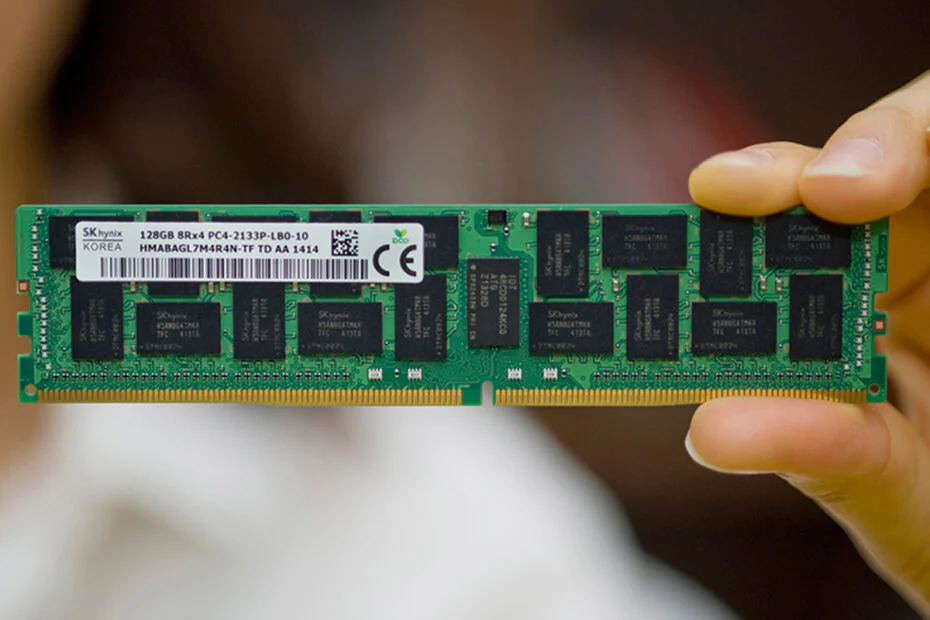
New analysis shows that computer memory prices have erased about 20 years of steady cost reductions in just one year. Prices have climbed back to levels last seen in 2007 as surging AI demand puts increasing pressure on global memory supplies. The reversal could push up costs for PCs, smartphones and other electronics.
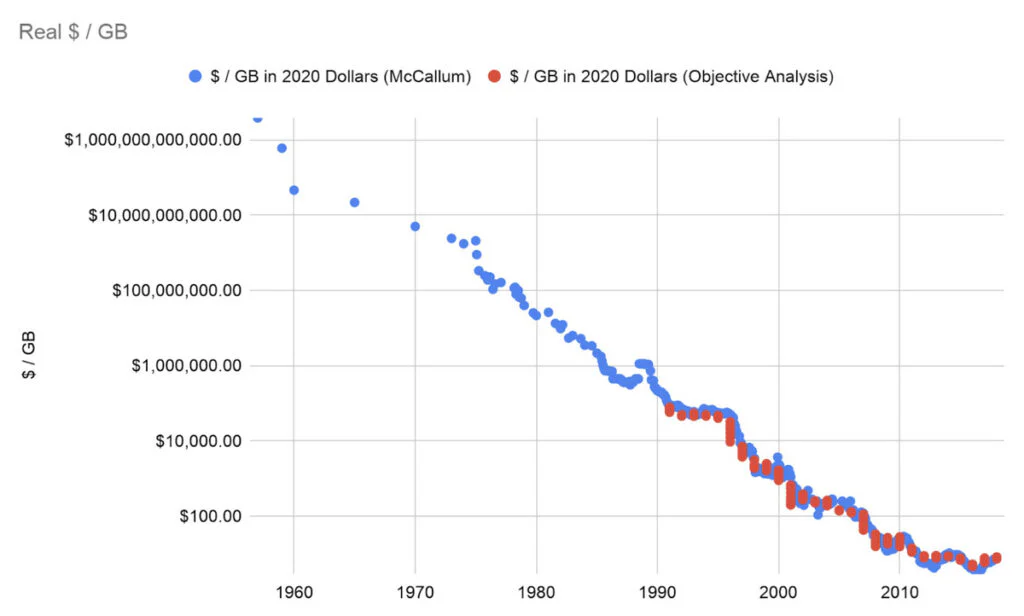
Daniel Lemire, a computer science researcher and software performance expert, says the recent jump in memory prices is a “historical anomaly.” His charts show how quickly things have changed, with memory costs suddenly moving in the opposite direction after years of steady declines. The price curve has taken a noticeable turn upward over the past year.
Lemire identified two possible ways for memory prices to return to more normal levels. Software developers could reduce the amount of memory their AI systems need, while hardware manufacturers could expand production to close the supply gap.
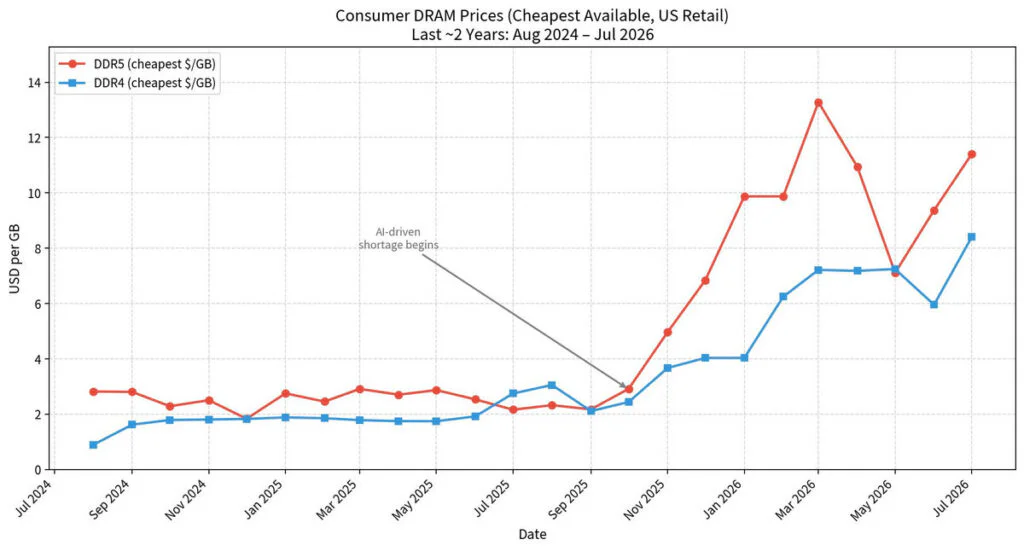
The current price surge is largely the result of strong demand from the AI industry. J.P. Morgan estimates that global memory prices have increased by more than 400 percent since early 2024. NAND flash prices have also risen sharply, with industry reports putting the increase at around 50 to 100 percent due to manufacturing constraints. The higher costs are affecting many types of consumer electronics, including laptops, desktops, graphics cards, smartphones and gaming consoles. HP, Dell and Apple have raised prices on some computer models, while Sony and Nintendo have also increased prices for the PlayStation 5 and Switch 2.
SK Hynix CEO Kwak Noh-Jung has warned that the memory shortage is likely to persist. He expects 2027 to be the most difficult year for the industry, while demand could remain higher than supply beyond 2030.
A lot will depend on what happens with AI. There are growing concerns that the current wave of AI investment could be turning into a bubble. If that bubble bursts, demand for memory could fall much faster than manufacturers expect.
Maybe you would like other interesting articles?