
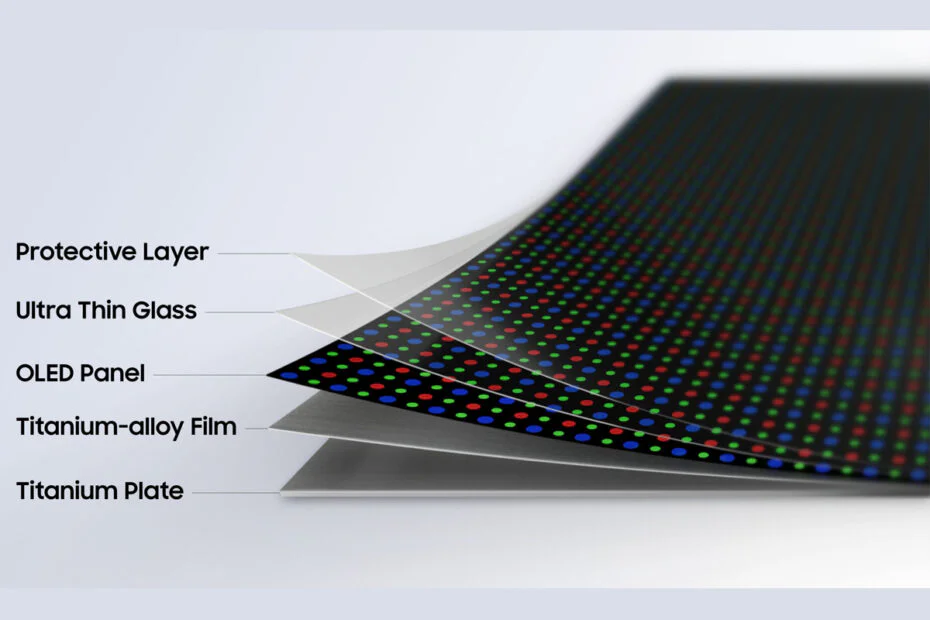
Samsung has introduced Flex Titanium, a display technology created for foldable devices that combines durability, flexibility, and a slim design. The technology relies on two titanium-based components and is expected to debut in the next Galaxy foldables on July 22.
Samsung says Flex Titanium is the result of seven generations of work on foldable devices. It uses a titanium-alloy film that’s about one-third as thick as a human hair and sits beneath the OLED display. According to the company, the film is 20 times stiffer than a standard polymer layer.
Under the titanium film is another titanium plate that helps remove air gaps and keeps the display layers more tightly connected. Samsung says this setup makes the crease harder to see, something many foldable phone users have wanted for years.
Foldable smartphones have long been promoted as the next step in mobile technology, but adoption has been slower than many expected. High component costs continue to keep prices out of reach for some buyers, while early models faced durability and usability challenges. At first, some critics viewed foldables as a product without a clear purpose, though attitudes have become more favorable as the technology has improved.
It’s not just the price that makes people hesitate to buy a foldable smartphone. Many are also put off by durability concerns and the visible crease in the screen. If Samsung’s Flex Titanium can make that crease much less noticeable, it could give more people a reason to consider making the switch.
Samsung will hold its next Galaxy Unpacked event on July 22, where the latest Galaxy Z foldables are expected to be introduced. The company is offering a $30 credit to customers who reserve ahead of the announcement, though many buyers may choose to wait until the products are officially revealed before placing a pre-order.
Maybe you’d like some other interesting articles?