
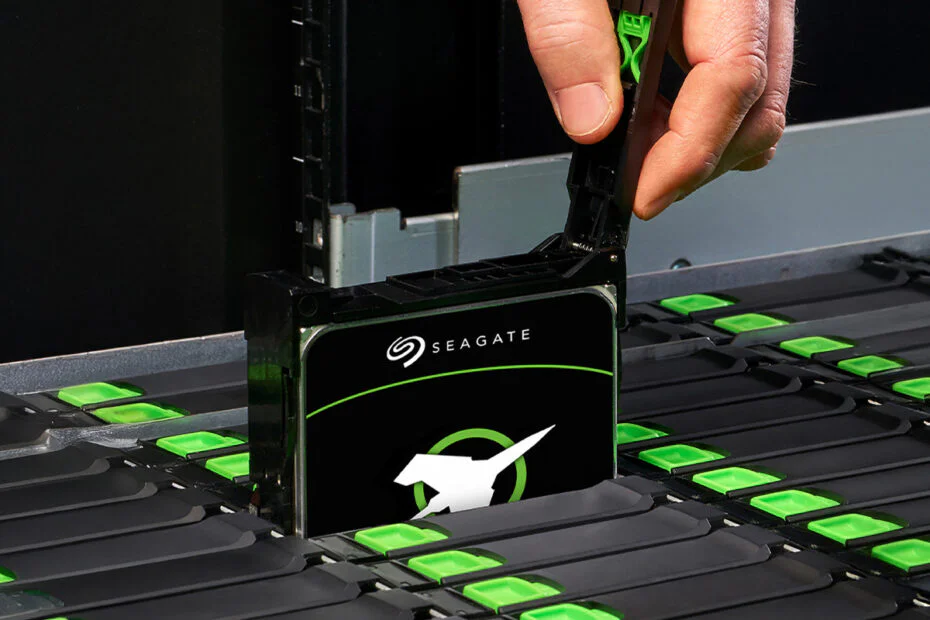
Seagate is getting closer to launching its first 50TB hard drives. The company expects to send the drives to data center customers for testing before bringing them to market in late 2027. The announcement, made during the company’s fiscal fourth-quarter 2026 earnings call, marks another milestone in its HAMR development roadmap as AI-driven demand continues to push the need for higher-capacity storage.
Speaking to shareholders, CFO Gianluca Romano said Seagate’s HAMR roadmap remains on track to deliver more than 5TB per platter. A standard ten-platter design would allow the company to surpass the 50TB mark. The drives are being developed for hyperscale deployments, targeting cloud operators, AI infrastructure providers, and other enterprise customers instead of retail consumers.
The upcoming drives will use Seagate’s third-generation HAMR platform, known as Mozaic 5+. Its current Mozaic 4+ technology supports capacities of up to 44TB, and the company expects those drives to represent about half of its HAMR exabyte shipments to select customers by the end of 2026. Seagate plans to begin sending Mozaic 5+ drives to OEMs and data center operators for qualification in 2027, with wider deployment expected after testing and customer validation are complete.
Seagate said boosting areal density by storing more terabytes on each platter is central to its storage roadmap. The company believes this approach helps maintain stable hard drive costs while increasing exabyte output without significant additional investment in manufacturing capacity.
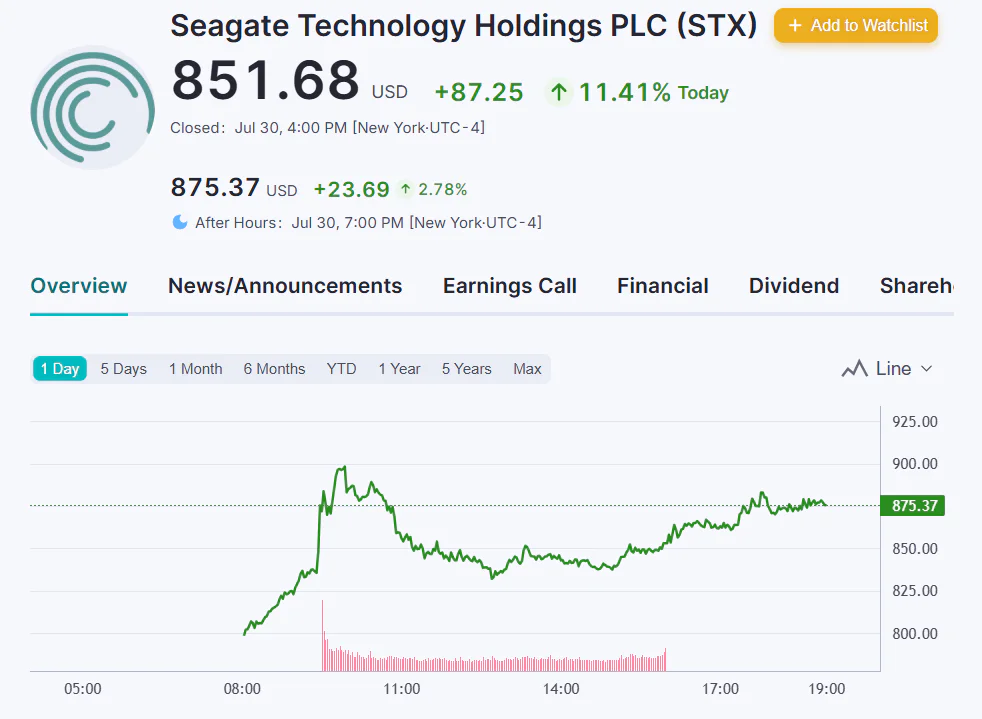
The storage roadmap wasn’t the only good news for Seagate. The company brought in $3.6 billion in revenue during the quarter ending June 2026, a 17% increase from the previous quarter and 48% higher than a year earlier. CEO Dave Mosley said customers are buying up nearline storage so quickly that most of Seagate’s production is already spoken for well into 2028.
Seagate now generates most of its revenue from AI-focused data centers and major cloud providers. CEO Dave Mosley said hyperscalers continue to depend on hard drives to store the vast amount of data behind AI workloads, while cold storage has become increasingly important for preserving the long-term context used by AI models and autonomous AI agents. That growing demand for durable storage is fueling both hardware purchases and Seagate’s revenue growth.
Maybe you’d like some other interesting articles?