
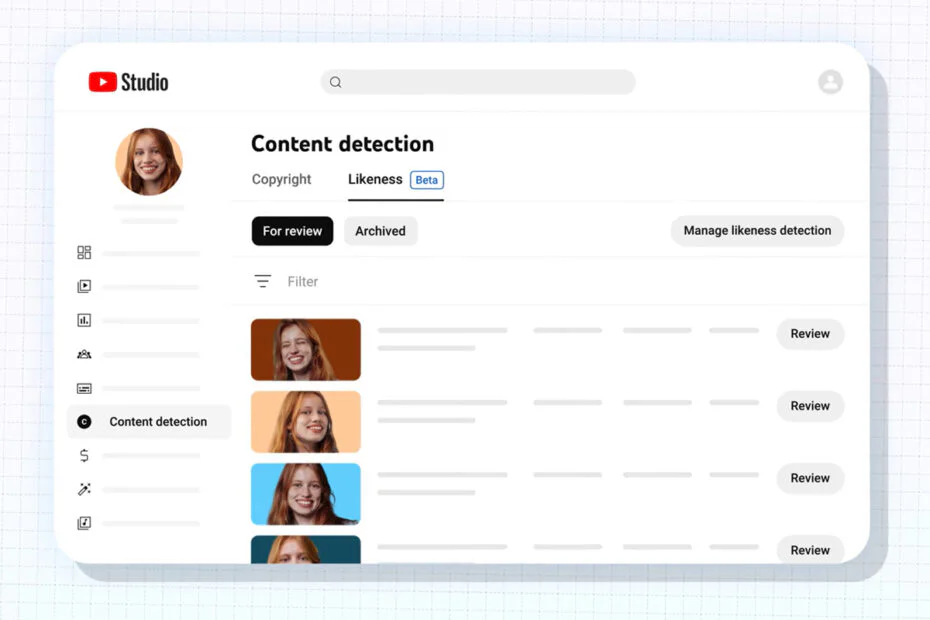
YouTube is widening access to a tool designed to help people spot AI-generated videos that use their face without consent. In the coming weeks, the platform says all creators aged 18 and older will gain access to its likeness detection feature, which had previously been limited to monetized creators, journalists, and public figures.
In an update posted to YouTube’s community page, Team YouTube said the feature is intended to give users “more peace of mind” by making it easier to request the removal of unauthorized content. Although the tool is framed as creator-focused, spokesperson Jack Malon told The Verge that it is available to anyone.
“With this expansion, we’re making clear that whether creators have been uploading to YouTube for a decade or are just starting, they’ll have access to the same level of protection,” Malon said in a statement.
The expansion comes at a time when separating authentic footage from AI-generated content is becoming increasingly challenging. Wider access to the tool could help not only established creators, who may find brands using their image without permission to market products, but also everyday users featured in deceptive or harmful AI-generated videos.
YouTube first previewed the detection tool in 2024 and started rolling it out in late 2025, initially for members of the YouTube Partner Program. The program covers creators who qualify to monetize their channels after reaching subscriber and viewing requirements. Access was later expanded to journalists and politicians before the newest rollout.
To sign up, users need to open YouTube Studio on a desktop, head to the “Likeness” section within “Content detection,” scan a QR code with their phone, and complete identity verification by submitting a government-issued ID and a selfie video. After enrollment, YouTube scans uploaded videos for potential facial matches. Any flagged content appears in the same Likeness tab, where users can review results and request removal by explaining how their likeness was used. While the process also asks whether a user’s voice was copied, the system cannot currently identify matches based on voice alone.
Maybe you would like other interesting articles?